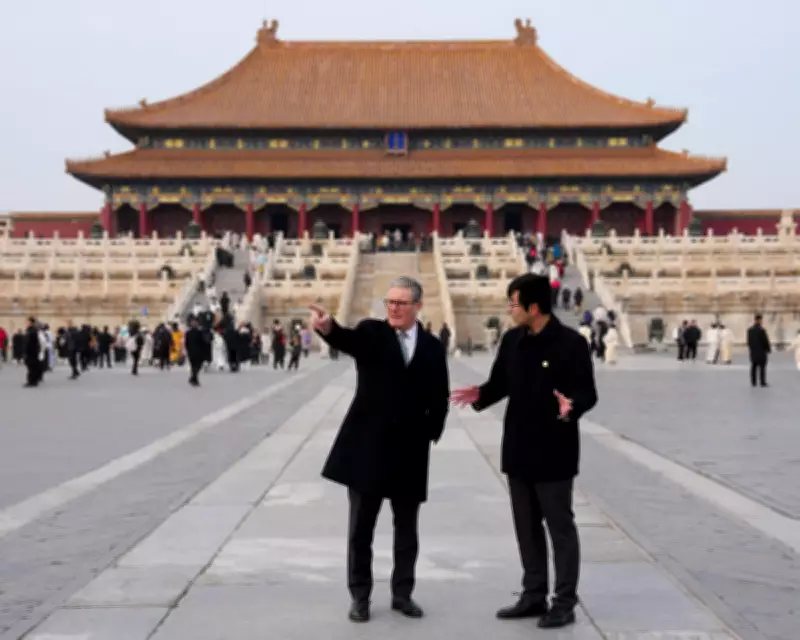
Starmer's Diplomatic Mission to Beijing Yields Concrete Agreements
Prime Minister Keir Starmer's official visit to China has concluded with several significant bilateral agreements, marking a pragmatic step forward in UK-China relations. While the trip did not produce the multi-billion pound investment packages that have sometimes characterised such diplomatic missions, Downing Street has secured a series of substantive deals across multiple sectors that promise tangible benefits for British citizens and businesses.
Visa-Free Travel: A Major Breakthrough for Tourism and Business
Perhaps the most immediately impactful achievement from Starmer's Beijing discussions is the agreement for visa-free travel to China for British citizens. Under this new arrangement, UK passport holders will be able to visit China for up to thirty days without requiring a visa, significantly reducing bureaucratic hurdles for both leisure travellers and business professionals.
This development brings Britain into alignment with approximately fifty other nations already enjoying similar visa-free access to China, including major European partners like France, Germany, and Italy, as well as global allies such as Australia and Japan. The streamlined entry process is expected to boost tourism numbers and facilitate smoother business exchanges between the two countries.
Intelligence Cooperation to Combat Organised Crime and Channel Crossings
In what may prove to be one of the most operationally significant outcomes of the visit, Starmer and Chinese President Xi Jinping have agreed to enhance intelligence sharing regarding organised crime networks. This cooperation specifically targets the supply chains supporting small boat Channel crossings, with estimates suggesting over half of the engines used in such vessels last year originated from Chinese manufacturers.
The Prime Minister emphasised that this agreement would "help us cut off the supply of boats at source – stopping crossings before lives are put at risk and restoring control to our borders." Beyond migration concerns, the intelligence partnership will also focus on disrupting opioid drug-smuggling operations originating from China, addressing a growing public health and security challenge.
Progress Toward a Services Trade Agreement
While no comprehensive free trade agreement has been finalised, the two nations have committed to a feasibility study exploring the potential for a services-specific trade deal. Given that the UK exports approximately £13 billion worth of services to China annually, such an agreement could establish clearer, legally binding frameworks for British service providers operating in the Chinese market.
Business leaders accompanying Starmer expressed optimism about this development. Melissa Geiger, Chair of KPMG UK, noted that "the further opening up of this major new market will unlock significant bilateral trade and investment opportunities and create jobs across the UK."
Strengthening Economic Cooperation Mechanisms
The visit has also reinforced institutional frameworks for ongoing economic dialogue. Building on last year's economic summit – the first since 2018 – both countries have agreed to strengthen the UK-China Joint Economic and Trade Commission. This signals China's continued interest in maintaining economic engagement with Britain despite broader geopolitical tensions.
Additionally, multiple memorandums of understanding were signed to enhance cooperation in specific areas including product standards, health sectors, sports industries, technical education, food safety protocols, and animal and plant quarantine procedures.
Facilitating Market Access for British Businesses
Responding to longstanding requests from UK companies seeking clearer pathways into the Chinese market, the agreements include measures to simplify export processes and improve market access. The framework aims to help British businesses identify reliable local partners and establish channels for professional qualification recognition, addressing key barriers to market entry.
Jerome Frost, Chief Executive of engineering firm Arup – which has operated in China for decades – welcomed the progress, highlighting China's role in hosting "some of our most technically demanding and innovative projects." His comments underscore the practical benefits that enhanced cooperation could bring to UK firms with established Chinese operations.
While Chinese state media has characterised Starmer's visit as an exercise in economic pragmatism, the concrete outcomes suggest a carefully calibrated approach to UK-China relations that prioritises specific, achievable objectives over grand symbolic gestures. The agreements reflect both countries' willingness to collaborate on issues of mutual interest while acknowledging the complexities of their broader relationship.