Taiwan Raises Alarm Over Coordinated Chinese Fishing Fleet Activity
Taiwanese authorities have expressed significant concern over unusual patterns of Chinese fishing vessel activity in the East China Sea, with security analysts suggesting these coordinated formations may represent strategic mobilisation tests. The incidents have gained particular attention as global focus shifts toward escalating conflicts in the Middle East, potentially creating a distraction from Beijing's maritime activities.
Extraordinary Maritime Formations Documented
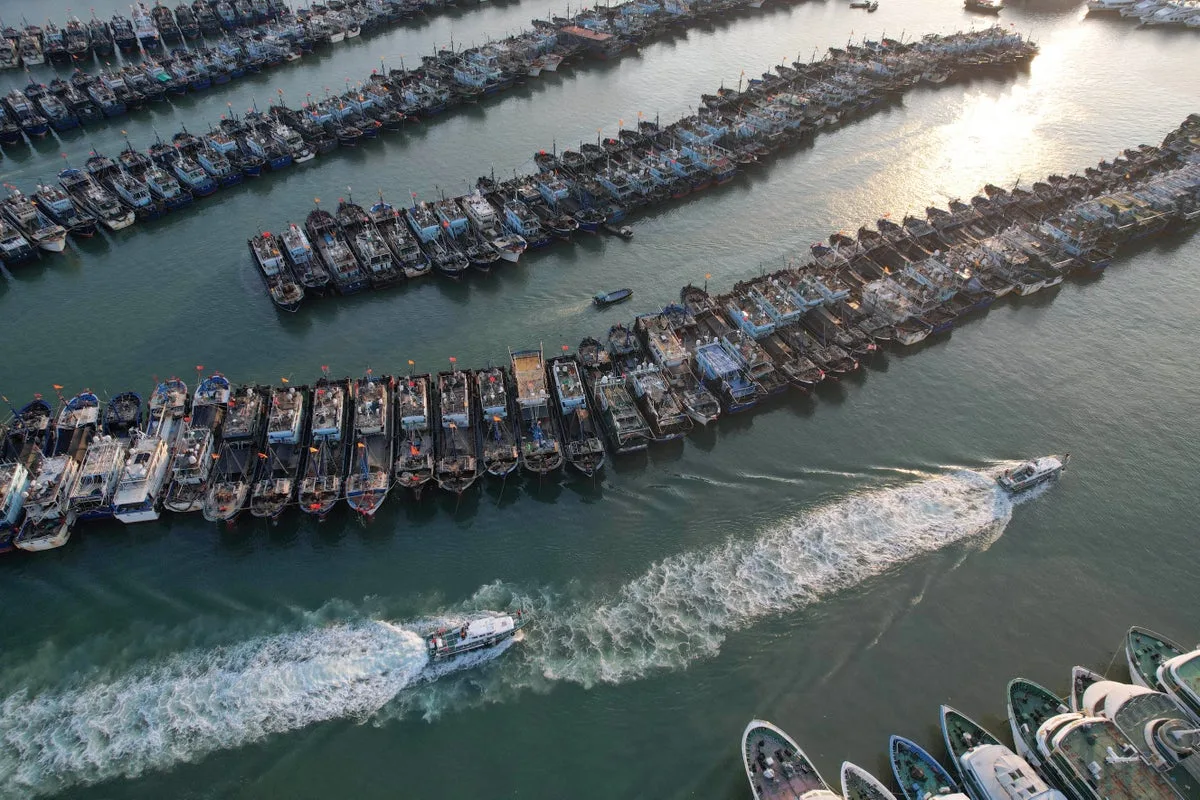
According to detailed satellite imagery and ship tracking data, Chinese fishing vessels have assembled in remarkably geometric formations on three separate occasions since December 2025. The most substantial incident occurred on Christmas Day 2025, when approximately 2,000 vessels arranged themselves into two parallel lines stretching an extraordinary 470 kilometres across the East China Sea.
Ray Powell, a former United States Air Force officer and director of SeaLight maritime activity tracker, described the scale as unprecedented. "Chinese fishing fleets routinely operate in large groups, but over a thousand vessels holding parallel lines for hundreds of miles over thirty hours has no clear precedent in publicly available data," Powell stated.
Strategic Implications and Analyst Concerns
Security experts have raised alarms that these formations likely represent more than routine fishing operations. The high degree of coordination suggests the vessels were directed not to fish but to demonstrate Beijing's capacity to mobilise civilian fleets for strategic purposes. Many of these boats appear linked to fishing fleets from Zhejiang province, which hosts China's largest concentration of documented maritime militia units.
These militia units consist of commercial fishing vessels whose crews may be registered as reserve military personnel, capable of rapid mobilisation to support maritime operations. Jason Wang, chief operating officer of ingeniSPACE satellite imagery firm, noted the unnatural patterns, stating, "In nature very rarely do you see straight lines" when describing the formations.
Regional Responses and Tensions
The unusual maritime activity has prompted serious responses from regional powers. Japan has reportedly deployed aircraft to monitor the formations and repositioned patrol vessels in the area, treating the incidents as potential security concerns rather than routine fisheries matters. This comes amid heightened tensions between Tokyo and Beijing over disputed territories in the East China Sea and Japan's increasingly assertive stance regarding Taiwan's security.
Taiwanese officials have noted the resumption of widespread Chinese air force activity around the island following an unexplained week-long lull, coinciding with the latest fishing vessel formations. Analysts suggest Taiwan would inevitably view any large-scale fleet mobilisation in the East China Sea through the lens of potential blockade scenarios, given the strategic geography.
Alternative Explanations and Strategic Ambiguity
While some analysts point to severe weather conditions as a possible explanation for the vessel clustering, others note the unusual duration of the formations contradicts typical storm avoidance behaviour. Takafumi Sasaki, a professor of marine bioresource science at Hokkaido University, observed that even if weather-driven, it was unusual for boats to maintain formation for such extended periods.
Beijing has offered no official explanation for the maritime activity, maintaining strategic ambiguity that forces regional powers to prepare for worst-case scenarios. Powell emphasised this tactical advantage, noting, "There's no clean military response to a thousand civilian fishing boats. And that's precisely what makes this approach so effective."
Broader Context of Maritime Strategy
The incidents occur against a backdrop of China's expanding maritime ambitions and ongoing tensions across the Taiwan Strait. According to a United States congressional report from January 2026, China views its fishing fleet as a strategic tool to expand influence, intimidate rivals, and control maritime resources across the Indo-Pacific region. These vessels reportedly operate under military command and feature reinforced hulls and water cannons for coercive tasks.
As global attention remains divided between multiple international crises, security analysts warn that China's evolving "grey zone" tactics at sea present complex challenges for regional powers attempting to respond to ambiguous civilian fleet activities that blur traditional military boundaries.