Thailand and Cambodia have reached a critical agreement for an "immediate" ceasefire, aiming to end weeks of intense and deadly border clashes that have resulted in significant casualties and mass displacement.
A Fragile Peace After Weeks of Conflict
In a joint statement issued by their defence ministries, the two Southeast Asian neighbours committed to halting all hostilities effective from noon local time on Saturday. The pact explicitly covers "all types of weapons, including attacks on civilians, civilian objects and infrastructures, and military objectives of either side."
The agreement, signed by Thai Defence Minister Natthaphon Narkphanit and his Cambodian counterpart, Tea Seiha, follows 20 days of fierce combat. The fighting has involved fighter jet sorties, rocket fire, and artillery barrages, marking a severe escalation in a long-running territorial dispute.
Last-Minute Strikes and the Human Cost
Strikingly, even as diplomats convened for talks on Saturday to finalise the ceasefire, Cambodia reported a fresh airstrike by Thailand. According to Cambodia's defence ministry, Thai F-16 fighter jets dropped four bombs on a target in Serei Saophoan, located in the north-western Banteay Meanchey province, on Saturday morning.
This incident followed a similar attack the previous day, where Cambodia alleged Thailand dropped 40 bombs on Chok Chey village in the same province—an action confirmed by the Thai military.
The human toll of the renewed conflict since early December is stark. Thai officials report 26 soldiers and one civilian killed directly in combat, with a further 44 civilian deaths from collateral effects. Cambodia has not released official military casualty figures but states that 30 civilians have been killed and 90 injured.
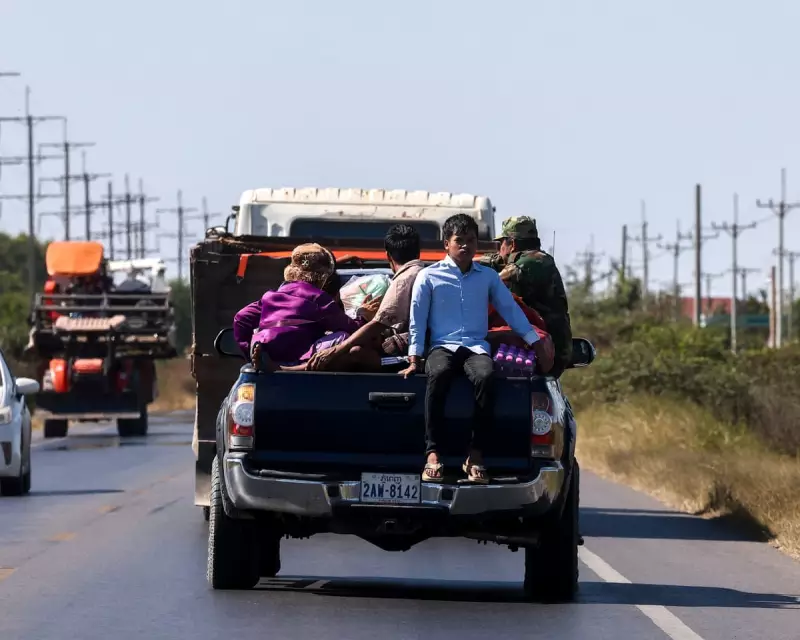
The violence has forced a massive humanitarian crisis, with over half a million people evacuated from their homes on both sides of the contested border.
Terms of the Agreement and Underlying Tensions
Beyond the cessation of fire, the joint statement mandates that both sides "maintain current troop deployments without further movement." It warns that any reinforcement would heighten tensions and harm long-term resolution efforts. The nations have also agreed to cooperate on demining and combating cybercrime.
The root cause of the clashes remains unresolved competing claims over territory along the border, which first erupted into open combat in late July. A previous ceasefire, mediated by Malaysian Prime Minister Anwar Ibrahim and supported by US pressure, proved unstable, leading to the renewed outbreak in early December.
While the immediate guns have fallen silent, the agreement represents a precarious pause in a deep-seated historical dispute, with the international community watching closely to see if this peace will hold.