Trump Reverses War End Pledge as Explosions Rock Iranian Capital
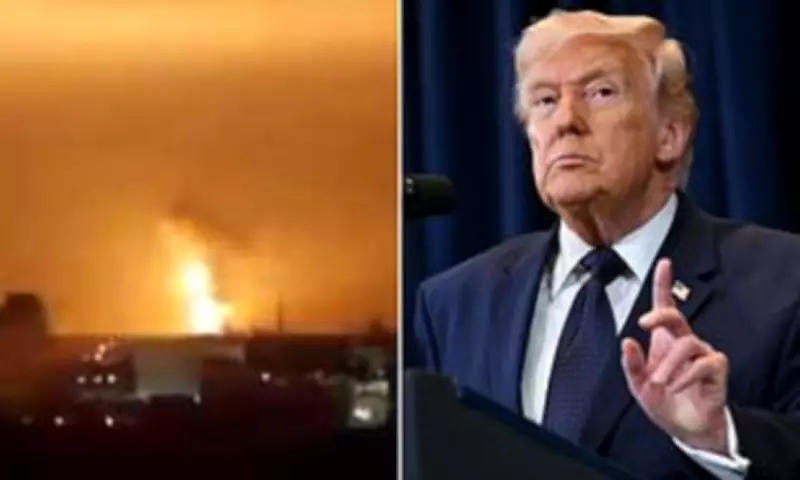
President Donald Trump has dramatically backtracked on his promise to conclude the Middle East conflict "very soon," as massive US-Israeli airstrikes struck Tehran with powerful explosions overnight. The night sky above the Iranian capital illuminated with intense glows during the latest wave of attacks, demonstrating the seriousness of Trump's vow to "go further" in the ongoing military confrontation.
Contradictory Statements from the White House
Just hours before the latest bombardment, Trump had insisted the war was "pretty much" over and claimed the military operation launched ten days earlier was progressing "very far" ahead of schedule. The American President described the extensive US and Israeli offensive as a "short-term excursion" that would conclude "pretty quickly."
However, subsequent remarks revealed Trump's willingness to continue hostilities, stating: "We've already won in many ways but we haven't won enough... we're going to go further." This contradictory messaging has created confusion about the administration's actual intentions and timeline for the conflict.
Intense Overnight Strikes on Tehran
Videos circulating from Tehran showed "unusually large" explosions across the city as the conflict intensified. One particularly dramatic recording captured a wide orange glow over western Tehran, which military analysts believe resulted from an attack on a major power distribution center. Loud detonations echoed throughout the capital, with additional strikes reported in Karaj and other Iranian regions.
The latest offensive followed Trump's assertion that Iran had "nothing left" militarily, made as B-52 bombers arrived in Britain prepared for potential deployment. Initial US estimates had suggested the conflict might continue for two weeks to two months, but Trump claimed complete military dominance, stating Iran had "no navy, no communications, they've got no air force."
Diplomatic Developments and Regional Impact
Trump engaged in an hour-long conversation with Russian President Vladimir Putin about the conflict, described by Moscow as "frank and businesslike." Despite Tehran's promise to increase missile launches, Trump warned: "They've shot everything they have to shoot, and they better not try anything cute or it's going to be the end of that country."
The war's economic consequences are spreading globally, with Britain facing potential cost-of-living increases affecting petrol prices, energy bills, and mortgage rates. Meanwhile, the UK's military response has been overshadowed by France's "unprecedented" deployment to the Mediterranean and Middle East, while Britain has yet to send ships to the region.
Market Reactions and Strategic Considerations
Trump's remarks provided some reassurance to volatile financial markets, with US oil prices dropping from $91 to $86 per barrel after he mentioned potentially taking control of the Strait of Hormuz. The Dow Jones recovered from a nearly 900-point drop to close up 200 points, while the S&P 500 gained 0.8 percent and the Nasdaq rebounded with a 1.4 percent increase.
When questioned about the strategic waterway, Trump responded that he is "thinking about taking it over" as oil tankers remain stranded in the Persian Gulf. This statement follows the Islamic Revolutionary Guard Corps' announcement that oil tankers from countries expelling US and Israeli ambassadors would be permitted passage through the strait starting today.
Humanitarian and Political Fallout
In a significant humanitarian development, five members of Iran's women's football team were granted asylum in Australia after escaping their hotel to avoid returning home, where they faced potential persecution for refusing to sing the national anthem. Trump had personally appealed to Australian Prime Minister Anthony Albanese regarding their case.
The political landscape in Iran continues to shift dramatically, with terrified Tehran residents expressing fears that new Supreme Leader Mojtaba Khamenei would prove "just as bad as his father." Trump has indicated he would support assassinating Iran's new leader if he refuses to abandon the country's nuclear program, while Israel has already vowed to "eliminate" Khamenei's successor.
Military Assessment and Future Projections
The US military reports striking over 5,000 Iranian targets and destroying 50 vessels since Operation Epic Fury began. Despite this extensive campaign, a pre-war US intelligence assessment concluded that military intervention alone was unlikely to achieve regime change in Iran.
Trump maintains that the US action was pre-emptive, declaring: "Within a week they were going to attack us 100 percent. They were ready. They had all these missiles, far more than anyone thought." He acknowledged leaving some "most important targets" untouched but claimed these could be eliminated "in one day."
When pressed about the conflict's conclusion, Trump stated it would end "soon" but not this week, further complicating predictions about the war's duration and ultimate resolution.