Rubio Proclaims Trump's Strong Commitment to Orban During Central European Tour
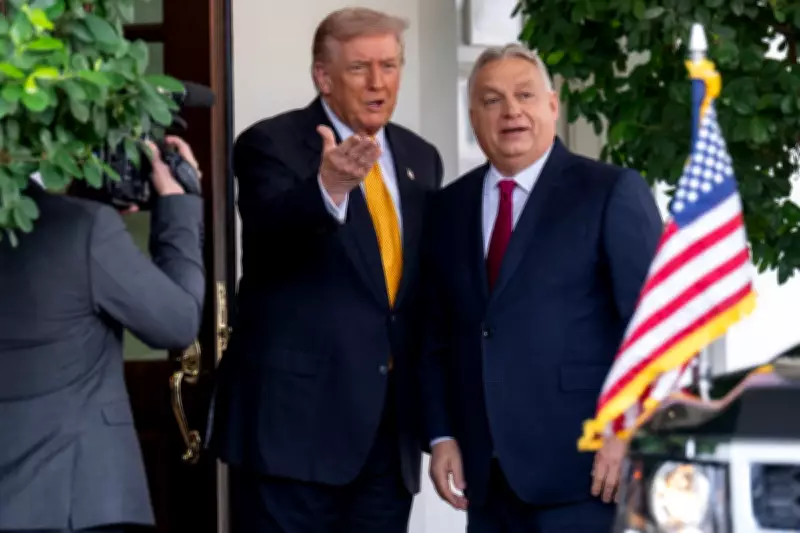
During a significant diplomatic visit to Central Europe, US Secretary of State Marco Rubio delivered a powerful endorsement for Hungarian Prime Minister Viktor Orban, declaring that President Donald Trump is deeply committed to Orban's political success. Speaking at a joint news conference in Budapest on Monday, Rubio framed this commitment as essential for American national interests, particularly while Orban remains in leadership.
A Conditional "Golden Era" for US-Hungary Relations
Rubio announced that US-Hungarian ties are entering what he described as a "golden era", but he notably appeared to condition this positive trajectory on the continuation of Orban's governance. "President Trump is deeply committed to your success, because your success is our success," Rubio stated emphatically while standing alongside the Hungarian leader. He elaborated, "We want this country to do well. It's in our national interest, especially as long as you're the prime minister and the leader of this country."
This endorsement comes at a critical juncture, with Orban facing his most formidable electoral challenge in years. An April 12 parliamentary election, set to be intensely contested, represents the biggest threat to Orban's Fidesz party since its landslide victory in 2010. The outcome is anticipated to have substantial implications not only for Hungary but for the broader landscape of conservative and far-right political movements across Europe.

Orban as a Model for the American Hard-Right
Viktor Orban has become a central figure for many on the American hard-right, who view his administration as a blueprint for Trump's own policy agenda. Specifically, Orban's stringent immigration policies and his vocal advocacy for Christian conservatism resonate strongly with key segments of Trump's political base. This alignment has solidified Orban's position as one of Trump's closest allies within Europe, despite the Hungarian leader's frequent clashes with the European Union.
Rubio's visit, which also included a stop in Slovakia, highlights the Trump administration's focus on cultivating relationships with conservative leaders in Central Europe who share critical views of the EU. Both Hungary and Slovakia have maintained notably warm ties with the Trump administration, often positioning themselves at odds with broader European Union policies and leadership.
Broader Geopolitical Context and Tensions
The Secretary of State's tour follows a year of significant strain in Transatlantic relations, marked by Trump's persistent criticism of European allies, the imposition of tariffs on EU countries, and controversial ambitions such as the attempt to acquire Greenland from NATO ally Denmark. These actions have prompted many Western European leaders to increasingly consider pursuing a more independent strategic path.
In remarks before his departure from Washington, Rubio reiterated Trump's strong support for Orban, who, according to most polls, is trailing ahead of the pivotal April election where he could potentially be voted out of power. Rubio also addressed the complex energy dynamics in the region. While most EU nations diversified their energy supplies away from Russia following the 2022 invasion of Ukraine—including through purchases of US natural gas—both Slovakia and Hungary have continued to import Russian gas and oil, a practice the United States has openly criticized.
Furthermore, Budapest has emerged as a significant hub for conservative activism, repeatedly hosting events for the Conservative Political Action Conference (CPAC), which gathers conservative activists and leaders from across the globe, with another major event scheduled for March.
Rubio concluded his public statements by framing international relations through the lens of national interest, stating, "We expect every country in the world to act in their national interest. That is what countries are supposed to do. When our national interests are aligned ... this is an extraordinary opportunity for cooperation and partnership." This philosophy underscores the administration's approach to its alliances in Central Europe and beyond.