Trump Issues Stark Warning Over Starmer's China Engagement
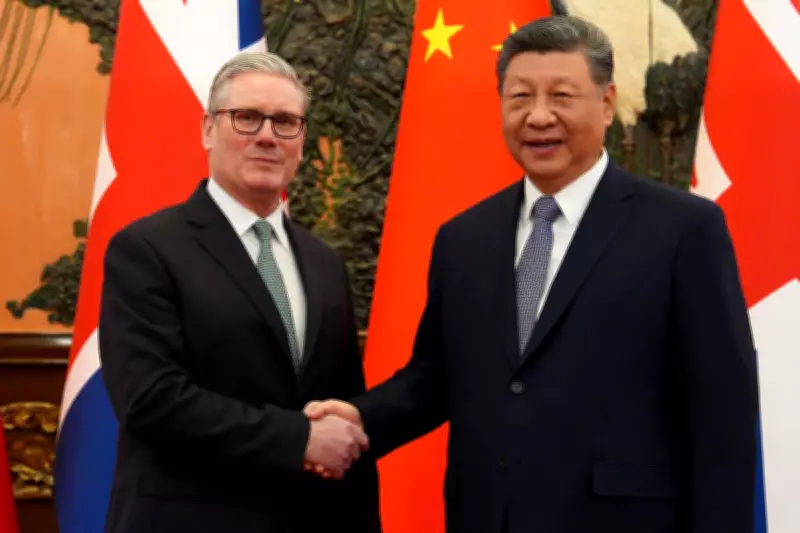
US President Donald Trump has issued a forceful warning, labelling Prime Minister Sir Keir Starmer's efforts to strengthen economic ties with China as "dangerous". The comments came as Sir Keir concluded a high-profile visit to Beijing, where he met with Chinese President Xi Jinping and advocated for a more nuanced bilateral relationship.
'Very Dangerous' Path for UK and Canada
Speaking to reporters early on Friday, President Trump expressed clear disapproval of the UK's diplomatic and economic overtures towards Beijing. "Well, it's very dangerous for them to do that, and it's even more dangerous, I think, for Canada to get into business with China," he stated. The US leader further criticised Canada's economic performance and dismissed the notion of China as a solution, remarking, "you can't look at China as the answer".
This rebuke extended to Canadian Prime Minister Mark Carney, who visited China earlier in January. During that trip, the two nations reached a preliminary agreement to reduce tariffs on selected goods. In a significant escalation, President Trump later threatened Canada with a potential 100% tariff on its exports should Ottawa proceed with a formal free trade agreement with China, a prospect Mr Carney has since denied.
Starmer's 'Sophisticated' Approach Amid Controversy
The Prime Minister's visit, the first by a UK premier since 2018, has been marked by both commercial ambition and political controversy. Sir Keir met with President Xi on Thursday, making the case for what he termed a "more sophisticated" relationship between London and Beijing. He later addressed the UK-China Business Council, where significant commercial announcements were made, including a pledge from AstraZeneca's chief executive, Sir Pascal Soriot, to invest 100 billion yuan (£10.4 billion) in China by 2030 to expand pharmaceutical manufacturing and research.
Ahead of his trip, Sir Keir explicitly rejected the idea of choosing sides between Washington and Beijing. In an interview with Bloomberg, he stated, "I'm often invited to simply choose between countries. I don't do that." He emphasised the UK's close relations with the US while arguing that ignoring China, as the world's second-largest economy, would be imprudent. "Equally, just sticking your head in the sand and ignoring China when it's the second biggest economy in the world and there are business opportunities wouldn't be sensible," he added.
Deals and Diplomatic Delicacy
The visit yielded concrete agreements, including a halving of tariffs on Scotch whisky to 5% and the removal of visa requirements for UK citizens visiting China for fewer than 30 days. Sir Keir's itinerary included meetings with businesses in Beijing and a planned stop in Shanghai before departing for Tokyo to meet Japanese Prime Minister Sanae Takaichi.
However, the trip has faced significant domestic criticism. Political opponents have accused the Prime Minister of "kowtowing" to President Xi. Sir Keir also faced pressure to raise sensitive human rights issues, including the jailing of Hong Kong pro-democracy campaigner Jimmy Lai and the treatment of the Uighur minority. The Prime Minister reported having a "respectful discussion" on these matters, describing such engagement as "part and parcel of the reason to engage".
Downing Street remained guarded on the specifics of these discussions, declining to detail conversations on sanctioned MPs, the Uighur community, or China's purchase of Russian oil. The government's official position calling for Jimmy Lai's immediate release was reiterated, though officials would not confirm if Sir Keir directly requested his release from President Xi. According to his son, the 78-year-old British national has endured five years in solitary confinement under Hong Kong's national security law, treatment described as amounting to "torture".
No 10 also indicated openness to a potential future state visit to the UK by President Xi, whose last such visit was in October 2015. As Sir Keir's controversial mission concludes, the contrasting warnings from Washington and the pursuit of economic opportunity in Beijing underscore the complex diplomatic tightrope the UK government is attempting to navigate.