Trump Announces Sanctions Relief After Conversation with Putin
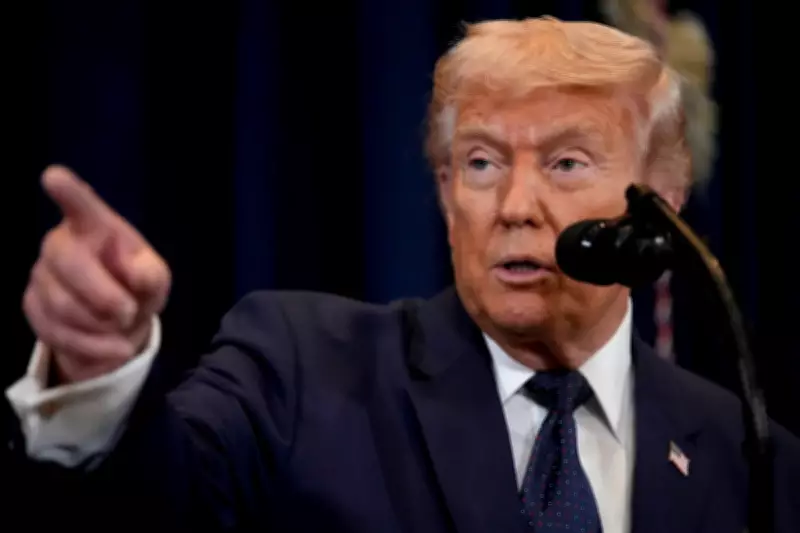
In a news conference held in Miami on Monday, President Donald Trump revealed plans to ease oil-related sanctions targeting "some countries." This decision follows a phone discussion with Russian President Vladimir Putin, aimed at addressing shortages triggered by the ongoing US-Israeli conflict with Iran.
The US president stated, "So we have sanctions on some countries. We're going to take those sanctions off until the strait [of Hormuz] is up." He provided no further specifics on which nations would benefit or the duration of this relief.
Impact on Global Oil Markets and Russian Relations
Reuters reports that this move could lead to a further relaxation of sanctions on Russian oil, complicating international efforts to penalize Moscow for its war in Ukraine. With the Strait of Hormuz largely blocked to oil tankers, benchmark crude prices soared above $100 per barrel on Monday, reaching peaks not seen since Russia's 2022 invasion of Ukraine, before slightly retreating.
Other measures under consideration to stabilize markets include potential releases from strategic oil reserves or restrictions on US exports. Last week, the US granted India a temporary waiver to purchase specific Russian oil cargoes, helping mitigate losses in Middle Eastern supply.
White House Strategies and Regional Tensions
A previously announced White House initiative to provide naval escorts and insurance for tankers navigating the Strait of Hormuz has yet to significantly increase shipping through this critical waterway. Meanwhile, Putin emphasized Russia's readiness to supply oil and gas to Europe, warning that the Iran conflict has sparked a global energy crisis and could halt production dependent on Hormuz transit.
Russia, as the world's second-largest oil exporter and holder of the biggest natural gas reserves, sees an opportunity in the current Middle East turmoil, though Putin noted the price surge may be temporary.
Ukraine's Role and Ongoing Conflict
Ukrainian President Volodymyr Zelenskyy disclosed that Ukraine sent interceptor drones and operators to protect US bases in Jordan last week, responding to requests from 11 countries affected by the US-Israeli war against Iran. This move aims to bolster relations with Gulf and Middle Eastern nations under Iranian attack.
Zelenskyy also expressed readiness for US-backed peace talks with Russia "at any moment," but noted that international attention is currently diverted to the Iran conflict, leading to a postponement of an upcoming meeting.
Recent Attacks and Diplomatic Disputes
In Ukraine, a Russian drone strike near a high-rise in Kharkiv injured six people, including a child, and set cars ablaze, according to Mayor Ihor Terekhov. Kharkiv, located 30km from the Russian border, has been a frequent target since withstanding early advances in 2022. Separately, shelling in Dnipro injured seven individuals, with regional governor Oleksandr Ganzha sharing images of damaged buildings and rubble.
On the diplomatic front, Ukraine has urged Venice Biennale organizers to reconsider Russia's participation in the art exhibition, arguing it should not serve as a platform to whitewash war crimes. Despite criticism, including from Italy's culture ministry, organizers have allowed Russia to take part in the event running from May to November.
Financial and Legal Controversies
Russian oligarch Roman Abramovich has escalated a dispute with the British government over the £2.5 billion from his sale of Chelsea FC. Despite sanctions imposed in 2022 due to his ties to Putin's regime, Abramovich insists the funds are his to allocate, while Britain seeks to ringfence the money for use exclusively in Ukraine.