Trump Vows No Fear in Sending Ground Troops to Iran as Conflict Intensifies
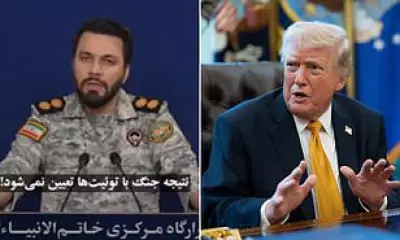
President Donald Trump asserted on Tuesday that he is 'not afraid' to deploy US ground troops within Iran, underscoring his aggressive stance in the ongoing Middle East war. Speaking from the Oval Office alongside Ireland's Taoiseach Micheál Martin, Trump faced numerous questions about the escalating conflict with Iran.
'I'm Not Afraid of Anything,' Trump Declares
When a reporter asked if deploying boots on the ground in Iran could lead to another Vietnam-like scenario, Trump swiftly responded, 'No,' and added, 'I'm not afraid of anything.' While he has previously mentioned using troops only if 'necessary,' the President has provided scant details on what conditions would trigger such an invasion.
During the meeting, Trump also revealed that the United States has considered destroying Iran's energy infrastructure, boasting, 'We could take out their electric capacity in one hour,' and claiming, 'there's nothing they can do.' Despite his assertion that the war should last only weeks, administration officials are increasingly concerned that the offensive could extend far longer.
Resignation and Internal Tensions Surface
The President addressed the resignation of his top counterterrorism official, Joe Kent, who stepped down early on Tuesday over frustrations with the Iran war. Trump commented, 'I always thought he was a nice guy, but I thought he was very weak on security. Very weak on security.' He added, 'But when I read his statement, I realized that it's a good thing that he's out, because he said Iran was not a threat.'
In a dramatic public break, Kent published a letter stating he 'cannot in good conscience support the ongoing war in Iran,' and argued that 'Iran posed no imminent threat to our nation, and it is clear that we started this war due to pressure from Israel and its powerful American lobby.' Three sources familiar with the matter told Axios that the conflict could potentially run into September, a timeline much longer than Trump has publicly acknowledged.
Military Buildup and Congressional Concerns
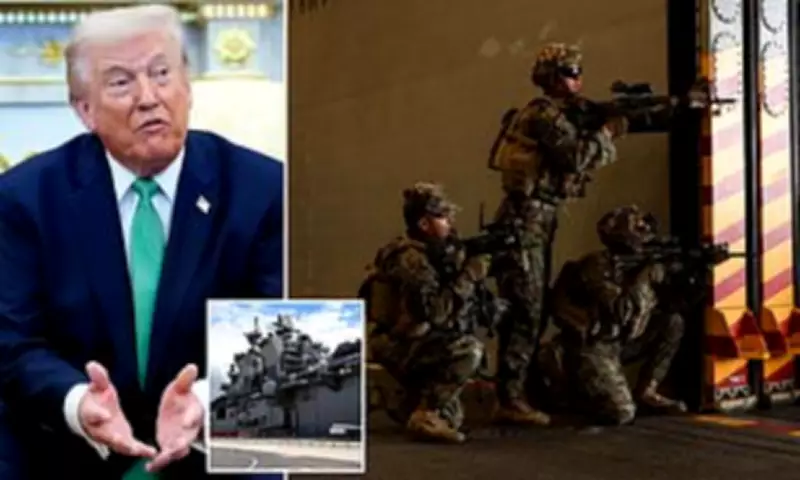
Evidence of a potential ground invasion is mounting, with the US military recently ordering 2,000 Marines and their equipment, along with several Naval vessels, to deploy from the South Pacific near the Philippines to the Middle East. The USS Tripoli and USS New Orleans, part of an Amphibious Ready Group (ARG) totaling nearly 5,000 service members, are capable of conducting amphibious assaults with aircraft like F-35 fighter jets and helicopters.
It is estimated that the ARG will arrive in the Middle East within 10 to 15 days from its deployment late last week, positioning the force near Iran by the end of this month. On Capitol Hill, concerns are rippling among lawmakers. Democratic Senator Richard Blumenthal of Connecticut warned after a classified briefing, 'We seem to be on a path toward deploying American troops on the ground in Iran to accomplish any of the potential objectives here.' He emphasized, 'So the American people deserve to know much more than this administration has told them about the cost of the war, the danger to our sons and daughters in uniform and the potential for further escalation and widening of this war.'
Public Opposition and Polling Data
Americans are largely against sending troops to Iran, according to a Quinnipiac survey of 1,000 US voters published on March 9. The results showed that 74 percent of respondents oppose deploying ground troops into Iran, and a majority of 53 percent stated they are against the war altogether. This public sentiment highlights the growing divide over the administration's aggressive military strategies in the region.