Trump Issues Stark Warning to Iran as US Bombers Deploy to UK Base
Donald Trump has delivered a severe warning to Iran, stating the nation would be hit "very hard" as the United States prepares for a potential missile onslaught ominously dubbed "The Big One." The US President reacted with fury to an apology from Iran to its neighbouring countries for recent air strikes, dismissing the gesture as insincere.
Military Buildup at RAF Fairford
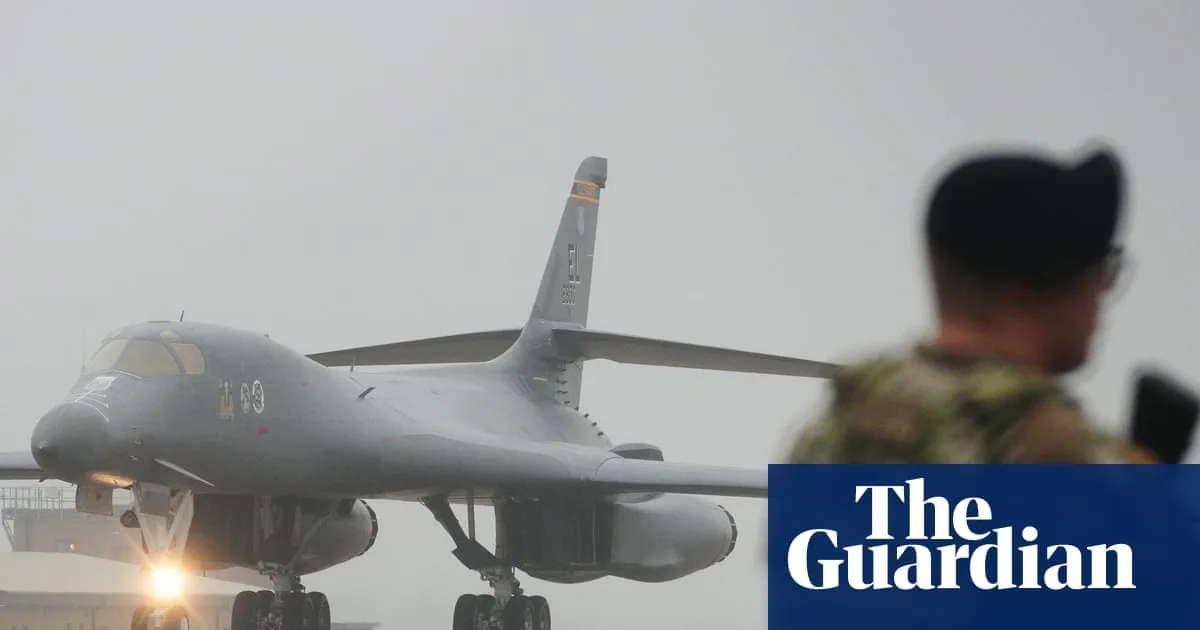
The warning coincides with the arrival of US Air Force B-1 Lancer bombers at RAF Fairford in Gloucestershire. These strategic supersonic aircraft, nicknamed "Bones" by the US military, are capable of hitting enemy targets with payloads of up to 34 tonnes of explosives. Their deployment to the UK base strongly suggests that Trump's previously threatened "mega-attack" on Iran, referred to as 'the big one,' may be imminent.
Armed forces chief Sir Richard Knighton indicated he expects the US to launch missions from the UK "within the next few days." Three additional B-1 Lancer aircraft have arrived at Fairford, bringing the total to four, as the regional crisis intensifies.
Trump's Ultimatum and Regional Apology
Trump asserted that Iran's promise of non-aggression toward neighbours was "only made because of the US Israeli military attacks" and claimed Iran was being beaten "to HELL." He declared the conflict could only conclude if Iran announces an unconditional surrender or when "they can't fight any longer because they don't have anyone or anything to fight with."
Iranian President Masoud Pezeshkian had apologised to neighbouring states in a video address broadcast on state media, stating Tehran would not attack them "unless attacked first." However, this apology was later contradicted by Iran's hardline military guard. Shortly after the address aired, Qatar reported intercepting a missile attack.
Escalating Regional Violence and Retaliation
Defiant Iranian military chiefs have launched a series of retaliatory strikes across the Middle East, targeting Iraq, Qatar, Saudi Arabia, and Israel in assaults that have left the region in flames. Drones struck oil facilities and airports in Iraq, while US-led troops gunned down several potential attacks over the Kurdish city of Erbil amid warnings of possible attacks on hotels.
The Islamic Resistance in Iraq, a network of Iranian-backed Shia factions, claimed responsibility for an attack on a US military base near Baghdad Airport 'in retribution' for the death of Iranian Supreme Leader Ali Khamenei, who was killed last Saturday. Iran also fired its twenty-third round of strikes, with missiles detected heading toward Israel from the region.
Israel has begun a new "broad wave" of strikes targeting Iranian infrastructure, while large-scale evacuations were carried out in the suburbs of southern Beirut, Lebanon.
Evacuation Efforts and Travel Disruption
The number of British nationals evacuated from the Middle East has risen to more than 9,000. A second Government charter flight carrying British citizens from Oman landed at Gatwick Airport early yesterday, joining approximately 6,500 Britons who have returned from the United Arab Emirates since widespread conflict began.
Emirates temporarily suspended all flights to and from Dubai after blasts were reportedly heard in the city, though operations partially resumed about thirty minutes later. Dubai International Airport urged people not to travel unless contacted by their airline confirming a flight.
Qatar Airways announced it would operate a "limited relief corridor" with flights from Doha to Heathrow, Paris, Madrid, Rome, and Frankfurt on Saturday. Etihad Airways stated it would resume a "limited commercial flight schedule" until March 19, including flights between Abu Dhabi and Heathrow, Manchester, and Dublin. More flights to the UK from the region are expected in coming days.
International Response and Diplomatic Stance
The Prime Minister affirmed the UK stands ready to help defend Saudi Arabia if needed. This statement follows criticism from allies over Britain's response to the crisis, particularly regarding the defence of Cyprus, where a UK base was struck by a drone earlier this week.
Air defence destroyer HMS Dragon is not expected to sail to the eastern Mediterranean until next week, while France and Greece have already deployed military assets to defend the island. More than 160,000 people in the region have registered their presence with the Foreign Office as the crisis deepens.