Trump Issues Stark Warning to Iran Over Qatar Gas Field Attacks
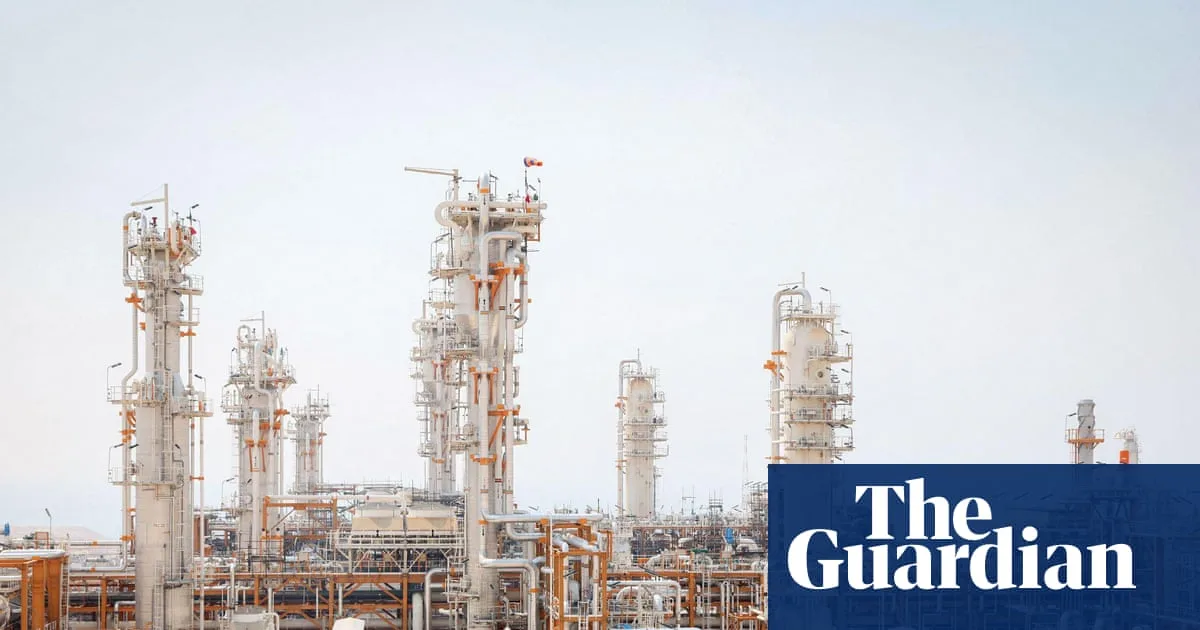
Former President Donald Trump has issued a dramatic threat against Iran, warning that the United States will "massively blow up" the South Pars natural gas field if Tehran continues its attacks on Qatar's energy infrastructure.
In a fiery Truth Social post, Trump declared that if Iran repeats its Wednesday assault on Qatar's Ras Laffan gas fields, the US response would be of "an amount of strength and power that Iran has never seen or witnessed before."
Escalating Regional Conflict
The warning comes as Qatar's Ras Laffan facility, the world's largest liquefied natural gas complex, was struck for a second time on Thursday morning. Iranian ballistic missiles caused what Qatar described as "extensive damage" around the industrial site, though no injuries were reported.
This follows Wednesday's attack where Iran fired five ballistic missiles at Qatar, with four intercepted but the fifth striking Ras Laffan and causing significant fires.
The economic impact has been immediate and severe. Oil prices surged to $112 per barrel in early Asian trading as the conflict threatens global energy supplies. Brent crude rose 4.27 percent while US West Texas Intermediate climbed 2.73 percent to $98.95.
Broader Regional Disruption
The United Arab Emirates suspended operations at its Habshan gas facility following missile-related incidents, with debris from intercepted projectiles also affecting the Bab oil field. Saudi Arabia reported that its air defences had destroyed 19 drones in the Eastern Province and four missiles launched toward Riyadh.
Maritime security has also been compromised, with a vessel east of the Strait of Hormuz catching fire after being struck by an unknown projectile, according to the UK's maritime security agency.
Political and Military Developments
The Pentagon has reportedly asked the White House to approve a more than $200 billion funding request to Congress to continue the war effort against Iran. This comes nearly three weeks since the US and Israel began coordinated strikes against what they describe as Iran's "security apparatus."
In Washington, the Republican-led Senate voted down a Democrat effort to curb President Trump's war powers for the second time, defeating a War Powers Resolution that would have required congressional approval for further attacks against Iran.
Trump has maintained that Israel acted independently in striking Iran's South Pars gas field, stating that "the United States knew nothing about this particular attack, and the country of Qatar was in no way, shape, or form, involved with it."
International Reactions and Consequences
Saudi Arabia's foreign minister declared that trust in Iran has been "shattered," reflecting the deepening regional divisions. Kuwait announced it would close its Grand Mosque for Eid al-Fitr due to the "current circumstances" in the region.
Australia's Prime Minister Anthony Albanese urged citizens to avoid panic buying petrol despite localized shortages, while the Reserve Bank of Australia warned that the Iran conflict poses a "material risk" to the Australian economy.
White House Deputy Chief of Staff Stephen Miller emphasized that "President Trump will not allow this regime to hold us hostage with energy blackmail," as Iran's actions have effectively restricted traffic through the strategically vital Strait of Hormuz, which carries approximately one-fifth of the world's oil.
The US is reportedly considering deploying additional military assets to secure shipping through the strait, though Trump's call for allies to send escort ships has so far been rebuffed.