Trump Delivers Stark Ultimatum to Iran Over Nuclear Programme
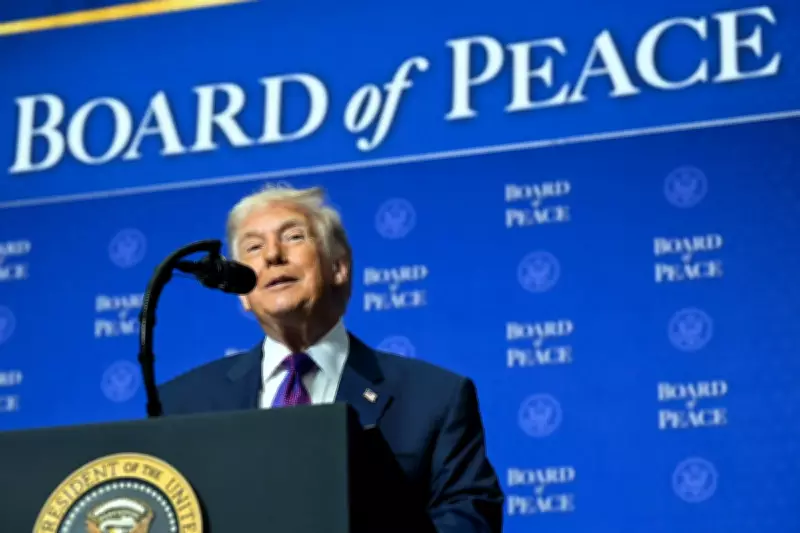
US President Donald Trump has issued a direct and urgent ultimatum to Iran, demanding the nation agree to a nuclear deal within 10 to 15 days or face severe consequences. Speaking at the inaugural meeting of his Board of Peace in Washington DC, Trump emphasised the necessity of a "meaningful" agreement, warning that failure would result in "really bad things" happening. This declaration comes amidst a significant and rapid US military buildup across the Middle East, heightening fears of an imminent conflict.
Diplomatic Deadline Amid Military Mobilisation
President Trump explicitly stated his impatience with the stalled negotiations, asserting that "10 to 15 days is enough time" for Iran to comply. The talks, which recently concluded in Geneva without a breakthrough, have been deadlocked over broader demands from the US and Israel for Iran to scale back its missile programme and sever ties with regional armed groups. Concurrently, the US is reinforcing its military posture, with reports indicating the deployment of an additional 50 combat aircraft, including F-35s and F-22s, to bases in Arab Gulf states. The USS Gerald R. Ford aircraft carrier has also been repositioned near the Mediterranean, enhancing strike capabilities.
Iran's Defiant Response and Regional Anxiety
In a firm rebuttal, Iran has vowed to respond "decisively" to any military aggression. In a formal letter to UN Secretary-General Antonio Guterres, Iran's permanent mission declared it would consider all assets of a "hostile force" in the region as legitimate targets. However, the letter also clarified that Iran does not seek tensions and will not initiate war. This stance has done little to assuage international concerns, as regional allies take precautionary measures. Poland has urgently advised its citizens to leave Iran, while Germany has relocated non-essential military personnel from Iraq. The escalating situation has sparked widespread anxiety about a potential full-scale war.

UK Withholds Base Access for Potential Strikes
In a significant diplomatic development, the British government has declined to grant the United States permission to use UK military bases, such as RAF Fairford and Diego Garcia, for potential strikes on Iran. This decision, reported by the BBC, marks a departure from previous arrangements where these bases were utilised for Middle Eastern operations. A UK government spokesperson declined to comment on operational specifics but reiterated the position that "Iran must never be able to develop a nuclear weapon" and expressed support for the ongoing political process. President Trump referenced these bases in a Truth Social post, suggesting their use might be necessary to counter a "highly unstable and dangerous regime."
Strategic Considerations and Human Cost
Reports indicate that President Trump is considering a limited initial military strike aimed at coercing Iran into compliance, rather than an immediate full-scale war. According to the Wall Street Journal, such an action would target select military or government sites, with broader operations to follow if Iran remains defiant. Analysts warn that any military engagement could last several weeks and have profound repercussions across the Middle East, potentially disrupting global oil supplies and incurring significant human and economic costs. The situation is further complicated by the sentencing of a British couple in Iran to 10 years imprisonment on espionage charges, highlighting the tense bilateral relations.
Broader Implications and Congressional Scrutiny
The escalating crisis has ignited debate within the United States regarding the constitutional and moral dimensions of potential military action. Critics argue that President Trump must seek congressional approval and transparently communicate the risks to the American public before embarking on any major campaign. The element of surprise is deemed absent, necessitating a clear explanation of the objectives and potential casualties among US personnel, allies, and Iranian civilians. As the deadline approaches, the international community watches closely, hoping for a diplomatic resolution to avert a conflict that could destabilise the entire region.