Trump's Board of Peace Summit Opens Amid European Boycott and Scepticism
The inaugural meeting of Donald Trump's Board of Peace is set to convene in Washington DC on Thursday, but the gathering will proceed without several key European allies who have declined participation. These nations have voiced strong criticism regarding the organisation's ambiguous funding sources and its broad political mandate, casting a shadow over the summit's legitimacy and effectiveness.
European Allies Withdraw Support Over Transparency Concerns
Dozens of world leaders and national delegations are expected to attend the meeting at the renamed Donald J Trump Institute of Peace. However, major European powers have chosen to abstain, highlighting concerns about the board's opaque financial backing and its perceived attempt to undermine established international bodies like the United Nations. This boycott represents a significant diplomatic setback for the White House initiative, which aims to position itself as a central player in global conflict resolution.
Gaza Reconstruction and Expanded Mandate
The Board of Peace was initially established with the primary objective of overseeing the reconstruction of Gaza, a region devastated by the ongoing war with Israel and mired in a severe humanitarian crisis. President Trump has announced via social media that countries have pledged more than $5 billion towards this effort. However, the board's mandate has since been expanded by Trump to address other global conflicts, raising questions about its focus and operational capacity.

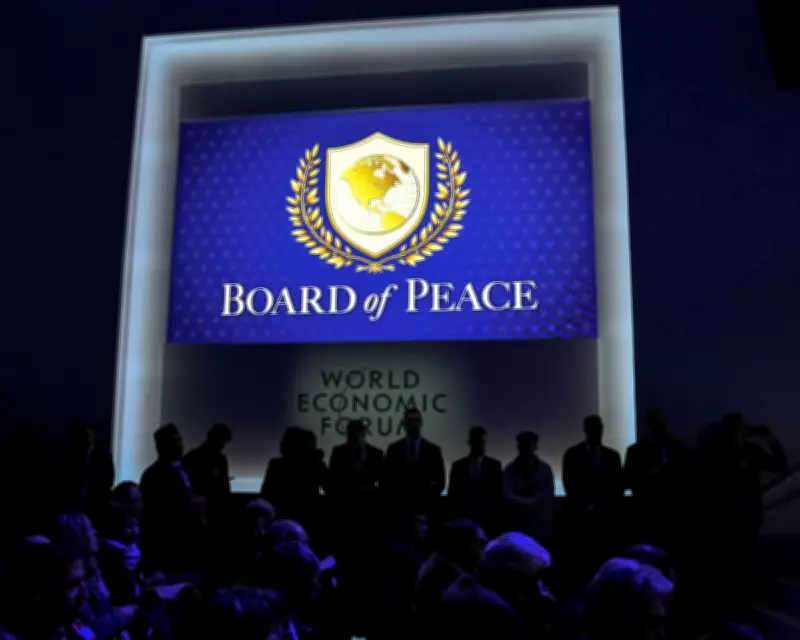
Despite these ambitious pledges, expectations remain low both for the Washington meeting and for progress in the Middle East. A 100-day peace and recovery plan, previously announced by Jared Kushner at the World Economic Forum in Davos, has stalled, and aid delivery into Gaza continues to be minimal.
Expert Analysis and Further Criticisms
Aaron David Miller, a senior fellow at the Carnegie Endowment for International Peace and former US diplomat, offered a sceptical perspective. "The board is a convenient way for a president who's interested in quick wins, transactions and a lot of motion in lieu of serious movement as a way to project that things are somehow ... not dead," he said, referring to diplomatic efforts. "So you could get some impressive pledges. But pledges are one thing, delivering is another."
The initiative suffered another blow this week when Pope Leo XIV announced that the Vatican would not join the board. Critics argue that the board is an attempt to usurp authority from other major international organisations and may allow Trump to retain his position as chair even after his presidency concludes.
Other Key Developments in US Politics
The article also highlights several other significant stories from the political landscape:

- Les Wexner Testifies Before Congress: The former CEO of Victoria's Secret, Les Wexner, testified before a congressional committee regarding his past ties to Jeffrey Epstein, asserting he has "done nothing wrong" and has "nothing to hide".
- Environmental Lawsuit Against EPA: More than a dozen health and environmental justice groups have sued the Environmental Protection Agency over its revocation of the "endangerment finding," a landmark legal determination that underpins US federal climate regulations.
- Trump Warns Starmer on Chagos Islands: Donald Trump urged UK Labour leader Keir Starmer not to hand the Chagos Islands over to Mauritius, calling it a "big mistake." A deal agreed last year would see Britain cede control but lease Diego Garcia for a joint US-UK military base.
- Immigration Policies Impact Hospitality: Trump's immigration policies are reportedly having a chilling effect on the US hospitality industry, where nearly a third of workers are immigrants, according to the largest hospitality union.
- Union Membership Rises: Despite the Trump administration's efforts to curtail collective bargaining, union membership soared to a 16-year high in 2025, as per new data from the Bureau of Labor Statistics.
Additional News Briefs
Other notable events include the tragic confirmation of eight skiers dead after an avalanche in California's Sierra Nevada, the Trump administration releasing funds for the Gateway rail tunnel project, Meta CEO Mark Zuckerberg testifying in a social media trial, Extinction Rebellion facing a federal investigation, NYU Langone Health closing its gender-affirming care program for minors, and a media regulator claiming journalists were tricked into covering a story about Stephen Colbert.