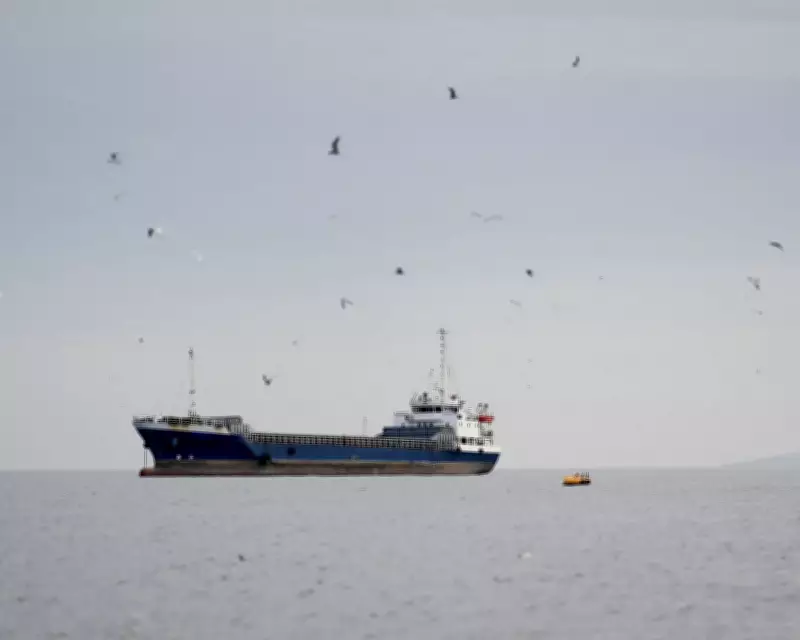
Trump Announces US Naval Blockade of Hormuz Strait as Iran War Tensions Escalate
In a dramatic escalation of the US-Israel conflict with Iran, former President Donald Trump has declared a US naval blockade of the Strait of Hormuz, effective from Monday at 10am ET. This move, announced during a press briefing in Maryland on Sunday, follows the collapse of weekend peace talks in Pakistan and has triggered immediate market reactions, with oil prices surging and global tensions rising sharply.
Blockade Details and Immediate Impacts
Trump stated unequivocally that he does not care if Iran returns to negotiations, asserting, "I don't care if they come back or not. If they don't come back, I'm fine." The blockade, coordinated by US Central Command, will target all Iranian Gulf ports and coastal areas, effectively seizing control of maritime traffic in the strategic waterway. In response, Iran's Revolutionary Guard warned that any approach by military vessels to the strait would be considered a violation of the ceasefire, heightening fears of further military confrontation.
The financial markets reacted swiftly to the announcement. US crude oil prices jumped by 8% to $104.24 per barrel, while Brent crude, the international benchmark, rose 7% to $102.29. Australia's share market experienced a sharp decline on Monday morning, reflecting broader economic anxieties. According to Lloyd's List Intelligence, all traffic through the Strait of Hormuz has ceased, with two vessels turning back after the blockade was declared.

Global Reactions and Economic Fallout
Iran's parliamentary speaker, Mohammad Bagher Ghalibaf, taunted Trump on social media, posting, "Enjoy the current pump figures. With the so-called 'blockade', soon you'll be nostalgic for $4–$5 gas." He earlier dismissed Trump's threats, vowing that Iran would not bow to pressure and would fight back if provoked. Meanwhile, the Wall Street Journal reported that Trump and his advisers are considering resuming limited military strikes in Iran, in addition to the blockade, citing officials familiar with the situation.
The economic implications are severe. Michael Lynch, a distinguished fellow at the Energy Policy Research Foundation, estimated that the blockade could push oil prices up by an additional $5 to $10 per barrel. The United Nations Development Programme warned in a report that over 32 million people worldwide could be plunged into poverty due to the war's fallout, with developing nations bearing the brunt of a "triple shock" involving energy, food, and weakened economic growth.
Diplomatic and Political Dimensions
Trump also launched a scathing attack on Pope Leo XIV, accusing him of being "weak on crime and terrible for foreign policy," and urging him to "focus on being a Great Pope, not a Politician." This criticism came after the Pope denounced a "delusion of omnipotence" as fueling the conflict and called for peace negotiations. In a separate development, Australian Prime Minister Anthony Albanese urged a swift resumption of talks to end the war, advocating for the full reopening of the Strait of Hormuz and free navigation for all nations.
As the situation unfolds, the global community watches with apprehension, fearing further escalations that could destabilize regional security and exacerbate economic hardships worldwide.