Trump's Iran Strategy Driven by External Influences as Inner Circle Stays Quiet
President Donald Trump's decision-making on Iran is reportedly being shaped more by forces outside his formal Cabinet than by his immediate advisors, who have maintained a state of relative silence on the escalating conflict. According to sources familiar with internal discussions, some of Trump's closest advisers privately view his campaign as misguided, yet direct dissent within the administration remains virtually non-existent.
External Pressure and Internal Hesitation
Privately, Israeli Prime Minister Benjamin Netanyahu, media magnate Rupert Murdoch, and several conservative voices have urged Trump to strike Iran, as revealed by anonymous sources speaking to Bloomberg. These external influences appear to be carrying significant weight in the President's deliberations, overshadowing the input from his official cabinet members.
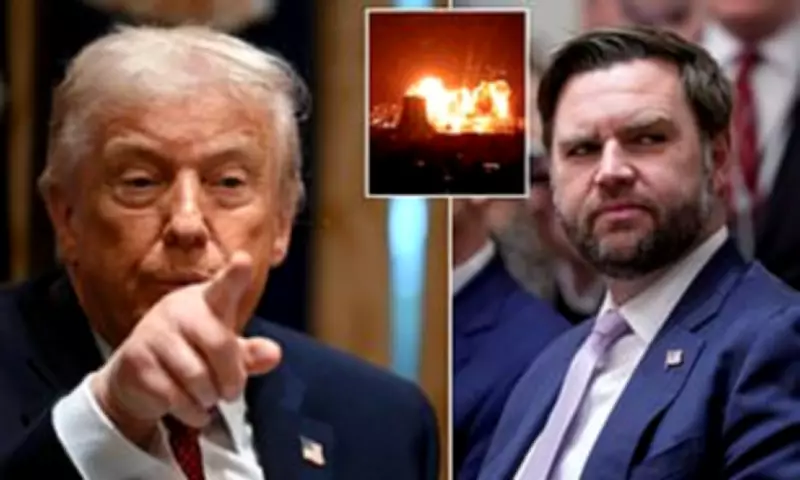
Within Trump's Cabinet, key figures closest to him have reportedly been quieter about military engagement with Iran and the deployment of American soldiers. Those advisors include Secretary of State Marco Rubio, Vice President JD Vance, and White House Chief of Staff Susie Wiles. While rarely voicing opposition directly to the president, these officials have approached the situation with caution.

Administration Dynamics and Strategic Concerns
White House Chief of Staff Susie Wiles has focused on clarifying the President's strategic alternatives, while Vice President JD Vance has pushed for blunt honesty from senior officials, reportedly interrogating the logistical realities and long-term mechanics of a potential conflict. Despite these internal discussions, direct criticism of Trump's approach has been minimal within official channels.
State Department spokesperson Tommy Piggot responded to reports of division within the administration, dismissing them as "an old familiar story of people not knowing what they are talking about, pretending that they do." Piggot emphasized that "there is no division" and that "President Trump is making the world safer, and the entire administration is lockstep in that effort."
Historical Context and Current Tensions
Trump's former national security adviser John Bolton provided insight into the President's management style, noting that "what he wanted for his advisers in his second term was people who were more amenable just to saying, 'Yes, sir' when he wanted to do X or Y, as opposed to people who said, 'Have you considered this or that or the other thing.'" This approach appears to be influencing current dynamics as the conflict crosses the one-month mark.
White House Press Secretary Karoline Leavitt countered this characterization, asserting that President Trump "always wants to hear the honest opinions of everyone in the room." Leavitt explained that "anyone who has actually been present for meetings with him will tell you he often solicits the opinions of all of his advisers, no matter their title or expertise, asking, 'What do you think?' And he expects honest feedback."
Political Ramifications and External Reactions
As the administration grapples with alienated allies and volatile energy prices, Republican strategists are eyeing a darkening horizon for the November midterms. The war's potential to cannibalize electoral margins has created mounting anxiety within the party, particularly as economic sentiment and the rising cost of living become central campaign issues.
The shift toward conflict has drawn fierce backlash from influential conservative voices like Steve Bannon and Tucker Carlson, who have criticized the president for abandoning his "America First" principles. Conversely, figures such as Senator Lindsey Graham and Mark Levin continue to advocate for a full-force approach to the war with Iran.
Intelligence Community and Iranian Response
Even those within Trump's advisory circle who once voiced opposition to military action have remained quiet. Testifying before Congress last week, Director of National Intelligence Tulsi Gabbard deferred entirely to Trump, asserting that the President remains the "only person" capable of determining if Iran continues to pose an "imminent threat."

Meanwhile, Iran has responded with taunts following Trump's claim that the US was halting strikes on Iranian energy infrastructure after what he called "very good" peace talks. An Iranian official told Fars News Agency, which is aligned with the Islamic Revolutionary Guard Corps, that there is "no direct or indirect contact with Trump." The anonymous source suggested Trump backed down after "hearing that our targets would include all power stations in West Asia."
Military Developments and Future Prospects
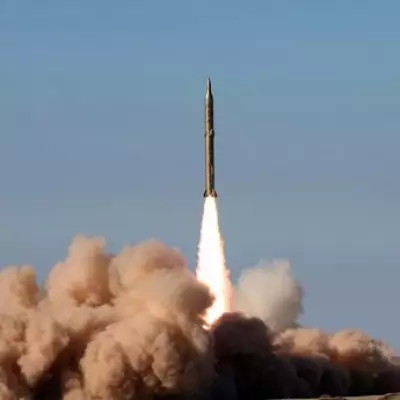
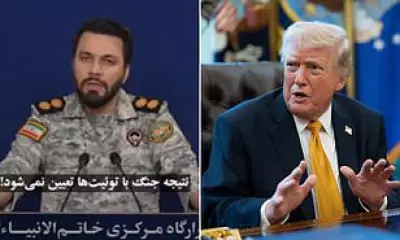
Iranian Major General Abdollahi added to the tensions by declaring that "the use of a new, secret weapon will begin soon and it will bring an end to the enemy's operations." These statements came just minutes after Trump claimed the two countries had held "productive conversations regarding a complete and total resolution of our hostilities."
US and Iranian diplomats have previously clashed over the regime's ballistic missile and nuclear enrichment programs, as well as their current defense stockpiles. As the administration teeters on the edge of a systemic crisis, the weight of the President's decisions becomes increasingly clear, with the conflict's trajectory remaining uncertain amid these complex diplomatic and military dynamics.