Why Iran is the Wrong War for Trump to Pursue
Donald Trump may take considerable pride in his formidable naval 'Armada' positioned menacingly off the Iranian coast, but the former US president's foreign policy focus appears dangerously misplaced. According to analysis, Trump could achieve a far more significant strategic victory, bolster American credibility, and support key allies by redirecting his attention from Tehran to helping Ukraine secure a decisive win against Russian invasion forces.
A Chaotic and Unprincipled Approach
The latest foreign policy manoeuvres from the Trump administration regarding Ukraine have been characterised as chaotic, unprincipled, and dangerously effective. While securing a brief, week-long pause in Russian bombardment during freezing winter conditions, the agreement comes with potentially devastating strings attached. The dangerous concession being demanded appears to be Kyiv's surrender of its most fortified defensive positions and key cities without resistance, in exchange for a temporary and fragile ceasefire.
This approach represents backing the wrong side in Eastern Europe while simultaneously threatening to ignite an uncontrollable conflict in the Middle East. American negotiators have reportedly pressured Volodymyr Zelensky's government to cede entire regions of Donetsk, Zaporizhzhia, and Kherson as concessions to Moscow's brutal invasion, which has cost Russia an estimated 1.2 million casualties.
Abandoning Ukraine While Threatening Iran
The Trump administration has dramatically severed military aid to Ukraine, restricting support to limited intelligence sharing. This has left Ukraine's energy infrastructure critically vulnerable to Russian air attacks, resulting in widespread power outages for civilians during harsh winter months. American support for this Western democracy has effectively collapsed under this policy shift.
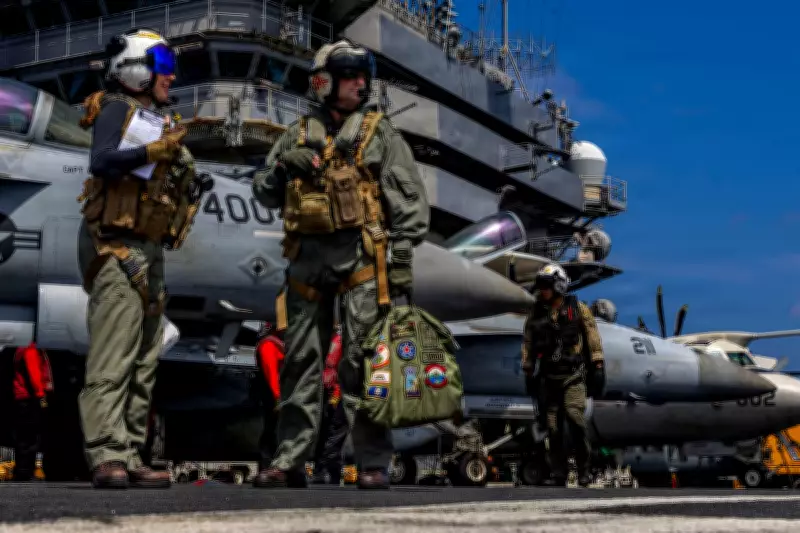
Meanwhile, Trump has assembled a staggering naval force led by the USS Abraham Lincoln aircraft carrier, threatening Iran with overwhelming firepower. The demands placed on Tehran include abandoning its nuclear programme, dismantling missile capabilities, and ending support for proxy groups across the region. Notably, all rhetoric about protecting Iranian protestors has been abandoned, despite previous encouragement and promises of assistance.
The Perilous Consequences of Attacking Iran
Bombing Iran's oppressive state apparatus might have provided a principled justification for intervention, following historical precedents in Somalia, Yugoslavia, and Libya. However, that moment has passed, and an attack now would target a sovereign nation with no coherent plan for the subsequent aftermath or regional stabilisation.
The attraction for Trump appears to be potential economic gains for American oil companies and perceived benefits for Israel. However, Iran poses minimal direct threat to US national security, unlike Russia's expansionist aggression in Ukraine, which directly threatens NATO allies and American bases across Europe.
An American attack triggering regime collapse in Iran could unleash uncontrollable centrifugal forces. Iran's sophisticated security infrastructure, deeply ideologically committed to the Islamic Revolution, could mobilise global terror networks in retaliation. Their expertise, demonstrated during the Iraq occupation in organising insurgent cells and advanced bomb-making, presents a formidable threat. Anti-Western sentiment is already potent following US support for Israel's Gaza campaign, which a UN commission suggested 'amounts to genocide'.
Ukraine Presents a Clearer Strategic Choice
Trump has a far more deserving arena for constructive intervention: Ukraine. With restored American military support, particularly air defence systems and long-range missiles, Ukraine could effectively defend its territory and airspace against Russian invaders.
Ukraine now fields a battle-hardened army of one million personnel with extensive combat experience. Integrating Ukraine into European security structures and eventually NATO would represent significant long-term savings for American taxpayers, shifting defence burdens to European partners. The Kiel Institute estimates that the costs of abandoning Ukraine would be 10-20 times greater than current German expenditure.
The humanitarian imperative is undeniable, with 10.6 million Ukrainians displaced, including six million refugees in Europe. Supporting Ukraine involves minimal risk to American personnel while upholding democratic values. Unlike Iran, Ukraine presents no risk of fragmentation or alignment with global terror networks.
Backing the Right Winner
As Finnish President Alexander Stubb noted at Davos, narratives of Ukrainian defeat are largely Russian propaganda. Lieutenant General Keith Kellogg, formerly Trump's special envoy to Ukraine, reinforced this perspective, suggesting that if Ukraine survives the winter, strategic advantages will shift against Russia's mauled frontline units.
Trump historically prefers backing winners. Europe's crucial task is persuading him that supporting Ukraine represents a clear win-win for American interests. Whether this diplomatic effort succeeds or fails, one conclusion remains evident: an attack on Iran would represent a catastrophic lose-lose scenario for all involved parties, while helping Ukraine secure victory offers a path to strategic success and regional stability.