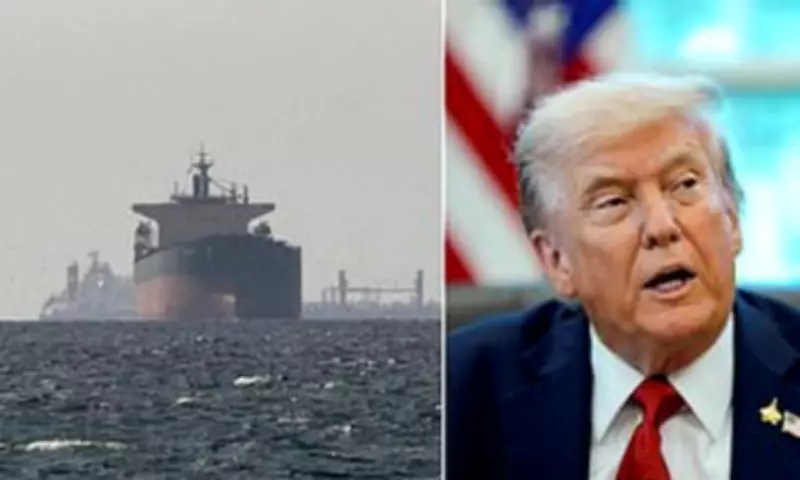
Trump's Middle East Nightmare: Ten Impossible Military Challenges in Iran Conflict
As the US-Israeli war stretches into its fifth week and the Middle East crisis deepens, several potentially insurmountable problems have plunged President Donald Trump into a nightmare scenario. While the American commander-in-chief has multiple options at his disposal, every potential course of action is rife with catastrophic risks, ranging from a 'mission impossible' uranium raid to a 'deathtrap' invasion of Kharg Island.
Escalating Military Presence
The United States currently maintains approximately 50,000 troops in the Middle East region, representing roughly 10,000 more personnel than usual deployments. This increase follows the arrival of 2,500 Marines and another 2,500 sailors as part of the USS Tripoli amphibious ready group. A second amphibious ready group, featuring the USS Boxer and its supporting vessels, dispatched from San Diego on March 18 and is delivering an additional 2,500 Marines from the 11th Marine Expeditionary Unit. Furthermore, elements of the Army's elite 82nd Airborne Division have been ordered to the Gulf, bringing at least 1,000 more soldiers to the theater of operations.
Global Economic Consequences
While the United States retains numerous military possibilities to escalate the conflict, the risk of incurring dramatic increases in American casualties remains exceptionally high. Additionally, the potential for creating further chaos within the global economy looms large. Brent crude oil prices rose three percent on Monday and were tracking toward a record monthly increase, while global stock markets remained in limbo as investors prepared for a Gulf conflict that many fear will trigger inflation spikes and recession risks across much of the world.

Ten Seemingly Impossible Obstacles
What follows are ten seemingly impossible obstacles that Washington faces as it contemplates the next military phase of the ongoing conflict.
Special Forces Uranium Raid
The Trump administration has publicly stated its aim to weaken Iran's military capabilities by sinking its naval forces, destroying missile and drone infrastructure, and crucially ensuring that the Islamic Republic never obtains nuclear weapons. However, a mission to seize Iran's supply of highly enriched uranium, stored within fortified underground tunnels, presents unprecedented risks and complications even for America's most elite Special Operations Forces commandos who have trained for decades for such operations.
According to International Atomic Energy Agency reports, Tehran maintains approximately 972 pounds of 60 percent enriched uranium, just a short technical step from the 90 percent enrichment levels required for high-yield military warheads. This would not only be one of the riskiest special operations missions in American history but very possibly the largest, according to CBS News national security analyst Aaron MacLean, a Marine veteran who deployed to Afghanistan.
In the absence of a peace agreement to remove or destroy the stockpile, deploying ground troops represents the only viable option. An alternative aerial campaign utilizing massive bunker buster munitions might entomb the stockpile deep underground, though no guarantee exists that enriched uranium would be completely eradicated. At least half of Iran's uranium is stored underground at the Isfahan facility, with the remainder likely beneath the Natanz facility seventy miles away, while evidence indicates some material has been moved to a site called Pickaxe Mountain.
While securing perimeters around target sites, military forces would need protection against possible Iranian drone and missile attacks, most likely incurring hundreds of casualties. Once underground, troops would face the challenging and time-consuming endeavor of unsealing heavily fortified tunnels using explosives and heavy earth-moving equipment. Inside the tunnels, challenges multiply exponentially as American troops could be exposed to myriad booby traps including mines, trip-wire-activated explosives, and improvised explosive devices, plus potential contamination from fissile materials.

After soldiers remove canisters and decipher real ones from decoys, successful exfiltration becomes the mission's most difficult phase as the element of surprise vanishes and enemies regroup with reinforcements. There remains the chance that Iranian forces might fire ballistic missiles to kill as many Americans as possible, even at the expense of destroying their own nuclear infrastructure. Crucially, as former US Marine interrogator Jonathan Hackett noted, "You can't destroy that knowledge. You can kill the people right now that know it, but you can't get rid of it."
Kharg Island Invasion
Also known as Forbidden Island, this sixteen-mile offshore speck represents Iran's primary hub for oil exports. By invading and seizing control of its terminal, storage tanks, and pipeline infrastructure, the United States could shut off the financial flow supporting Tehran's economy and military operations. Kharg Island, dubbed the 'crown jewel' of the regime, handles ninety percent of Iran's oil output, processing up to 1.5 million barrels daily.
However, invading the island presents extraordinary dangers given Tehran's possession of 1,000 ballistic missiles and thousands of medium-sized drones capable of carrying explosive payloads, manufactured in small-scale factories across the country. During attempted aerial landings, Iranians could set fire to oil storage tanks containing up to 18 million barrels, creating thick black cloud cover that would complicate helicopter assaults or parachute operations.
While military obstacles might be temporary, the impact on the global economy would be immeasurable, particularly for China and India which remain reliant on Iranian exports. A prolonged bombing campaign to soften Kharg's defenses would facilitate Marine and paratroop landings but sacrifice the element of surprise. Iranian cruise missiles could target vulnerable helicopters and transport aircraft during paratroop missions, while individuals with shoulder-launched missiles and rocket launchers would pose serious threats as troops entered range.
First-person drones controlled by operators with headsets could prove lethal against parachute assaults, picking off paratroopers mid-air. Some military experts warn this combination of risks could transform initial assaults into suicide missions for the 82nd Airborne, while others calculate battles could be won but would plunge troops into kill zones reminiscent of intense fighting on Ukraine's Russian front.
Even if US troops successfully storm and capture the island, holding territory presents further challenges. Constant missile and drone attacks from the mainland would necessitate frequent American aircraft sorties for defensive operations.
Reopening the Strait of Hormuz
Iranian attacks have effectively closed the Strait of Hormuz, the narrow shipping lane between Iran and Oman through which approximately one-fifth of the world's daily oil and liquefied natural gas supply passes. While President Trump has suggested sending warships to safely escort oil tankers through the crucial waterway, such options remain fraught with hazards including cruise and ballistic missiles, fast-attack boats, and sophisticated naval mines.
With transit lanes in some places only three to four miles from Iranian shorelines, ships have less than two minutes to react to incoming strikes. Naval escorts also face threats from remote-controlled boats laden with explosives. The oil passage's narrow, shallow geography forces vessels within miles of Iran's mountainous shores, creating ideal conditions for asymmetric warfare tactics utilizing small, widely dispersed weapons difficult for adversaries to eliminate entirely.
As former naval officer Jennifer Parker explained, "You have very limited time from detection to response. To try and take out that missile or drone, your response time could well be minutes." President Trump recently threatened via Truth Social to destroy Iran's power plants, desalination facilities, oil wells, and Kharg Island unless a deal is reached to "immediately" reopen the Strait of Hormuz.
Attacking Power Infrastructure
Any attack on Tehran's energy infrastructure risks retaliatory strikes with catastrophic consequences for the global economy. Israel's March 18 attack on Iran's South Pars gas field prompted Iranian aerial assaults on energy infrastructure across Qatar and the Middle East, marking the conflict's biggest escalation and triggering energy price spikes.
Following Iranian attacks on Qatar's Ras Laffan industrial area, which includes the world's largest LNG processing plant, QatarEnergy reported approximately seventeen percent of export capacity would be impacted. Attacks on oil fields across Saudi Arabia, Qatar, the United Arab Emirates, and Kuwait could plunge the world into chaotic energy crises, triggering cost-of-living emergencies in Britain and beyond.
Iran's Foreign Minister Abbas Araghchi stated the regime would show "zero restraint" if infrastructure was struck again. Oil prices could surge well beyond current levels as the Strait of Hormuz closure and attacks on Middle Eastern production facilities deeply cut global supplies with unclear timelines for resumption.
Potential energy sites in Tehran's crosshairs include the UAE's Ruwais refinery in Abu Dhabi, Saudi Arabia's Abqaiq processing facility, the Samref refinery, Qatar's Mesaieed Petrochemical Complex, and the UAE's al-Hosn gasfield. With analysts warning of $200 per barrel prices, motorists would feel immediate pain with diesel potentially reaching £2 per liter within weeks.
Bab al-Mandeb Strait Closure
Known as the 'Gate of Tears' in Arabic, the Strait of Bab al-Mandeb represents one of the world's busiest shipping lanes, carrying twelve percent of global oil shipments. Vessels traverse this twenty-mile wide passage to access the Red Sea and Suez Canal from the Indian Ocean.
In recent weeks, Iran-backed Houthi militants have threatened to choke off the passage, a move that would escalate global financial woes and potentially push oil prices to $150 per barrel. Houthi official Mohammed al-Bukhaiti announced earlier this month, "Our finger is on the trigger. Yemen joining the conflict is only a matter of time."
Despite being long-dismissed, Houthi militants represent formidable opponents who seized control of Yemen's capital and much of its population over a decade ago during civil war, successfully fending off Arab coalitions led by Saudi Arabia and the United Arab Emirates. During the Gaza war, Houthi drone and missile attacks nearly halted Red Sea and Suez Canal traffic, forcing shippers to take longer routes around South Africa's Cape of Good Hope.
Prolonged Hormuz Closure Scenarios
Assuming current supply disruptions are sustained, analysts estimate Brent crude prices between $100 and $190, with average forecasts around $134.62. The conflict has already shrunk global oil supplies by approximately 11 million barrels daily according to International Energy Agency Executive Director Fatih Birol.
While President Trump extended deadlines for Iran to reopen the Strait of Hormuz, he has simultaneously weighed using ground forces to seize Kharg Island. Escalation damaging Kharg's export facilities could lift prices above $120, with some analysts forecasting $200 levels. If the US and Israel declared war's end but Iranian shipping threats persisted, analysts project prices between $50 and $150, reflecting uncertainty over disruption duration and severity.
While all industries would feel higher energy cost impacts, power-intensive sectors plus agriculture and downstream chemicals-dependent industries would be especially hard hit. As NORD/LB analyst Thomas Wybierek noted, "Rising transport costs affect consumer goods but also capital goods. Supply chain problems particularly impact chemical and agricultural sectors."
Vulnerable Desalination Plants
Iran could produce humanitarian disasters for Gulf states by crippling desalination plants across the desert region, cutting water supplies for millions. Approximately five thousand desalination plants operate across the Middle East, with over four hundred in the Gulf region, though a smaller number produce most output.
Amnesty International announced this month that attacks on systems providing essential services like electricity, heating, and running water risk violating international law and "in some cases could amount to war crimes" due to potential devastating civilian harm and environmental impacts. Attacks on desalination plants could cripple the Middle East, one of Earth's driest regions where water availability is ten times lower than global averages, with about forty-two percent of global desalination capacity located there.
Vulnerable US Bases
Iran has struck approximately 104 American and regional bases according to open-source analyst Fabian Hinz's geolocated strike analysis. The United States now prosecutes its war remotely, with troops evacuating to office spaces and hotels to avoid attacks. Among all hubs, Ali Al Salem in Kuwait suffered most hits with twenty-three strikes, followed by Camp Arifjan and Camp Buehring with seventeen and six geolocated strikes respectively.
Ukrainian President Volodymyr Zelensky claimed Russia supplied Iran with satellite images of a US base in Saudi Arabia days before a vital spy plane was destroyed. On Friday, Iran launched drones and at least one ballistic missile at Prince Sultan Air Base, injuring up to twelve US soldiers, with two in serious condition, and destroying an E-3 Sentry aircraft.
Relations between America and Gulf allies grow increasingly fraught as those same allies bear the brunt of relentless retaliatory strikes on US bases, embassies, and vital energy infrastructure. While approximately 40,000 US troops were in the region when conflict started, Central Command has dispersed thousands to locations as far as Europe, though many remain in the Middle East at different bases.
Attacks on US Radar Systems
Iran's precision strike on the E-3 Sentry aircraft at Prince Sultan Air Base indicates worrying intelligence levels and limits US military ability to provide early threat warnings during combat operations. President Zelensky revealed Moscow had taken satellite images of the Saudi base days before the attack, stating, "Do they help Iranians? Of course. How many percent? One hundred percent."
Dwindling Political Support
President Trump previously promised he was "not putting troops anywhere" amid apparent divisions within his Maga base over foreign military engagements and congressional approval requirements. The President may also prove reluctant to deploy soldiers with crucial midterm elections approaching in November.
Trump has told aides he wants to avoid "forever war" scenarios and find negotiated exits, urging them to stress the four-to-six-week hostilities timeline he outlined publicly, though senior White House officials acknowledge such timelines appear "shaky." Simultaneously, Trump has threatened major military escalation if talks fail.
Diplomatic overtures to Iran, including fifteen-point peace proposals sent via Pakistani backchannels, demonstrate increasingly urgent searches for off-ramps, though unclear prospects exist for fruitful negotiations. As former US deputy national intelligence officer Jonathan Panikoff noted, "President Trump has poor options all around to end the war. Part of the challenge is lack of clarity about satisfactory outcomes."
A White House official insisted the Iran campaign "will conclude when the commander-in-chief determines our objectives are met" and that Trump laid out explicit goals. For some analysts, the United States has no option but to maintain presence and operations in the region to topple the Islamic Republic and enact regime change, fully eradicating nuclear threats.
As former British military intelligence colonel Philip Ingram explained, "I liken it to a cancer surgeon only removing part of a tumour. Leave some tumour inside, it grows back worse. With elements of the Iranian regime remaining, that's like cancerous remnants. Donald Trump would be a poor surgeon leaving that in there."