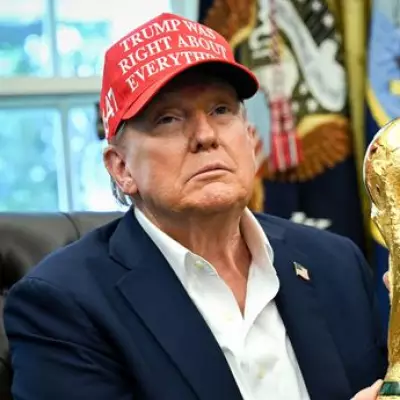
President Donald Trump has sparked controversy with a social media post that not only contained a significant spelling error but also implied a willingness to abandon America's allies in securing a critical global oil route. In a Truth Social message early Wednesday, Trump mused about the consequences of letting other nations handle the security of the so-called "Straight" of Hormuz after his military campaign against Iran concludes.
Spelling Slip and Strategic Implications
The president's post, which referred to the "Straight" of Hormuz rather than the correct "Strait," came amid his administration's nearly three-week-old conflict with Iran. Trump later corrected the misspelling in a follow-up post, but the initial message suggested he might allow countries dependent on the waterway to manage its security independently. "That would get some of our non-responsive 'Allies' in gear, and fast!!!" Trump wrote, highlighting his frustration with traditional partners.
Geopolitical Significance of the Waterway
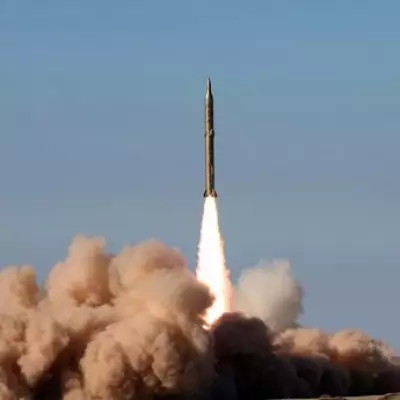
The Strait of Hormuz serves as a crucial maritime choke point connecting the Persian Gulf to open oceans, with approximately one-fifth of the world's oil supply passing through annually. Since the U.S.-Israeli military operation against Iran began on February 28, Iran has threatened to attack tankers and merchant ships, effectively holding traffic hostage while allowing vessels carrying Iranian oil to China and India to pass safely.

Trump's fixation on the waterway's proper name has become apparent in recent days. During a Monday press conference, he twice referred to it as the "Hormuz straits" and later mocked the precision of terminology while discussing how many nations rely heavily on oil from "the straits — or as they call it, the strait."
Allied Rejection and Diplomatic Fallout
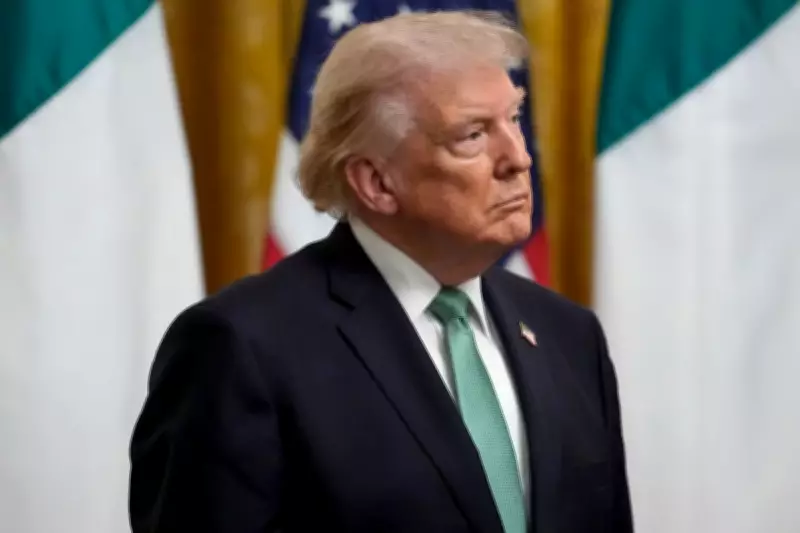
The president's social media comments followed widespread rejection of his requests for naval assistance from America's traditional allies. During a bilateral meeting with Irish Taoiseach Micheál Martin, Trump asserted that the United States does not require any help from partners, despite having previously urged China, France, Japan, South Korea, the United Kingdom, and other affected nations to contribute ships for escort duties.
"Despite the fact that we help them so much ... they don't want to help us, which is amazing," Trump remarked, expressing astonishment that NATO allies would not comply with his demands. He characterized the alliance's refusal as "a very foolish mistake" and reiterated that his call for assistance served as a "test" of their commitment.
International Responses and Strategic Concerns
Global leaders have responded cautiously to Trump's appeals. British Prime Minister Sir Keir Starmer acknowledged ongoing discussions about developing a "viable plan" but emphasized that securing the strait would be challenging without resolving the underlying conflict. Meanwhile, German officials have firmly declined involvement, with Defense Minister Boris Pistorius questioning what "a handful of European frigates" could accomplish that the powerful U.S. Navy cannot.
French President Emmanuel Macron has indicated efforts to form a coalition focused on protecting freedom of navigation in the region. However, he stressed that such actions must wait until the "hottest phase" of hostilities concludes, reflecting broader international reluctance to engage militarily while active combat persists.
Economic Consequences and Security Realities
The conflict has already triggered significant economic disruption, with global oil prices soaring and gasoline costs rising rapidly in response. Multiple ships have been struck by projectiles since the war's inception, exacerbating market instability. Trump's suggestion that the U.S. might withdraw from securing the strait entirely raises concerns about long-term energy security for nations dependent on Middle Eastern oil exports.
As the situation develops, the president's combination of spelling errors and strategic threats underscores the complex diplomatic landscape surrounding one of the world's most vital maritime passages. The international community continues to watch closely how Trump's administration will navigate both linguistic precision and geopolitical pressures in the volatile region.