Trump's Second Withdrawal from the WHO Sparks Global Health Concerns
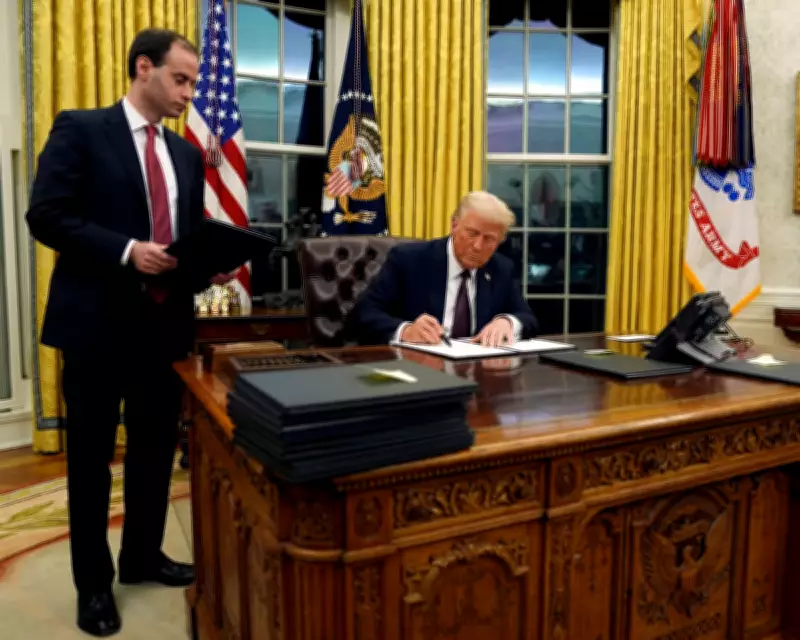
In a move that echoes his first term, former President Donald Trump signed an executive order on 20 January 2025, formally withdrawing the United States from the World Health Organization (WHO). This action, which took effect at the end of last month, marks only the second time in the agency's history that a major power has exited, following the Soviet Union's brief departure in 1949.
Historical Context and Political Maneuvering
Trump initially withdrew the US from the WHO in July 2020, but President Joe Biden reversed this decision upon taking office in January 2021. Despite hopes for stability, Trump's return to power has reignited tensions, with the US now officially out of the global health body. This withdrawal is buried under broader news of political chaos, yet its implications are profound for international cooperation.
The justifications for leaving mirror attacks by figures like Nigel Farage in the UK, who criticize the WHO for imposing lockdowns during the Covid-19 pandemic. However, this argument is fundamentally flawed, as the WHO lacks legal authority to enforce such measures; lockdowns were solely decisions by national governments.

Independence and Scientific Integrity Under Fire
Trump and his allies claim the WHO is not independent, but evidence suggests the opposite. The agency has faced pressure to align with MAGA talking points, such as unscientific links between vaccines and autism or climate-change denialism. When the WHO pushed back, it was reprimanded, highlighting its commitment to scientific accuracy over political favor.
Moreover, the WHO has resisted pressures from countries like Israel and Russia on sensitive issues, such as the Gaza conflict and the Ukraine war, demonstrating its role in maintaining credibility beyond short-term political cycles. This independence is crucial for addressing global health threats effectively.
Financial and Leadership Implications
The US has historically been the largest contributor to the WHO, funding campaigns against diseases like smallpox, polio, and HIV/AIDS. Prior to Trump, US leadership in global health was bipartisan, with initiatives from presidents like Bill Clinton, George W. Bush, and Barack Obama. Today, however, fear of losing funding or jobs has silenced many US academics from speaking out.
Fortunately, the WHO has implemented financial reforms, securing 85% of its budget for 2026/27 and reducing dependence on US funding. This resilience allows the agency to maintain core functions, but a leadership vacuum persists. The EU and countries like Germany are stepping up to support multilateralism, while China and Russia expand bilateral ties with low-income nations, linking health aid to geopolitical influence.
Private Engagement vs. Public Rhetoric
Behind the scenes, Trump's administration continues to engage with the WHO privately, even as it lambasts the agency publicly. This hypocrisy serves to appease his MAGA base, which seeks foreign enemies to attack, while ensuring the US retains access to vital global health intelligence. In essence, the US government remains more dependent on the WHO than vice versa, a reality obscured by political posturing.
This situation offers a critical lesson for the British public: following anti-WHO rhetoric, as championed by Nigel Farage, could lead to self-destructive policies. The WHO's role in coordinating responses to threats like H5N1 bird flu and antimicrobial resistance underscores the importance of international cooperation, regardless of political grandstanding.