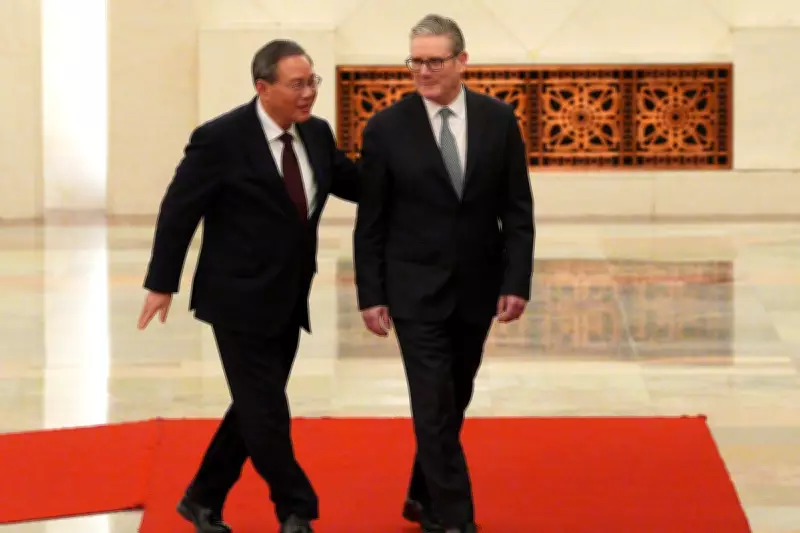
In a significant diplomatic breakthrough, British citizens will soon enjoy visa-free access to China for short-term visits, following successful negotiations led by Prime Minister Sir Keir Starmer during his official trip to Beijing. The landmark agreement, announced by Downing Street, marks a pivotal shift in UK-China relations and promises to facilitate easier travel for both business and tourism purposes.
A New Era of Travel Accessibility
The new arrangement will permit UK passport holders to enter mainland China without a visa for stays of up to thirty days. This change aligns British travellers with citizens from over fifty other nations, including key European partners like France and Germany, who already benefit from similar visa exemptions. While the precise implementation date remains to be confirmed, Chinese authorities have committed to unilaterally enacting the visa-free entry for UK visitors.
Currently, British nationals must obtain a visa before travelling to China, a process that can be time-consuming and administratively burdensome. The forthcoming policy is expected to streamline travel significantly, removing barriers for professionals seeking business opportunities and tourists exploring China's rich cultural heritage.
Economic and Strategic Implications
Prime Minister Starmer emphasised the economic advantages of the new visa rules during his discussions. "As one of the world's economic powerhouses, businesses have been crying out for ways to grow their footprints in China," he stated. "We'll make it easier for them to do so, including via relaxed visa rules for short-term travel, supporting them to expand abroad, all while boosting growth and jobs at home."
The Prime Minister's visit to China, the first by a UK leader since 2018, included a substantial delegation of fifty-four representatives from British business and cultural institutions. This underscores the government's intent to deepen economic and cultural ties with China, leveraging the new travel agreement to foster greater collaboration and investment.
Diplomatic Reset and Complex Dialogues
The visa agreement emerged from a crucial meeting between Sir Keir Starmer and Chinese President Xi Jinping at the Great Hall of the People. Sir Keir expressed his desire for a "more sophisticated" relationship with China, while President Xi acknowledged that bilateral relations had experienced "twists and turns" in recent years.
Beyond the travel deal, the discussions addressed sensitive geopolitical issues. Downing Street confirmed that Sir Keir raised "areas of concern," including the imprisonment of Hong Kong pro-democracy campaigner Jimmy Lai and the treatment of the Uighur minority. The Prime Minister described these exchanges as a "respectful discussion," integral to a mature diplomatic engagement.
"We raised those issues, as you would expect," Sir Keir remarked. "Part of the rationale for engagement is to make sure that we can both seize the opportunities that are available, which is what we've done, but also have a mature discussion about issues that we disagree on."
Chinese Perspectives and Ceremonial Observances
Beijing's official readout of the meeting highlighted a mutual commitment to developing a "long-term, stable and comprehensive strategic partnership." It reiterated China's stance that it does not "pose a threat" to other nations and affirmed the UK's unchanged policy regarding Taiwan. Additionally, the statement noted that "Hong Kong's prosperity and stability are in the common interest of both countries, and the UK welcomes Hong Kong as a unique and important bridge between the UK and China."
The diplomatic visit was marked by ceremonial formalities, including a tour of the Forbidden City and an official welcome at the Great Hall of the People. A military band performed both "God Save The King" and the Chinese national anthem, "March Of The Volunteers," followed by an inspection of an honour guard comprising approximately 140 troops from the Chinese army, navy, and air force.
This visa-free travel agreement represents a tangible outcome of Sir Keir Starmer's efforts to recalibrate UK-China relations, blending economic pragmatism with principled diplomacy. As both nations navigate their complex partnership, the eased travel restrictions are poised to enhance people-to-people connections and open new avenues for bilateral cooperation.