UK Government Initiates Unprecedented Evacuation Plans Amid Gulf Crisis
British authorities are coordinating plans to evacuate hundreds of thousands of citizens from the Gulf region as violent conflict escalates following coordinated US-Israeli air strikes on Iran and subsequent retaliatory attacks. The Foreign Office has confirmed that 94,000 British nationals have already registered their contact details, with officials anticipating this number to increase dramatically as the situation develops.
Military Cooperation and Diplomatic Statements
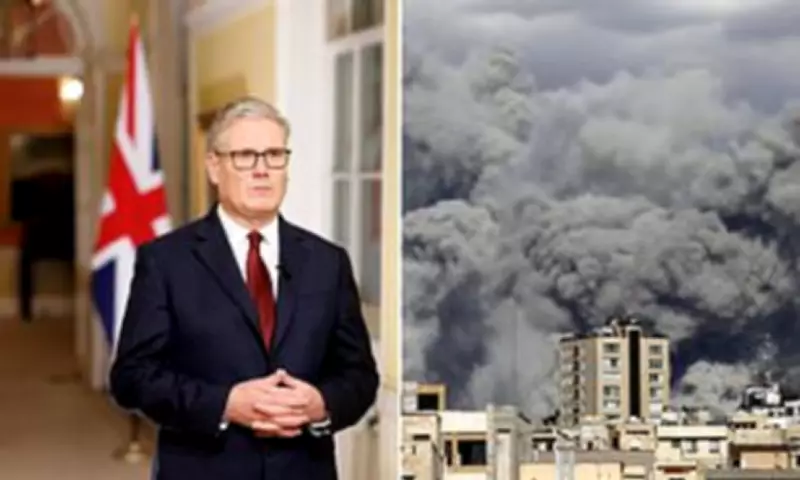
Prime Minister Keir Starmer has agreed to a United States request to utilize British military bases for targeting Iranian missile sites, while simultaneously emphasizing defensive rather than offensive involvement. "Our partners in the Gulf have asked us to do more to defend them, and it's my duty to protect British lives," Starmer stated. "This is in line with international law and we are publishing a summary of our legal advice."
The Prime Minister drew explicit comparisons to previous conflicts, noting: "We all remember the mistakes of Iraq and we have learned those lessons. We were not involved in the initial strikes on Iran and we will not join offensive action now. But Iran is pursuing a scorched-earth strategy so we are supporting the collective self-defence of our allies and our people in the region."

Evacuation Strategy and Regional Chaos
Ministers are developing contingency plans for a potential mass evacuation via land routes to Saudi Arabia from the United Arab Emirates, Bahrain, Kuwait, and Qatar. Foreign Secretary Yvette Cooper is leading the emergency response scheme, which officials describe as unprecedented in scale. The "register your presence" initiative has never before managed such substantial numbers of British citizens abroad.
The crisis follows the killing of Supreme Leader Ayatollah Ali Khamenei on Saturday, which triggered Iranian missile and drone attacks across the Middle East. In response to the escalating violence:
- Three American soldiers were killed and five injured in Iranian attacks
- An RAF Typhoon intercepted a drone over Qatar
- Hundreds of British military personnel implemented defensive measures in Bahrain, Cyprus, and other locations
- Former US President Donald Trump claimed Iran's new leadership had agreed to negotiations
- Nearly fifty senior Iranian figures, including ex-president Mahmoud Ahmadinejad, were reportedly killed in air strikes
Travel Disruption and Airport Closures
The conflict has created monumental travel chaos throughout the region, with airports in Dubai, Abu Dhabi, and Kuwait sustaining direct hits that killed at least one person and injured eleven others. Dubai International Airport—one of the world's busiest international hubs—halted all operations following an incident that injured four staff members.
Flight tracking data reveals nearly 6,000 global flight cancellations and approximately 30,000 delays since hostilities began, representing one of the most significant travel disruptions since the pandemic. In the United Kingdom, 24 of 56 scheduled Heathrow departures to the Middle East were cancelled on Saturday alone.
Authorities across the Gulf region scrambled to close airspaces as the conflict intensified, while the strategically vital Strait of Hormuz—through which a quarter of global oil supplies travel—came to a complete standstill with 150 ships dropping anchor following tanker attacks.
British Citizens Describe Chaotic Scenes
Amanda Murdoch, a 55-year-old from the Lake District, became stranded while transiting through Dubai on her return journey from New Zealand. She described "utter carnage" at the airport with minimal announcements and overwhelming crowds. "There was a mass exodus and it took me three hours to leave the airport," Murdoch reported, noting that Emirates' communication channels were completely overwhelmed.
Kirsty Greyling, vacationing in Dubai with her toddler, witnessed strikes hitting the famous Fairmont The Palm Hotel. "We slept in the basement of our hotel overnight," she told ITV News. "We can't go outside the hotel... you can hear the odd missile in the background."

Judy Trotter, whose return flight from Dubai was cancelled, told the BBC: "I've met people who were very upset about their travel plans, there were thousands of people in the airport. I met people who told me they were missing funerals."
Economic and Political Repercussions
Financial markets are bracing for potential oil price surges that could fuel global inflation, while Green Party leader Zack Polanski has urged the Prime Minister to condemn what he termed "illegal and unprovoked" US strikes. The British government's current advice for most citizens in the region is to shelter in place, with evacuation plans to be activated only if airspace closures become prolonged.
Officials are negotiating with regional carriers including Emirates, Qatar Airways, and Etihad to assist with potential evacuation efforts. If implemented, this operation would represent the largest mass evacuation of British citizens in a generation, surpassing both the Afghanistan evacuation of August 2021 and last summer's evacuations following Israel-Iran missile exchanges.
The Foreign Office continues to urge British nationals in Bahrain, Israel, Palestine, Qatar, and the UAE to register online for updates, emphasizing: "If you are a British national in those countries, you should shelter in place and register your presence."