The presidents of Ukraine and Poland have used a high-profile meeting in Warsaw to project a united front against Russian aggression while taking steps to heal deep historical wounds that have strained their alliance.
Strategic Unity Against Russian Aggression
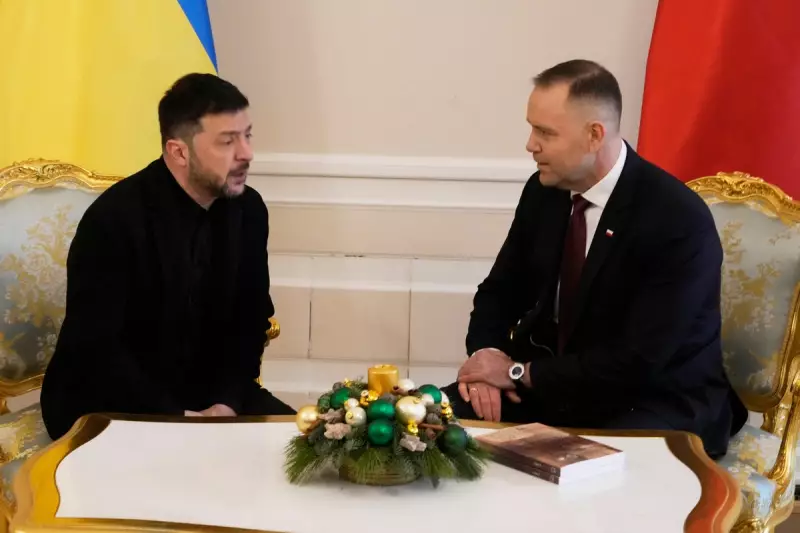
Ukrainian President Volodymyr Zelenskyy was hosted by Polish President Karol Nawrocki at the Presidential Palace on Friday, 19 December 2025. The visit was strategically timed to solidify relations with a key ally, Poland, amidst political uncertainty in Warsaw. Nawrocki, elected with the backing of the nationalist Law and Justice party, has previously adopted a tougher stance, demanding greater Ukrainian gratitude for Polish support and opposing unconditional EU membership for Kyiv.
However, during a joint press conference, President Nawrocki struck a firm tone of solidarity. He declared the Ukrainian leader's presence was "good news for Warsaw and Kyiv and bad news for Moscow." He affirmed that strategic cooperation on security between the two nations and other democratic countries in the region was never in doubt.
Nawrocki outlined concrete support, including backing for the transfer of frozen Russian assets to Ukraine, further sanctions against Moscow, and action targeting Russia's shadow fleet. For his part, President Zelenskyy offered to share Ukraine's hard-earned expertise in drone defence and invited Polish businesses to participate in the country's future reconstruction.
EU Funds and Nuclear Threats
A major topic was the substantial European Union support package for Ukraine. Zelenskyy thanked Poland for backing a massive €90 billion interest-free EU loan agreed earlier that Friday to cover Ukraine's military and economic needs for the next two years.
"If Russia drags out this war... we will use these funds for defence," Zelenskyy stated. "If the world compels Russia to make peace, we will use these funds exclusively for the reconstruction of our country."
The Ukrainian president also raised the alarm over Russia's deployment of its latest nuclear-capable Oreshnik missile system to Belarus, warning it posed a direct threat to Poland, Germany, and other European nations. He revealed that Ukraine had shared intelligence on the system with Western allies and urged sanctions on its component manufacturers, though no action has yet been taken.
Addressing the Painful Past
The leaders also navigated the sensitive historical issue of the Volhynia massacres during World War II, a period of violent interethnic conflict that has long been a source of bilateral tension. Poland estimates tens of thousands of its citizens were murdered.
A significant breakthrough was reached in January 2025, with Ukraine agreeing to allow the exhumation of Polish victims from mass graves. Work has already begun this year in locations like Puzhnyky and Lviv-Zboiska, where the remains of at least 42 people believed to be victims have been uncovered. Both sides have granted further permissions for exhumations at other sites.
While President Nawrocki asked for additional concessions, the atmosphere was conciliatory. Representatives from institutions dealing with historical memory met alongside the presidents. Zelenskyy acknowledged, "The Ukrainian side is ready to meet Polish expectations to accelerate work on this matter." He emphasised mutual respect for each nation's historical memory as the foundation for moving forward.
The summit concluded with a reinforced message of present-day solidarity against a common adversary, coupled with a pragmatic commitment to reconciling a difficult shared history, ensuring the crucial Poland-Ukraine alliance remains resilient for the challenges ahead.