Ukraine's Battlefield Success Contrasts with Russia's Economic Woes
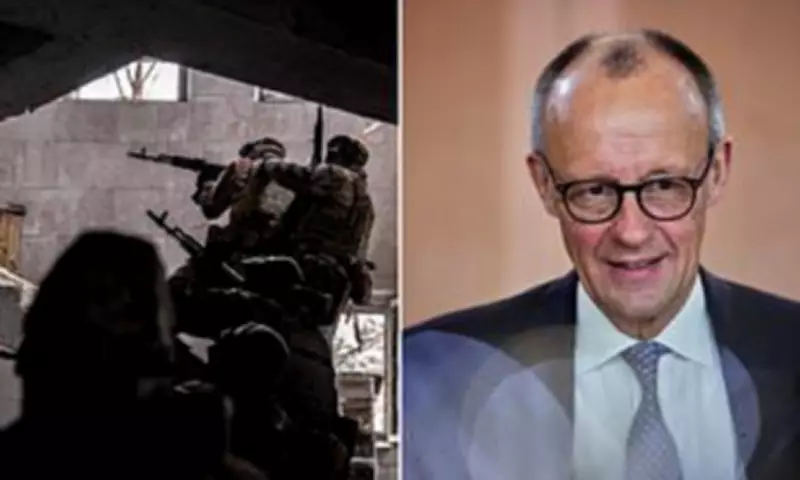
Germany's Chancellor Friedrich Merz has declared that Ukraine has achieved 'astonishing' battlefield gains in recent weeks, while the Russian economy falters under the enormous cost of President Vladimir Putin's ongoing war. The German leader emphasised that Ukraine's fight against Russia is proving more effective than often portrayed in media coverage, citing major territorial advances made by Ukrainian forces this month as the conflict approaches its fourth anniversary.
Significant Territorial Reclamations Documented
Ukrainian President Volodymyr Zelenskyy revealed in a February 20 interview that his military forces had liberated approximately 300 square kilometres of territory from Russian control in an unspecified area of southern Ukraine. Although Zelenskyy did not specify the exact time frame for these gains, independent analysis suggests Ukrainian forces have been capitalising on strategic advantages.
Additional confirmation comes from independent data showing that Ukrainian forces reclaimed 200 square kilometres in just five days two weeks ago in the southeastern region. These advances were particularly concentrated in the Donetsk Oblast area between February 11 and 15, where Ukraine launched several successful counteroffensives against Russian positions.

Technological Factors Influencing Battlefield Dynamics
The territorial gains appear to correlate with Elon Musk's decision to block Russian forces from accessing his Starlink internet terminals beginning February 1. Only users approved by the Ukrainian Ministry of Defence's whitelist can currently access the satellite internet service in conflict areas, effectively locking out Russian military communications.
Musk acknowledged the impact of these measures on social media earlier this month, stating: 'Looks like the steps we took to stop the unauthorised use of Starlink by Russia have worked. Let us know if more needs to be done.' This technological advantage has reportedly contributed to Ukraine's improved battlefield performance in recent weeks.
Stalled Negotiations and Political Pressure
Despite these military successes, diplomatic efforts remain deadlocked. The latest round of US-brokered talks between Kyiv and Moscow ended without progress after Russia reiterated demands for territorial concessions in the Donbas region. Parts of this eastern Ukrainian territory have been occupied by Russian forces for years, though significant areas remain under Ukrainian control.
Former US President Donald Trump added to the political pressure during recent discussions, urging Zelenskyy to 'come to the table fast' while Putin maintained his territorial demands. Analysts suggest Ukraine's recent battlefield advances could potentially strengthen its negotiating position in future ceasefire discussions.
Russia's Economy in Critical Condition
While Ukraine makes strategic gains, Russia's economy has entered what analysts describe as a 'death zone.' Alexandra Prokopenko, a fellow at the Carnegie Russia Eurasia Center, warns that Russia's economy is only sustaining itself through military industry while other sectors languish under the weight of international sanctions.
Prokopenko notes that oil revenue has been halved due to sanctions, and non-military industries have been effectively 'left in the cold.' The Russian economy now operates on what she terms 'military rent'—budget transfers to defence enterprises that generate wages and economic activity, but produce assets designed for destruction rather than long-term economic growth.
Structural Economic Challenges Deepen
The massive expansion of military industry has created jobs and cash flow, but Prokopenko emphasises that this comes at tremendous cost. Money spent on military recruitment doesn't translate to increased productivity, as new soldiers are frequently killed or maimed in large numbers. The Centre for Strategic and International Studies estimates Russian military casualties at approximately 1.2 million, including 325,000 fatalities.

Despite the Kremlin cutting interest rates to stimulate growth, Prokopenko argues that clever fiscal policy cannot resolve these fundamental structural problems. Interest payments on government debt are projected to exceed combined spending on education and healthcare, indicating severe budgetary strain.
Expert Analysis on War Dynamics
Jenny Mathers, a senior lecturer in international politics at Aberystwyth University, observes that while Ukraine's gains are significant, Russia has demonstrated capacity to adapt, albeit slowly. 'Russia is not good with innovation, and they're quite slow to respond to change, but they do respond to change,' Mathers noted in comments to ABC.
Prokopenko extended her 'death zone' analogy to suggest that while Russia can continue waging war in the foreseeable future, no system can survive indefinitely under such extreme conditions. 'Not all climbers who attempt the descent survive it,' she cautioned, highlighting the precarious nature of Russia's economic and military position.
The territorial advances calculated by news agency AFP using data from the independent Institute for the Study of War confirm Ukraine's recent battlefield successes, even as diplomatic efforts remain stalled over fundamental disagreements about territorial sovereignty in eastern Ukraine.