The diplomatic initiative spearheaded by former US President Donald Trump to end the war in Ukraine faced a severe setback on Monday, after Russia accused Kyiv of a brazen drone assault on one of Vladimir Putin's residences. The allegation, swiftly dismissed by Volodymyr Zelensky as a pack of "lies," threatens to unravel progress made during critical weekend negotiations in Florida.
Russian Allegations and Ukrainian Denials
Moscow claimed that Ukrainian forces launched a massive overnight attack involving 91 long-range drones targeting the Russian president's forest retreat at Lake Valdai in the Novgorod region. Russian Foreign Minister Sergei Lavrov stated that all drones were intercepted, with no damage reported. In response, the Kremlin declared it would revise its position in ongoing peace talks as a direct consequence of the alleged incident.
President Zelensky issued a forceful rebuttal, characterising the Russian claims as a cynical fabrication. He accused Moscow of inventing stories to "undermine diplomacy and justify dragging out the war." Ukraine's Foreign Minister, Andrii Sybiha, echoed this sentiment on social media platform X, labelling it a "usual Russian tactic" of accusing others of one's own actions to create a "false justification" for further aggression against Ukraine.
The Stumbling Blocks in Florida Talks
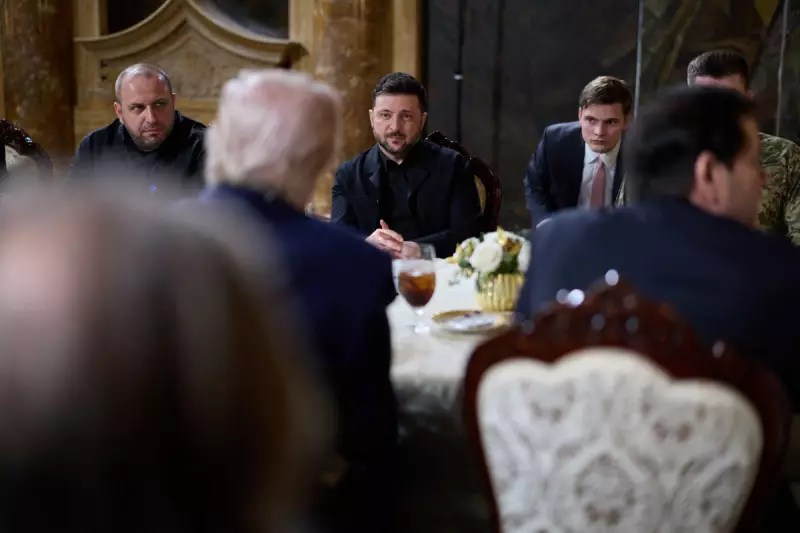
The row erupted just as details emerged from the high-stakes discussions between Zelensky and Trump at Mar-a-Lago. While both leaders hailed progress on a revised 20-point peace plan, significant gaps remain. A major point of contention is the duration of proposed security guarantees for Ukraine. Zelensky revealed that while agreements were reached, Trump was only prepared to commit the US to upholding peace for 15 years, far short of Ukraine's desired timeframe of 30 to 50 years.
"I told him that we are already at war, and it has been for almost 15 years," Zelensky stated. "Therefore, I really wanted the guarantees to be longer." He added that Trump agreed to consider an extension, but any long-term guarantees would require approval from the US Congress and other allied parliaments.
Other unresolved critical issues include the future status of the Donbas region and the management of energy from the Zaporizhzhia nuclear power plant, Europe's largest. Zelensky continues to advocate for foreign troops to help police any future ceasefire and has proposed putting a final peace plan to a referendum, contingent on a 60-day truce.
Diplomatic Fallout and Next Steps
The immediate diplomatic fallout saw Trump brief President Putin on the talks in a phone call on Monday, with further contact expected. Kremlin spokesman Dmitry Peskov confirmed the conversation but indicated no plans for Putin to speak directly with Zelensky.
As Kyiv warned of potential new Russian strikes on the capital, international efforts continued. French President Emmanuel Macron announced that Ukraine's allies will convene in Paris in early January to finalise concrete contributions to security assurances. Zelensky also confirmed another meeting with European leaders is scheduled for next month, underscoring the fragile, multi-front effort to secure a lasting peace as trust between Moscow and Kyiv hits a new low.