A classified US intelligence evaluation, completed just before the United States and Israel launched military strikes against Iran, concluded that American intervention was highly unlikely to result in regime change within the Islamic Republic. This assessment directly challenges the administration's assertions about achieving its objectives rapidly in the ongoing conflict.
Secret Assessment Contradicts Administration Claims
The National Intelligence Council's secret evaluation, finalized in February, determined that neither limited airstrikes nor an extended, sustained military campaign would likely lead to a new government assuming power in Iran. According to individuals familiar with the classified document who spoke anonymously, this conclusion holds true even if the current Iranian leadership were completely eliminated through military action.
This intelligence finding significantly undermines the administration's repeated claims that it can accomplish its goals in Iran relatively swiftly, potentially within just a few weeks of military engagement. The assessment reveals a fundamental disconnect between intelligence community projections and political rhetoric surrounding the conflict.
No Viable Opposition Ready to Assume Control
The intelligence evaluation specifically concluded that there exists no single powerful or unified opposition coalition prepared to assume control in Iran should the current leadership be removed. This absence of a credible alternative government structure presents a major obstacle to any regime change scenario, according to those familiar with the report's contents.
Furthermore, the assessment found that Iran's political and religious establishment would work diligently to maintain continuity of power if Supreme Leader Ayatollah Ali Khamenei were killed. This prediction proved remarkably accurate when, following the assessment's conclusions, Iran's senior clerics selected Mojtaba Khamenei to replace his father as supreme leader after the elder Khamenei was killed in the war's initial strikes.
New Leadership Signals Defiance
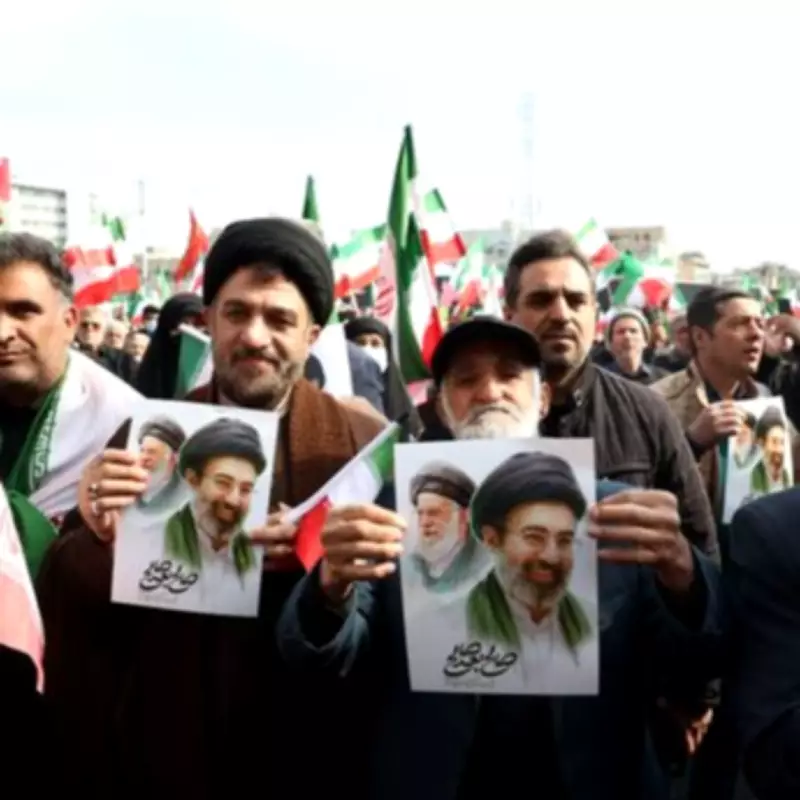
The appointment of Mojtaba Khamenei represents a powerful signal of defiance from Iran's leadership structure and provides clear indication that the government has no intention of standing down easily. Intelligence sources indicate the son harbors views that are even more extreme than his father's, suggesting potential escalation rather than capitulation following the leadership transition.
This development directly contradicts the administration's varying justifications for the strikes that commenced on February 28. While President Donald Trump and other senior officials have claimed the military action was essential to hinder Iran's nuclear weapons program or prevent ballistic missile attacks, the intelligence assessment suggests these objectives may be complicated rather than advanced by the current approach.
Administration Presents Mixed Messages
The administration has maintained publicly that it is not pursuing regime change in Iran, even as the strikes have eliminated numerous figures in the Iranian leadership structure. Meanwhile, President Trump has simultaneously indicated that regime change represents something he wishes to achieve, creating contradictory messaging about American objectives in the conflict.
Defense Secretary Pete Hegseth has stated explicitly that the war is not targeted at regime change, yet Trump's comments have suggested otherwise. This discrepancy between stated goals and desired outcomes reflects broader tensions within the administration regarding Iran policy.
Historical Context of Intelligence Skepticism
President Trump has demonstrated profound skepticism toward the US intelligence community dating back to his first term, regularly dismissing its findings as politically motivated or part of what he terms a "deep state" attempt to undermine his presidency. This historical context adds complexity to how the current administration processes and responds to intelligence assessments regarding Iran.
Richard Goldberg, who served as director for countering Iranian weapons of mass destruction at the National Security Council during Trump's initial term, noted that skepticism toward intelligence community assessments stems partly from significant misjudgments in recent years. These include failures to predict the rapid collapse of the Afghan government to the Taliban in 2021 and incorrect predictions about Ukraine's ability to withstand Russian invasion in 2022.
Intelligence Community Under Scrutiny
Goldberg, currently a senior adviser at the Foundation for Defense of Democracies, described intelligence assessments as "almost like an op-ed from the intelligence community," highlighting ongoing debates about the role and reliability of such evaluations in policymaking. This perspective reflects broader discussions about how intelligence findings should inform military and diplomatic decisions.
The Office of the Director of National Intelligence declined to comment on the specific Iran assessment when questioned, directing inquiries instead to the White House. This response follows previous tensions between the intelligence community and administration, including Director Tulsi Gabbard's dismissal of the National Intelligence Council's acting chairperson last year after publication of a declassified memo that conflicted with administration statements regarding Venezuelan immigrants.
The secret assessment's conclusions, previously reported by The Washington Post and The New York Times, continue to influence discussions about the trajectory and potential outcomes of the ongoing conflict with Iran. As military engagement continues, the disconnect between intelligence projections and political objectives remains a significant factor in understanding the conflict's dynamics and potential resolution.