
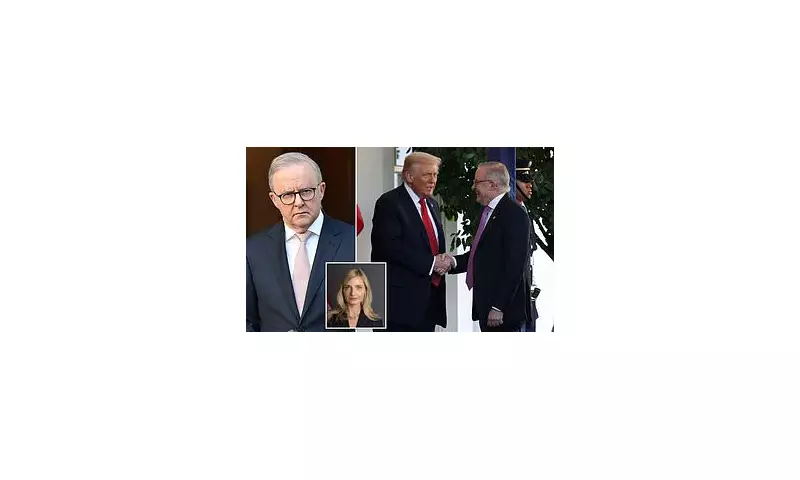
A high-ranking United States diplomat has launched a sharp critique of Australia's proposed new hate speech legislation, arguing a specific clause could lead to "deeply perverse" consequences.
Religious Exemption Sparks International Concern
Sarah Rogers, the US Under Secretary of State for Public Diplomacy, voiced her apprehension after Australian activist Drew Pavlou highlighted a contentious provision in the draft Combatting Antisemitism, Hate and Extremism Bill. The bill is a direct response to the terrorist attack at Bondi Beach on December 14.
Pavlou claimed on social media platform X that the legislation contains a clause which exempts individuals from prosecution if they are directly quoting from religious texts. He argued this could effectively provide a legal shield for extremist rhetoric. Rogers shared his post, adding her own stark warning.
A "Deeply Perverse" Potential Outcome
"A statute that imprisons you for calling to deport jihadist extremists – but provides safe harbor if you *are* a jihadist extremist – would be deeply perverse," Rogers wrote. She expressed hope that this was not the Australian government's intention.
Rogers suggested the clause might be a "clumsy effort" to avoid situations seen in Europe and the UK, where individuals have faced legal action for quoting the Bible or praying silently. However, she cautioned that hate speech laws are often enforced by authorities who might "coddle actual violent zealots."
While affirming that religious freedom is a core value, Rogers warned that "protecting speech *only* if it's religious, while arresting people for secular rejoinders, may distort the public sphere."
Emergency Parliamentary Sitting to Debate Bill
Prime Minister Anthony Albanese confirmed on Monday that Parliament will be recalled for an emergency sitting on January 19 and 20 to deal with the new legislation. The sitting will begin with a condolence motion for the victims of the Bondi attack.
The government and Opposition have already agreed on the wording for this motion, demonstrating a unified front. Following the tributes, Parliament will immediately turn to debating the centrepiece of the government's response: the Combatting Antisemitism, Hate and Extremism Bill 2026.
Drafted in the immediate aftermath of the Bondi Beach attack, the bill represents one of the most significant crackdowns on extremism in recent years. It introduces new federal offences for publicly promoting racial hatred that causes intimidation, harassment, or feelings of unsafety.
The legislation also includes:
- Tough new offences targeting hate preachers who radicalise children.
- Significantly increased penalties for hate-crime offences.
- A requirement for courts to consider extremist motivation during sentencing.
- A new offence for inciting hatred with intent to intimidate or harass.
- An expansion of the ban on prohibited extremist symbols.
"We want to ensure that Australia remains a society where everyone has the right to be proud of who they are," Albanese stated in Canberra. "Just as antisemitism and racism are an offence against our Australian values, they should be an offence against Australian law."
The bill is set to be introduced on Monday, debated on Tuesday, and then fast-tracked to the Senate for approval.