
US Officials Held Covert Meetings with Alberta Separatist Group
Senior officials from the Trump administration have reportedly engaged in several clandestine meetings with a far-right Canadian separatist organisation that advocates for Alberta's independence from Canada. According to a detailed report from the Financial Times, these secretive discussions took place in Washington on three separate occasions since April of last year.
Meetings with "Very, Very Senior" US Figures
The Alberta Prosperity Project, a fringe right-wing group aiming for the oil-rich western province to break away from Canada, claims its representatives met with high-ranking US officials. Jeff Rath, the group's legal counsel, told the Financial Times that "the U.S. is extremely enthusiastic about a free and independent Alberta." He further asserted that they were meeting with "very, very senior people leaving our meetings to go directly to the Oval Office."
The separatists are reportedly planning another meeting in Washington next month to formally request a substantial $500 billion credit facility. This financial support would be intended to fund the province should a future independence referendum succeed, though no such vote has been officially called.
Official Denials and Heightened Tensions
Both the White House and the State Department have responded to the reports by stating that no commitments were made during these encounters. A White House spokesperson clarified, "Administration officials meet with a number of civil society groups. No such support, or any other commitments, was conveyed." Similarly, sources familiar with Treasury Secretary Scott Bessent's thinking indicated his team was unaware of any credit facility request and had no plans to engage on the matter.
These revelations emerge during a period of significantly strained relations between the United States and Canada. Recent tensions have been fuelled by trade disputes, sovereignty issues, and diplomatic friction. Notably, Treasury Secretary Bessent recently described Alberta as "a natural partner for the U.S." in an interview, a comment that sparked excitement within separatist circles.
Domestic Canadian Context and Counter-Movements
Within Canada, the Alberta Prosperity Project's ambitions face considerable domestic opposition. The group is seeking 177,000 signatures to present an independence petition to the provincial legislature before May, though it has declined to disclose its current progress. In stark contrast, a counter-petition named Alberta Forever Canada, which opposes independence, garnered an impressive 438,568 signatures by a deadline last year.
A spokesperson for Alberta's Premier, Danielle Smith, emphasised that "the overwhelming majority of Albertans are not interested in becoming a U.S. state." Carlo Dade of the conservative Canada West Foundation think-tank dismissed the separatist group as "attention seekers," suggesting that "the Americans are more than happy to continue to play Canadians off each other."
Broader Diplomatic Strains and Security Implications
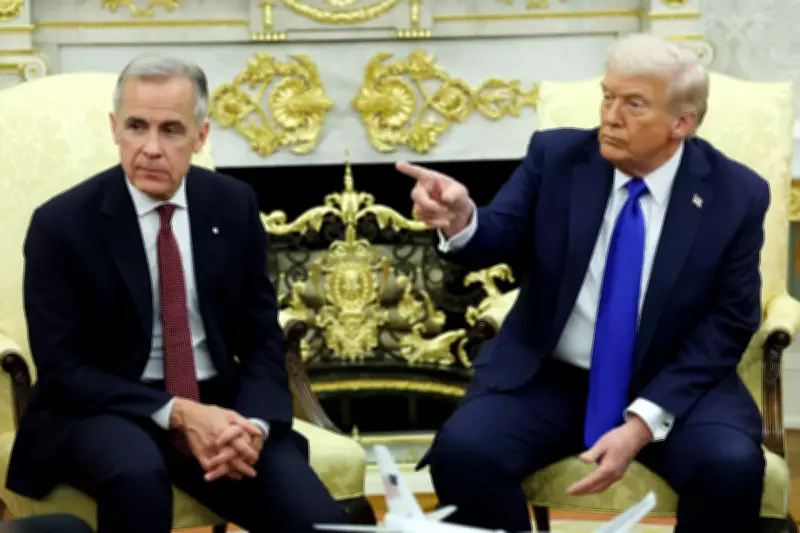
The reported meetings coincide with a series of broader diplomatic confrontations. President Trump has recently threatened to impose 100 percent tariffs on Canadian goods if the country proceeds with a trade deal with Beijing, despite Canadian Prime Minister Mark Carney stating Canada has no interest in such a comprehensive agreement with China.
Furthermore, the US Ambassador to Canada, Pete Hoekstra, warned that the United States might alter the longstanding North American Aerospace Defense Command (NORAD) agreement if Canada backtracks on its planned purchase of 88 F-35 fighter jets. Hoekstra suggested that reduced Canadian capability could lead to more frequent US intervention in Canadian airspace, potentially necessitating new terms for the Cold War-era defence pact.
These developments, combined with President Trump's historical provocations regarding Canadian sovereignty—including suggestions that Canada become the "51st state" and the sharing of an AI-generated map depicting Canada as US territory—paint a picture of a complex and increasingly fraught bilateral relationship, within which provincial separatist movements are seeking to capitalise.