The United States has pledged $2 billion for United Nations humanitarian aid operations, a move that comes alongside sweeping cuts to American foreign assistance and a stark warning for global agencies to reform or face oblivion.
A Fraction of Historic Funding
Announced on Monday 29 December 2025, the $2 billion commitment represents a dramatic reduction from traditional US contributions. According to UN data, American funding for UN-backed humanitarian programmes has reached as high as $17 billion annually in recent years, with officials noting $8-$10 billion of that was voluntary. The new pledge creates an umbrella fund managed by the UN Office for the Coordination of Humanitarian Affairs (OCHA), led by former British diplomat Tom Fletcher, from which money will be distributed to specific agencies and crises.
This consolidation is a key demand from the Trump administration, which is pushing for what it calls a "humanitarian reset" to improve efficiency and accountability. U.S. Ambassador to the United Nations Michael Waltz stated the reset should "deliver more aid with fewer tax dollars — providing more focused, results-driven assistance aligned with U.S foreign policy."
'Adapt, Shrink, or Die': A Stark Ultimatum
The pledge caps a year of crisis for major UN bodies, including refugee, migration, and food aid agencies, which have already faced billions in cuts from Washington. The State Department issued a blunt statement, saying, "Individual U.N. agencies will need to adapt, shrink, or die." It argued the agreement requires the UN to consolidate functions to reduce bureaucratic overhead and unnecessary duplication.
A senior State Department official, speaking anonymously ahead of the Geneva announcement, explained that under the plan, Fletcher's OCHA "are going to control the spigot" on fund distribution. This shift aims to move away from scattered US contributions to individual appeals towards a more centralised system.
Global Consequences and Targeted Aid
The cuts and restructuring have profound implications. Agencies like the International Organization for Migration, the World Food Programme, and the UNHCR refugee agency have already received billions less from the US this year compared to allocations under the previous Biden administration or even during Trump's first term.
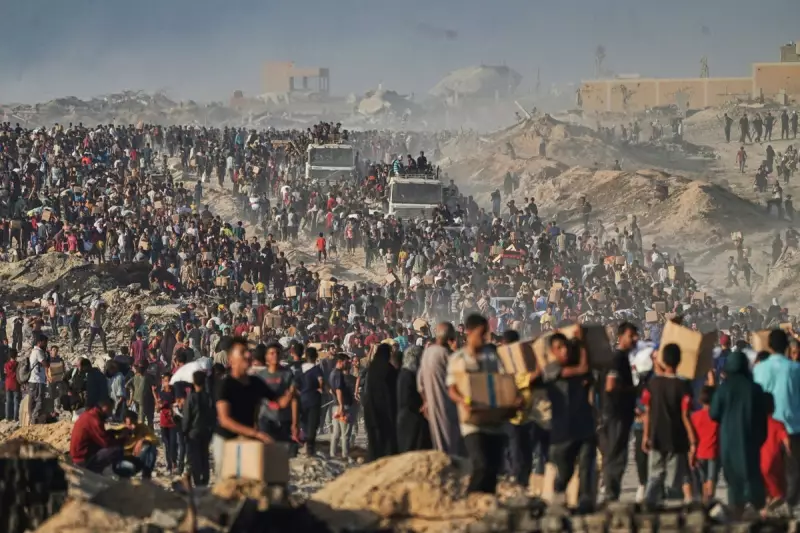
These reductions occur as global need surges, with famine in parts of Sudan and Gaza, and climate-related disasters displacing thousands. The new funding pools will initially target 17 countries, including Bangladesh, Congo, Haiti, Syria, and Ukraine. Notably, Afghanistan is excluded, while aid for the Palestinian territories is intended to come from a separate, incomplete Gaza peace plan.
Critics condemn the Western aid cutbacks as shortsighted, arguing they have exacerbated hunger, displacement, and disease while damaging American soft power. The Trump administration, however, frames the $2 billion as a generous commitment that maintains the US status as the world's top donor, while forcing necessary reform on a system it views as wasteful and ideologically adrift.