US to Manage Venezuela's Oil Revenue with Strict Oversight, Rubio Reveals
The Trump administration has announced a significant shift in policy regarding Venezuela's vast oil resources, with Secretary of State Marco Rubio detailing a plan that will see the United States exercise direct control over revenue from sanctioned petroleum sales. This strategic move aims to stabilise the South American nation while ensuring funds benefit its population rather than corrupt officials.
Interim Measures to Prevent Systemic Collapse
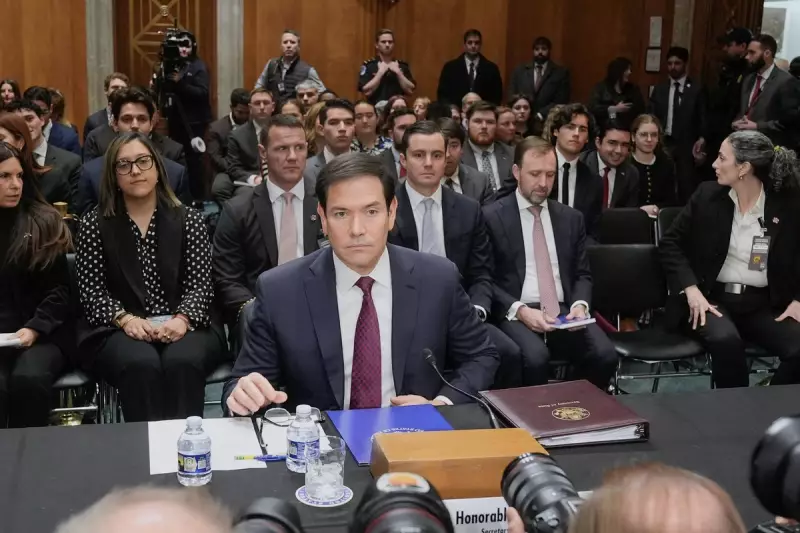
During a Senate Foreign Relations Committee hearing, Rubio confirmed that Washington will permit Venezuela to sell oil currently under American sanctions, with all proceeds initially dedicated to basic government services. These essential services include policing operations and healthcare provisions, both of which have deteriorated dramatically under previous leadership.
"The funds from that will be deposited into an account that we will have oversight over," Rubio stated unequivocally, emphasising that the US Treasury would maintain control throughout the entire process. He further clarified that Venezuela "will spend that money for the benefit of the Venezuelan people" under American guidance.
Account Structure and Legal Safeguards
Rubio provided new insight into the financial mechanisms being established, revealing that hundreds of millions of dollars have already been set aside with expectations of reaching up to $3 billion. The account was initially established in Qatar to circumvent potential seizure by American creditors and address legal complications arising from the US not recognising Nicolás Maduro's government as legitimate.
"It's an account that belongs to Venezuela, but it has US sanctions as a blocking mechanism," Rubio explained. "We only control the dispersal of the money, we don't control the actual money." This distinction is crucial to the administration's approach, which Rubio characterised as an "interim step" rather than permanent control.
Political Scrutiny and Democratic Concerns
Democrats and some Republicans on the committee pressed Rubio for greater transparency regarding President Trump's plans for Venezuela's oil industry. Senator Chris Murphy of Connecticut voiced particular concern about potential favouritism toward oil companies allied with the administration.
"You are taking their oil at gunpoint, you are holding and selling that oil ... you're deciding how and for what purposes that money is going to be used in a country of 30 million people," Murphy argued during the hearing. "I think a lot of us believe that that is destined for failure."
Venezuela's Dire Healthcare Situation
The urgency of directing oil revenue toward essential services becomes starkly apparent when examining Venezuela's current healthcare crisis. Hospitals across the country are so poorly equipped that patients are routinely asked to provide basic medical supplies themselves, ranging from syringes to surgical screws. Furthermore, individuals must pay for laboratory and imaging tests at private facilities due to public system failures.
Acting Venezuelan President Delcy Rodríguez recently announced during a televised event that oil sale proceeds would flow into two sovereign wealth funds: one dedicated to supporting crisis-stricken health services and another to bolster public infrastructure including the electrical grid. Rodríguez noted that her government and the US administration "have established respectful and courteous channels of communication" since Maduro's capture earlier this month.
Historical Context and Future Prospects
Rubio contrasted the new approach with previous arrangements under Maduro, where he claimed Venezuela's oil industry primarily benefited corrupt leaders and countries like China, which purchased Venezuelan crude at substantial discounts. The Secretary of State confirmed that Venezuela's interim leaders are now assisting the United States in seizing illegal oil shipments.
Looking forward, the US will provide Venezuela's current leadership with specific instructions regarding permissible and prohibited expenditures, conducting regular audits to ensure compliance. At Rodríguez's request, Venezuelan lawmakers have begun debating an overhaul of the country's energy law, with proposed changes designed to create conditions attractive to much-needed private foreign investment.
This comprehensive plan represents a significant development in US-Venezuela relations, balancing humanitarian concerns with strategic oversight as both nations navigate complex political transitions and economic challenges.