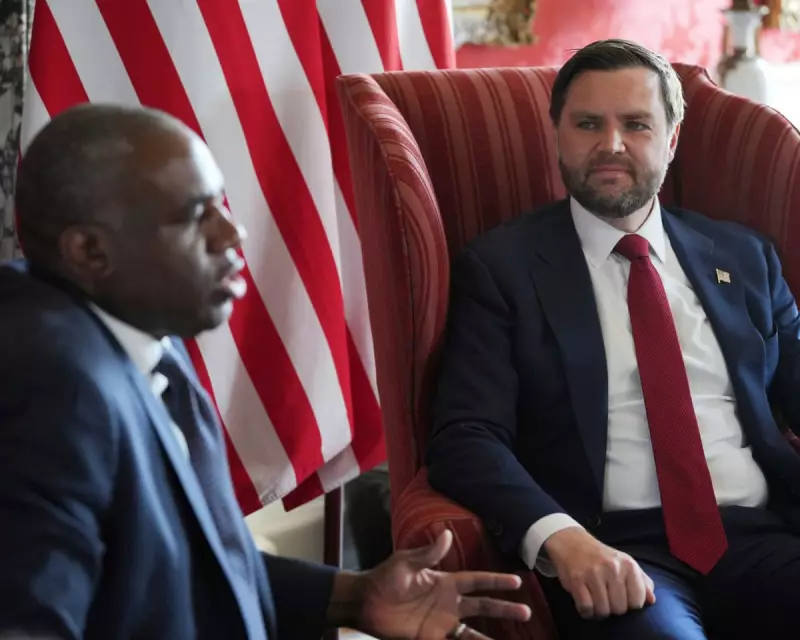
Tensions between the United States and the United Kingdom over Gaza policy have come to the fore ahead of a high-profile meeting between US Senator JD Vance and UK Foreign Secretary David Lammy.
Vance, a prominent Republican figure, suggested that the two allies hold differing views on how to approach the ongoing crisis in Gaza. His comments hint at potential discord in transatlantic coordination on Middle Eastern affairs.
Diverging Approaches to Gaza
The apparent policy rift emerges as both nations grapple with balancing humanitarian concerns with strategic interests in the region. While specifics of the disagreement remain undisclosed, insiders suggest the differences may revolve around ceasefire negotiations, aid distribution, or long-term political solutions.

High-Stakes Diplomacy
The Vance-Lammy meeting, scheduled for later this week, takes on added significance against this backdrop of policy divergence. Observers will be watching closely to see whether the two politicians can bridge the gap or whether the differences will become more pronounced.
Political analysts note that such transatlantic disagreements, while not uncommon, could complicate international efforts to address the Gaza situation. The outcome of these talks may set the tone for future cooperation between the Biden administration and the new UK government.
Domestic Pressures at Play
Both politicians face domestic political considerations that may influence their positions. Vance, as a potential vice-presidential candidate, must balance international diplomacy with domestic political messaging, while Lammy navigates the foreign policy priorities of a new administration in Westminster.
The meeting comes at a critical juncture in Middle Eastern diplomacy, with various international actors attempting to mediate the conflict. How the US and UK align or differ in their approaches could have significant implications for the region's future stability.