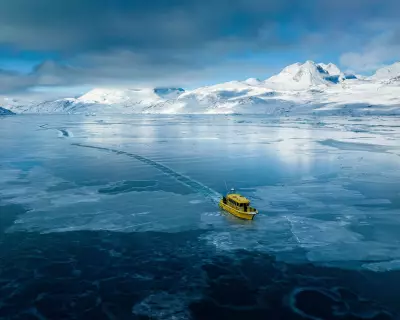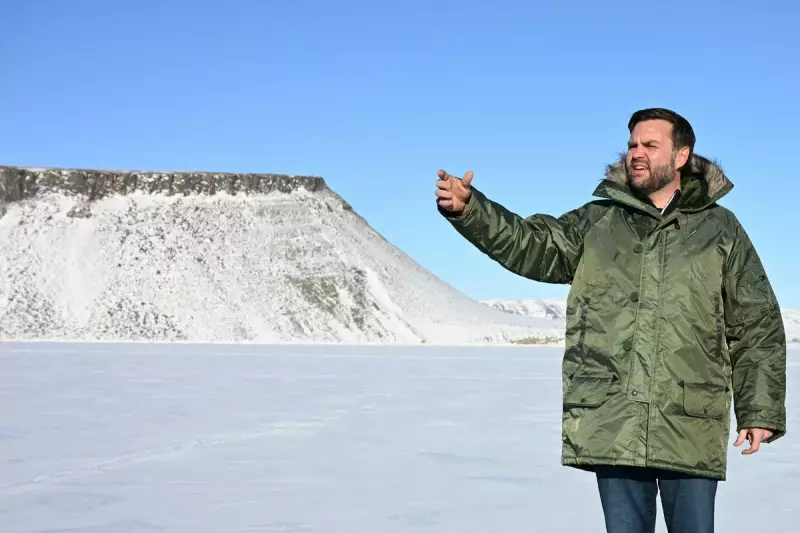
Washington D.C. is set to host high-stakes diplomatic talks concerning the future of Greenland, with US Vice President JD Vance taking a central role. This move follows repeated assertions from the Trump administration about a potential takeover of the vast Arctic territory, which have caused significant alarm amongst European allies.
Escalation to the White House
The meeting was initially requested by Denmark's Foreign Minister, Lars Lokke Rasmussen, and Greenland's own representative, Vivian Moltzfeldt. They sought discussions with US Secretary of State Marco Rubio to address the escalating rhetoric. However, the situation took a further turn when Vice President JD Vance asked to participate and will now host the gathering at the White House.
"Our reason for seeking the meeting we have now been given was to move this whole discussion... into a meeting room where we can look each other in the eye and talk about these things," Rasmussen stated to reporters in Copenhagen on Tuesday 13 January 2026.
A History of Provocative Statements
Vance's direct involvement is seen as particularly inflammatory given his historical stance. He has been a vocal supporter of the idea of the United States seizing Greenland from Denmark, a fellow NATO member. Just last week, he warned European nations to take President Trump's aspirations "seriously."
"What we're asking our European friends to do is to take the security of that land mass more seriously, because if they're not, the United States is going to have to do something about it," Vance declared.
This echoes comments he made in March of last year, where he accused Denmark of "not doing a good job at keeping Greenland safe" and claimed the country was passing its responsibilities to America.
Strategic Stakes and Alliance Fears
President Trump's interest in Greenland is not new; he first publicly floated purchasing the autonomous Danish territory in 2019. The motivations are twofold:
- Vast Resources: Greenland holds significant, untapped deposits of natural resources, including oil, gas, and critical minerals like zinc, copper, nickel, and graphite.
- Strategic Location: Its position in the Arctic, between North America and Europe, makes it a geopolitically crucial asset for national security and military strategy.
The potential fallout from a forced acquisition could be catastrophic for the Western alliance. Several politicians, including US Democratic Senator Chris Murphy, have warned that a US takeover of Greenland would effectively spell the end of NATO, as the alliance would be obligated to defend the territory against its own leading member.
As these tense talks approach, the international community watches closely to see if diplomacy can cool a situation that threatens to fundamentally destabilise transatlantic relations.