Vance's Deleted Armenian Genocide Reference Highlights Diplomatic Tensions
US Vice President JD Vance's official team posted and subsequently deleted a social media message referencing the "Armenian genocide" during his visit to a memorial commemorating early 20th century Armenians killed by the Ottoman Empire. The incident has reignited discussions about the diplomatic weight carried by specific terminology in international relations.
The Controversial Social Media Post
The initial post on Vance's official X account stated he was visiting the Armenian Genocide Memorial "to honor the victims of the Armenian genocide." This was later replaced with a second post showing what Vance wrote in the guest book alongside footage of the vice president and his wife Usha Vance laying flowers at the memorial site.
Vance became the first US vice president to visit Armenia as part of the Trump administration's follow-up to a US-brokered agreement aimed at resolving the decades-long conflict between Armenia and Azerbaijan. His itinerary included subsequent travel to Azerbaijan later that Tuesday.

Why Terminology Matters in International Diplomacy
The term "genocide" carries significant legal and political implications that governments approach with extreme caution. According to the United Nations' 1948 definition adopted by the US State Department, genocide refers to "acts committed with intent to destroy, in whole or in part, a national, ethnical, racial or religious group."
Historical records confirm that hundreds of thousands of Armenian citizens, predominantly Christians, perished under the direction of the Committee of Union and Progress that governed the Ottoman Empire from Constantinople, now Istanbul. The US Holocaust Memorial Museum estimates casualties ranging from 664,000 to 1.2 million individuals.
Despite these historical facts, the US government historically avoided recognizing these events as genocide to maintain relations with Turkey, a crucial regional ally. This changed in 2021 when President Joe Biden formally acknowledged the systematic killings and deportations as genocide, prompting strong condemnation from Turkish officials who declared they "will not be given lessons on our history from anyone."
Vance's Careful Wording During Memorial Visit
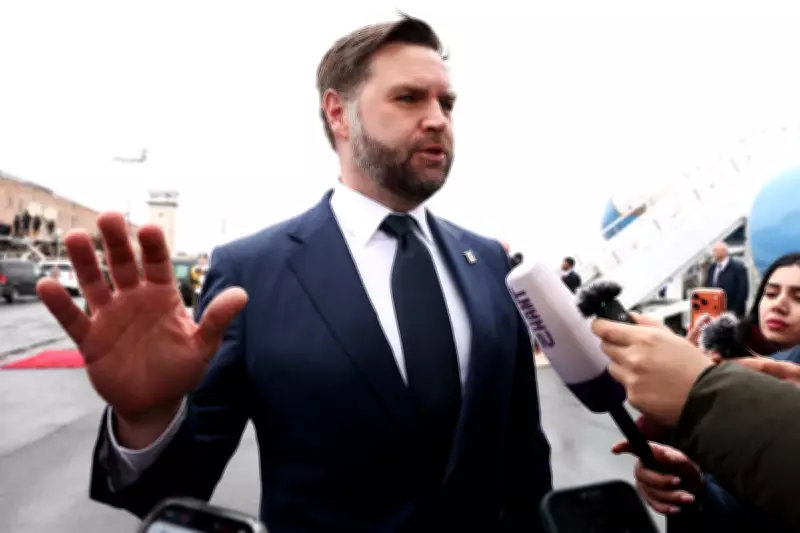
When specifically questioned about whether his memorial visit constituted recognition of genocide, Vance deliberately avoided using the term. He explained he attended "to pay my respects" at the invitation of Armenian Prime Minister Nikol Pashinyan and his government.
"They said this is a very important site for us, and obviously I'm the first US vice president to ever visit Armenia," Vance stated. "They asked us to visit the site. Obviously, it's a very terrible thing that happened a little over a hundred years ago and something that's very, very important to them culturally."
Vance emphasized his visit represented "a sign of respect, both for the victims but also for the Armenian government that's been a very important partner for us in the region."
White House Response and Broader Context
The White House attributed the original social media post to a staff error, marking the second instance within a week where administration officials blamed unnamed aides for controversial social media content. The previous incident involved a racist video shared on former President Trump's Truth Social account depicting Barack and Michelle Obama as jungle primates, which the White House initially defended before deleting amid widespread criticism.
Potential Diplomatic and Political Implications
While immediate diplomatic consequences remain uncertain, Vance appeared focused on his trip's primary objectives, stating, "I think the president struck a great peace deal. I think the administration is really making it stick."
The incident raises political questions about potential reactions from Armenian American communities and serves as another reminder of the US government's historical reluctance to employ the term "genocide" for events that Armenian communities worldwide commemorate through memorials and annual remembrance days.

This rhetorical controversy underscores how language choices in international diplomacy can reverberate through historical memory, current alliances, and domestic political considerations, particularly regarding recognition of historical atrocities.