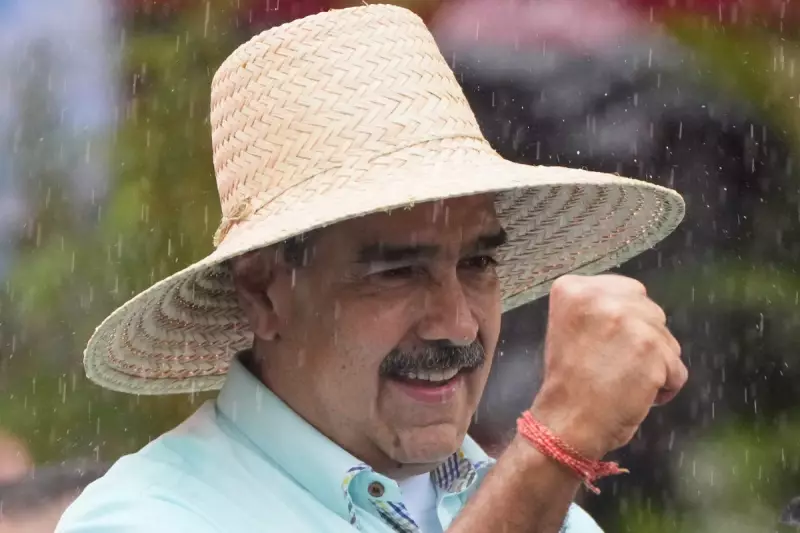
Venezuelan President Nicolas Maduro has made a significant overture to the United States, proposing "serious talks" on combating drug trafficking and offering American companies access to the nation's vast oil reserves.
A Shift in Tone Amid Military Buildup
The remarks, made during an interview filmed on New Year's Eve and broadcast on Venezuelan state television on 1st January 2026, signal a notable shift in Maduro's rhetoric. This comes in the wake of a large-scale US military buildup in the southern Caribbean, ordered by President Donald Trump, who has repeatedly accused Maduro's "illegitimate" government of running a narco-state and threatened to remove him from power.
In the broadcast, Maduro described Venezuela as a "brother country" to the United States and a friendly government. He pointedly recalled that during their last conversation in November 2025, Donald Trump had acknowledged his authority by addressing him as "Mr. President."
Projecting Confidence in Caracas
The televised interview was staged in a symbolic manner. Maduro and his interviewer were seen walking through a militarised zone of the capital, Caracas. In a later segment, the president took the wheel of a car with the journalist in the passenger seat and his wife, Cilia Flores, in the back.
Political commentators interpreted this gesture as a deliberate attempt to project confidence and normalcy, despite Maduro having scaled back public appearances in recent weeks amid fears of a potential US strike.
Oil and Narcotics on the Table
Directly addressing the American people and government, Maduro laid out his terms for engagement. "We must start to speak seriously, with the facts in hand," he stated. "The US government knows... that if they want to speak seriously about the agreement to battle drug trafficking, we are ready to do that."
He directly linked this to Venezuela's primary economic resource, adding, "If they want Venezuela's oil, Venezuela is ready to accept US investments like those of Chevron, when, where and how they want to make them."
This offer stands in stark contrast to Maduro's longstanding accusations that the true motive behind Washington's pressure is to seize control of Venezuela's oil reserves and rare earth mineral deposits.
Context of Accusations and Denials
The Venezuelan leader has vehemently denied any links to criminal activity and frames the US posture as imperialist aggression. At an event shortly before Christmas, he urged Trump to focus on domestic challenges, saying he would tell him that "each one should attend to their internal affairs."
The ball now appears to be in Washington's court. Maduro's latest comments present a clear, if unexpected, diplomatic proposition, coupling the contentious issue of narcotics with the tangible economic incentive of energy access, against a backdrop of heightened military tension.