White House Delivers Terse Six-Word Retort to Joni Mitchell's Trump Remarks
The White House has issued a strikingly dismissive response to legendary singer-songwriter Joni Mitchell after she made subtle criticisms of former President Donald Trump during a recent awards ceremony appearance. The exchange highlights ongoing cultural and political tensions between artistic figures and political establishments.
Mitchell's Subtle Political Commentary at Juno Awards
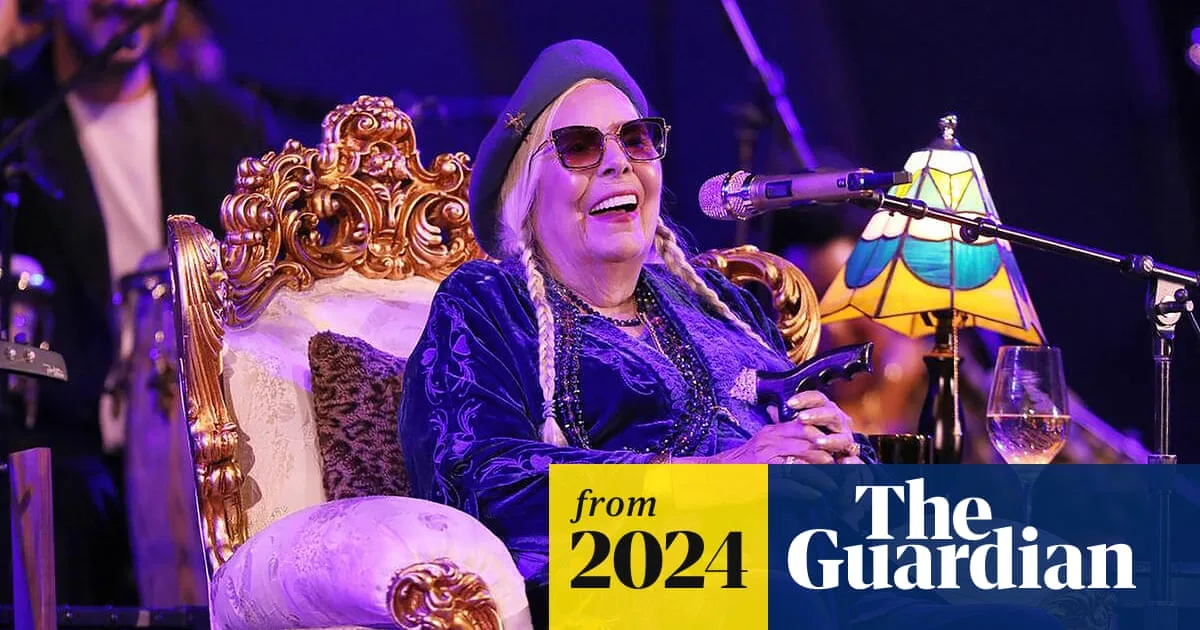
Joni Mitchell, the 82-year-old Canadian-born music icon who resides in Los Angeles, made a rare public appearance on Sunday to accept the Lifetime Achievement Award at the Juno Awards in Ontario, Canada. During her acceptance speech, Mitchell expressed relief at being back in her home country, telling the audience: "I'm living in the States and you know what's happening there." She then offered praise for Canadian Prime Minister Mark Carney, stating: "This man is a blessing. You guys are so fortunate," in what appeared to be a veiled criticism of Trump's leadership.
The White House's Dismissive Response
When approached for comment regarding Mitchell's remarks, White House spokesperson Davis Ingle delivered a pithy six-word retort: "Who the hell is Joni Mitchell?" This dismissive response suggests the administration either chose to ignore the criticism or deliberately minimized Mitchell's cultural significance. The exchange represents another instance of the ongoing friction between the Trump political sphere and prominent cultural figures.
Mitchell's History of Trump Criticism
This is not the first occasion that Mitchell has publicly criticized Donald Trump. During her sold-out performances at the Hollywood Bowl in October 2024, the singer incorporated political commentary into her musical performances. While performing her 1985 song "Dog Eat Dog," which addresses themes of dishonesty and corruption, Mitchell ad-libbed "Like Donald Trump!" following lyrics about "snakebite evangelists and racketeers and bigwig financiers."
Later during the same concert series, when an audience member shouted something about the President, Mitchell chuckled and responded: "'F*** Donald Trump.' I love that song," seemingly referencing YG's 2016 protest anthem "FDT."
Political Activism and Recent Public Resurgence
Mitchell has demonstrated consistent political engagement in recent years. Just before the 2024 presidential election, she encouraged American audience members to vote, stating: "This is an important one. I wish I could vote. I'm a Canadian. I'm one of those lousy immigrants." This comment highlighted her perspective as a Canadian immigrant living in the United States.
At the 2026 Grammy Awards, where she won Best Historical Album, Mitchell wore an "ICE OUT" pin, showing support for immigrant rights and opposition to Immigration and Customs Enforcement policies. This visible political statement further established her as an artist willing to engage with contemporary social issues.
Remarkable Comeback After Health Challenges
Mitchell's recent public appearances mark a significant resurgence following substantial health challenges. After releasing her last studio album in 2007, she stepped away from the music industry for nearly fifteen years. In 2015, she suffered an aneurysm that required her to relearn basic functions including walking, talking, singing, and playing guitar.
Her remarkable recovery and return to public performance began with an honor at the Kennedy Center in December 2021, followed by a triumphant full-length performance at the Newport Folk Festival in July 2022 alongside Brandi Carlile. During her Juno Awards acceptance speech, Mitchell reflected on this challenging period, stating: "Some years ago — 10 or 12 years ago, I forget how long ago — I had an aneurysm, which changed my life, oddly, for the better."
Cultural Significance of the Exchange
The exchange between Mitchell and the White House represents more than a simple celebrity-political disagreement. It highlights the ongoing tension between artistic expression and political power, particularly regarding how cultural figures engage with political leadership. Mitchell's subtle criticisms and the White House's dismissive response illustrate the complex relationship between entertainment, politics, and public discourse in contemporary society.
As a legendary figure in music history with a career spanning decades, Mitchell's political commentary carries significant cultural weight, while the White House's response demonstrates how political establishments sometimes choose to engage with or dismiss such commentary from artistic figures.