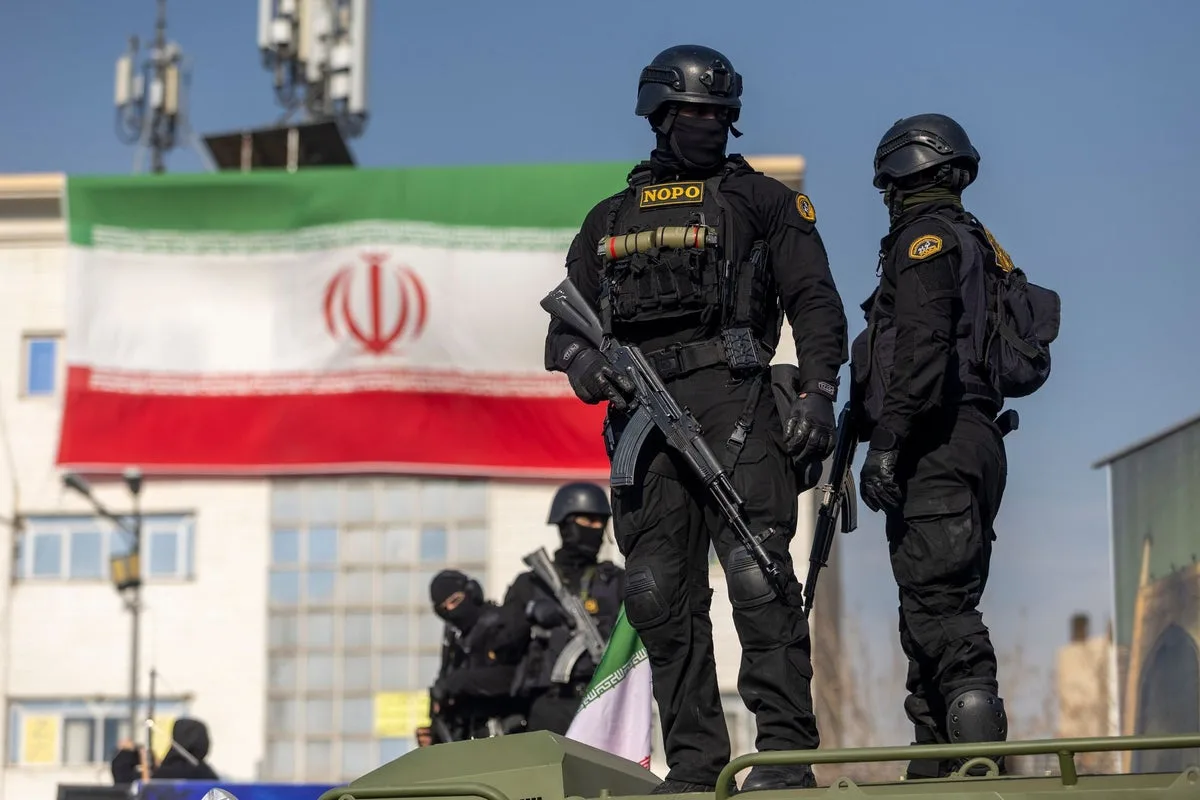
Why War With Iran Would Be a Costly Mistake for the US, Experts Warn
Why War With Iran Would Be a Costly US Mistake

Why War With Iran Would Be a Costly Mistake for the US, Experts Warn

Amid escalating tensions and a growing US naval presence in the Gulf, speculation is mounting that America could be preparing for another Middle East conflict, this time with Iran. President Donald Trump has warned of "serious consequences" if Tehran does not permanently halt uranium enrichment, curb its ballistic missile programme, and end support for regional proxy groups. However, international politics experts argue that such a war would represent a significant strategic error for the United States.

Political Contradictions and Strategic Realities

President Trump's electoral appeal, both in 2016 and again in 2024, has heavily relied on promises to end America's "forever wars" and avoid costly overseas interventions. A full-scale conflict with Iran would directly contradict this narrative. Iran embodies the very definition of a protracted, resource-draining engagement that Trump has vowed to prevent. Any all-out war would almost certainly be prolonged and risk dragging in neighbouring countries, creating a regional quagmire.

Furthermore, achieving a decisive victory would be exceptionally difficult. For a president whose political brand is built on restraint abroad and disruption at home, initiating a war with Iran would undermine the central logic of his stated foreign policy approach.

Iran's Prepared Asymmetric Capabilities

Iran's strategic posture is fundamentally different from past US adversaries. Since the 1979 revolution, Tehran's military doctrine and foreign policy have been shaped by preparing for survival against potential external attack. Rather than building a conventional force to defeat the US in open combat, Iran has invested heavily in asymmetric capabilities.

  • Ballistic and cruise missiles
  • Regional proxy networks
  • Sophisticated cyber operations
  • Anti-access strategies including naval mines, fast attack craft, drones, and electronic warfare

Comparisons to the 2003 Iraq invasion are therefore misleading. Iran is larger, more populous, more internally cohesive, and far more militarily prepared for sustained confrontation. An attack on Iranian territory would not trigger regime collapse but would activate a layered defensive strategy designed precisely for this scenario.

The Staggering Financial and Strategic Costs

While the US defence budget approaches $900 billion annually, giving it the capacity to initiate conflict, the true challenge lies in sustaining a war. The conflicts in Iraq and Afghanistan offer a cautionary precedent, estimated to have cost the US between $6 and $8 trillion when long-term veterans' care, interest payments, and reconstruction are included.

These wars stretched over decades, repeatedly exceeded initial cost projections, and contributed significantly to ballooning public debt. A conflict with Iran—larger, more capable, and more regionally embedded—would almost certainly follow a similar, if not more expensive, trajectory.

The opportunity costs are potentially even greater today. As the US focused on counterinsurgency operations in the Middle East, other powers like China and India invested heavily in infrastructure, technology, and long-term economic growth. The international system is now entering a more intense phase of multipolar rivalry, characterised by competition in artificial intelligence, advanced manufacturing, and strategic technologies.

Geographic and Economic Vulnerabilities

Iran's geographic position compounds these risks significantly. Sitting astride key global energy routes, Tehran possesses the ability to disrupt shipping through the strategically vital Strait of Hormuz. Even limited disruption would drive oil prices sharply higher, feeding inflation globally. For the US, this would translate into higher consumer prices and reduced economic resilience at precisely the moment when strategic focus and stability are most needed.

Political Backfire and Regional Instability

There is also substantial danger that military pressure would backfire politically. Despite significant domestic dissatisfaction, the Iranian regime has repeatedly demonstrated its ability to mobilise nationalist sentiment in response to external threats. Military action could strengthen internal cohesion, reinforce the regime's narrative of resistance, and marginalise opposition movements.

Previous US and Israeli strikes on Iranian infrastructure have not produced decisive strategic outcomes. Despite losses of facilities and senior personnel, Iran's broader military posture and regional influence have proved remarkably adaptable.

The Abraham Accords, which Trump has cited as a foreign policy achievement, depend on regional stability, economic cooperation, and investment. A war with Iran would jeopardise all these elements. Despite their rivalry with Tehran, Gulf states including Saudi Arabia, the UAE, and Qatar have prioritised regional de-escalation in recent years.

Brinkmanship Versus Preparation for Invasion

Taken together, these factors suggest that current US military movements and rhetoric are better understood as coercive signalling rather than preparation for actual invasion. This is not 2003, and Iran is neither Iraq nor Venezuela. A war would not be swift, cheap, or decisive.

The greatest danger lies not in a deliberate decision to invade, but in miscalculation. Heightened rhetoric and military proximity can increase the risk of accidents and unintended escalation. Avoiding that outcome will require restraint, diplomacy, and a clear recognition that some wars—however loudly threatened—are simply too costly to fight.

Bamo Nouri is an honorary research fellow in the department of international politics at City, University of London. This analysis draws upon expertise in geopolitical risk assessment and Middle East security dynamics.