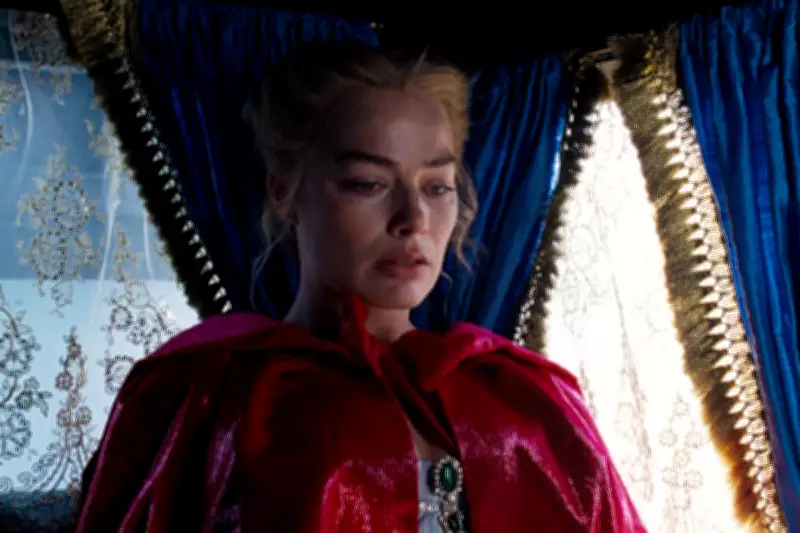
Wuthering Heights Adaptation Sparks Office Rift at The Independent
Are you currently questioning your friendships and relationships based on opinions about Emerald Fennell's flamboyant bodice-ripper adaptation? You are certainly not alone in this experience. Here at The Independent, the release of Wuthering Heights has created deeper divisions than ever witnessed before within our cultural team. In an effort to foster understanding and reconciliation, we invited eight of our writers to articulate their passionately held views on this polarizing cinematic interpretation.
A Cinematic Canary in the Coal Mine
Brexit. The assassination of President John F. Kennedy. The infamous blue and black versus white and gold dress controversy. While these topics have generated notable debates, they pale in comparison to the drama and volatility that has engulfed The Independent's culture desk during the initial days following Wuthering Heights' release. Emerald Fennell's grass-eating, dough-handling bodice-ripper—"loosely adapted" from Emily Brontë's literary masterpiece—has served as a revealing indicator within our offices, exposing longstanding tensions and intensifying rivalries between different editorial sections.
To clarify, I am exaggerating slightly. The reality is that we have experienced profound and genuine disagreement about this film, with Fennell solidifying her reputation as the most divisive filmmaker currently active in the industry. Questions have circulated constantly among staff. "Was Margot Robbie's performance intentionally crafted that way?" "Jacob Elordi's gold tooth—approval or disapproval?" "Did I genuinely enjoy Wuthering Heights, or was there potentially a gas leak in my cinema?" These queries have dominated our conversations.

HR-Mandated Peacemaking
At the explicit insistence of our Human Resources department, we have been instructed to calmly articulate our fractured perspectives about the film in this public forum. We must formally declare that each individual interpretation of the movie remains valid and legitimate. These viewpoints do not reflect positively or negatively upon the respective writers, and no one shall face mockery, commendation, or derision for their thoughts regarding Emerald Fennell's work. A collective sigh of relief has been expressed.
Katie Rosseinsky's Perspective
I entered the Odeon cinema on a Friday evening with a singular expectation from Wuthering Heights: an outstanding performance by Martin Clunes. On this specific criterion, the film delivered satisfactorily. Is Martin Clunes now entering his prestige era? Is Doc Martin poised to "do a Colman" and transition to Hollywood? Beyond this aspect, however, the film elicited a substantial shrug of indifference from me. It failed to achieve the cleverness and scandalous impact that Emerald Fennell evidently believed it possessed. Her persistent tendency to aestheticize relentlessly ultimately stripped away all emotional depth and nuance, rendering one of literature's most strange and fascinating novels feeling flat and emotionally vacant.
Annabel Nugent's Counterpoint
It becomes easy to become immersed in the widespread hatred directed toward Wuthering Heights because, admittedly, the acting demonstrates inconsistency in certain parts and, as an adaptation, it significantly simplifies Emily Brontë's classic novel. Yet when I feel myself beginning to surrender to the joyless naysayers, I recall that I was actually enjoying myself sufficiently while seated in the cinema watching this movie. Between the highly stylized Yorgos Lanthimos-inspired sets, Charli XCX's soaring musical soundtrack, and all the sexually charged silent longing unfolding on screen, ample distractions exist from the film's obvious shortcomings. Certainly, there is nothing profoundly deep or meaningful presented here, but must every film necessarily contain such elements?

Patrick Smith's Balanced Assessment
Few contemporary directors polarize critical opinion as dramatically as Emerald Fennell. For most viewers, her films represent either brilliant achievements or unmitigated disasters. I personally considered Wuthering Heights to be acceptable. At its strongest moments, it emerges as a bold, glistening, schlocky melodrama featuring a Charli XCX score that burrows persistently into your auditory consciousness. At its weakest, however, the film drags ponderously and fails to generate sufficient heat. This cinematic experience is best enjoyed accompanied by generous quantities of wine.
Roisin O'Connor's Scathing Critique
I genuinely loathe this film. I believe it speaks volumes about today's film industry and its condescending assumption that audiences lack sufficient intelligence for anything beyond superficial interpretations of genuine art. Perhaps it also suggests that Emerald Fennell's Oxford University degree in English Literature was ultimately wasted on her. Wuthering Heights constitutes a challenging literary work, certainly, but that does not mean its central themes—colonialism, destructive love, revenge, religious hypocrisy, class conflict—lack contemporary relevance. None of these profound elements materialize in her film adaptation. Instead, we receive what essentially amounts to an extended Charli XCX music video that follows Fennell's teenage interpretation of Heathcliff and Cathy as star-crossed lovers separated by simple misunderstanding. I must particularly question the opening scene's rationale. What was Fennell's intended purpose in depicting a gormless, lust-fueled group of villagers being led into orgasmic frenzy at the sight of a hanged man's erect penis? This represents a telling commentary about her perception of the audience.
Ellie Muir's Appeal for Calm
With all due respect, everyone needs to calm down substantially. Literary adaptations are produced constantly, and while this particular version diverges dramatically from its source material—I would argue that the only resemblance to Brontë's novel resides in the characters' names—this remains a wildly entertaining and aesthetically beautiful movie. I entered the cinema anticipating dislike, having been deterred by the deafening pre-release discourse and the excessively smutty promotional trailer. Yet the film made me laugh, cry, and cringe simultaneously. I found myself covering my eyes on multiple occasions, primarily during the numerous uncomfortable and squelchy fish-poking, egg-yolk-centric scenes. Additionally, the musical soundtrack performs heavy lifting when you discover yourself becoming irritated by the questionable accents. Approach the film with an open mind, and you might unexpectedly enjoy the experience.
Helen Coffey's Alternative Interpretation
If you anticipate witnessing a faithful interpretation of a challenging literary classic, I understand completely why you might sneer at this film. However, I do not believe for a single moment that this represents what Emerald Fennell attempted to accomplish. This film constitutes "porn" for women, pure and simple—an adaptation that stands in relation to Wuthering Heights as Bridgerton does to Pride and Prejudice. The approach actually demonstrates genius once you view it through the lens of erotic fan fiction that has extracted the essence of what many people mistakenly believe the novel concerns—forbidden love culminating in tragedy—and incorporated everything that stimulates audience interest: high production values, sumptuous costumes, and romantic leads possessing abundant sexual chemistry while lacking the inconveniently problematic traits of the original characters.
Carsen Holaday's Unexpected Conversion
Listen carefully, I approached this film with profound scepticism. As someone fiercely devoted to the source material and profoundly bored by Emerald Fennell's previous work Saltburn, I represented a day-one hater of this adaptation from the initial casting announcement. Yet as I sat in the packed theater on opening night, I felt myself involuntarily surrendering each time Charli XCX's autotuned vocalizations swept across the misty moors. Overlooking the gaudy costumes—I overheard a woman in the theater bathroom remarking they appeared AI-generated—and Fennell's signature third-act perversion, I somehow became charmed by Jacob Elordi's small earring and found myself earnestly sobbing by the film's conclusion. While I still wish she had simply written an original screenplay, you must respect Fennell's unwavering commitment to her artistic vision, regardless of how pathetic and possessive it might appear.
Jessie Thompson's Maximalist Appreciation
What is the one characteristic we famously recognize about the novel Wuthering Heights? It represents excessive intensity. And what is the one attribute we could all confidently identify about Emerald Fennell's big-screen, quotation-mark-embraced "Wuthering Heights"? It demonstrates excessive intensity. Almost overwhelming intensity. And that constitutes precisely why I adored it. Emily Brontë's solitary novel has provided female artists from Kate Bush to Sylvia Plath with the confidence to embrace excessiveness for decades, and there exists something genuinely joyful in embracing that artistic maximalism that Fennell grasps with both hands. The film is excessively bright, excessively ribald, and every character appears far too beautiful. It does not remain faithful to the book, but it maintains faithfulness to the novel's essential spirit. Sometimes I wished Fennell would cease becoming distracted by pretty visual elements and allow sexual tension to simmer between her two doomed lovers, but simultaneously, this is not that particular type of film. Who ultimately cares when a film delivers this much entertainment? I remain fascinated and somewhat thrilled by the divisive reactions. Do we still maintain such gatekeeping attitudes toward GCSE set texts? Are we still so unwilling to engage with a woman's artistic vision on its own distinctive terms? Wuthering Heights represents excessive intensity—it is fundamentally intended to embody precisely that quality.