King Charles's friendship 'saved' Tetra Pak billionaire Sir Hans Rausing twice
King Charles's friendship 'saved' Tetra Pak billionaire twice

The two venerable gentlemen are clearly old friends, engrossed in conversation – to the point that neither even looks up to acknowledge that they are having their picture taken. One of them, the King, you will of course recognise instantly but the other may take you somewhat longer – if you know him by sight at all. And that’s because his days of routine society party going – and, before that, macabre international notoriety – are both now long past.

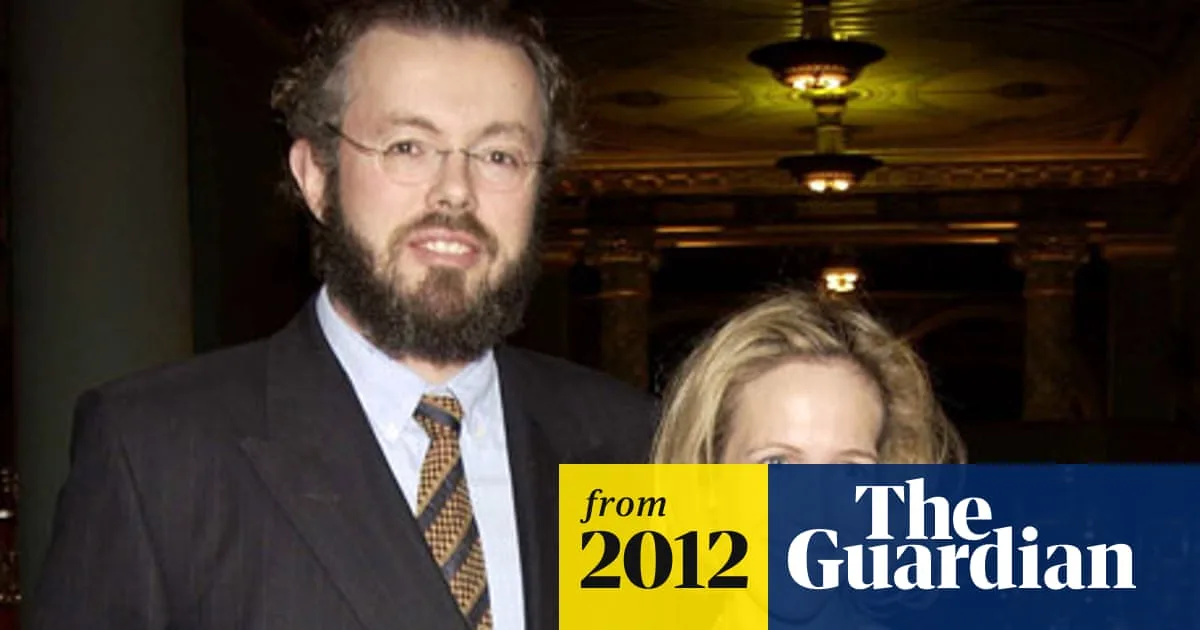
That second man is the now increasingly reclusive billionaire, Sir Hans Rausing. And the picture of Rausing with King Charles, taken at a literary reception given by Queen Camilla at Clarence House last month, gives a fascinating insight into a relationship that some credit with having ‘saved’ the rarely-seen tycoon not once, but twice. Because while the grisly story of the strange life of the heir to the Swedish Tetra Pak billions, and the deaths of his two wives, is well known to many, the small but important part played by King Charles in it is much less widely understood.

The Early Years and Addiction

Mr Rausing’s saga begins, of course, with unimaginable wealth. Born in 1963 in Lund, Sweden, Rausing was heir to a giant fortune built by his grandfather, Ruben Rausing, whose revolutionary cartons transformed the global food industry. By the time Hans Kristian Rausing, now 62, reached adulthood, the family name was globally synonymous with billions. In 2019, at the time of his father Hans Senior’s death, the family fortune, of which he was principal beneficiary, was estimated at £9billion.

Wide Pickt banner — collaborative shopping lists app for Telegram, phone mockup with grocery list

Yet even in those early years, Swedish society eyed the already eccentric Rausing junior, known as ‘Hans K’ with a mixture of awe and unease. Press profiles would later describe Hans Kristian as a restless, drifting figure, a man who spurned the family business to wander through India and beyond in search of mystical fulfilment. What he found instead was addiction.

It was in an American rehab clinic that Rausing met Eva Kemeny, the glamorous daughter of wealthy US Pepsi-Cola executive Tom Kemeny and his wife Nancy. Their marriage, formalised in 1992, had the hallmarks of a society fairy tale: wealth, beauty, philanthropy and homes stretching from Belgravia to Barbados. Together, they gave millions to addiction charities and moved in the upper circles of society in London and New York, even as they battled the demons of drugs themselves.

Royal Support

It was at this point, over 20 years ago, that the first known contact occurred between the now secret addict Rausing and the future King – and it’s thought they immediately connected. This came in 2004, when Eva was personally appointed by the then Prince Charles as a trustee of his charity, the Prince’s Foundation for the Built Environment. July 2006 saw the first public acknowledgement of the budding relationship between the two eminent men: when the Prince publicly thanked Hans Rausing for a donation he had made to that charity.

‘I am delighted to say that we have already attracted some serious support from one very special philanthropist,’ said Prince Charles, hinting that there was not only money involved here, but also a developing friendship. But at the same time that the Rausings were socialising in the very highest circles, behind closed doors they were set on a darker and ultimately ruinous path: by 2008, their addiction had become impossible to conceal.

It finally became public when Eva was arrested after – incredibly given its reputation for the highest security – attempting to enter the US Embassy, then in Grosvenor Square in Mayfair, while carrying cocaine and heroin. When her stash was uncovered, it prompted a police raid on the Rausings’ palatial home in nearby Cadogan Square, Belgravia, where further drugs were discovered. It was an extraordinary bust which made headlines around the world – and immediately attached a notoriety to the Rausing name which endures to this day.

Pickt after-article banner — collaborative shopping lists app with family illustration

Nevertheless, the couple had one very prominent friend who didn’t walk away, but who was instead prepared to defend them publicly: Prince Charles. The then heir to the throne quickly made it known that he felt Eva – and, by association, Hans – deserved sympathy and support rather than condemnation. An aide told The Mail on Sunday at the time: ‘The Prince’s charities work with young people, many of whom have had problems with drugs. They aim to give these people a second chance to help them rebuild their lives. It would therefore be hypocritical for the Prince not to give Eva Rausing a second chance.’

This was a bold move by Charles, as predictably many violently disagreed with his stance. Typical was Labour MP Ian Davidson who publicly attacked the Prince over his support for the Rausings. He said: ‘There is every difference between a mature adult being involved in cocaine abuse and impoverished youngsters getting involved with drugs. Prince Charles’s stance strengthens the view that the casual use of drugs by members of society and the Establishment is acceptable and that when they are caught they face no consequences.’

In Sweden, this was not merely a scandal – it was a national embarrassment. The heir to one of Sweden’s greatest industrial fortunes had become, in the blunt phrasing of tabloid commentators, ‘a billionaire lost in drugs’.

Tragedy and Rehabilitation

But worse, much worse, was to come. In July 2012, the Met Police, acting after a routine stop prompted by Rausing driving erratically, searched the couple’s £70million Belgravia mansion. What they discovered, in an upstairs attic, would horrify even hardened detectives: Eva Rausing was dead, long dead, and her body lay concealed beneath bin bags, clothing and bedding. One report described her corpse as being in an ‘advanced state of decomposition’ – so advanced in fact that she could only be formally identified by the serial number of her pacemaker.

Eva, 48, had been dead for weeks – probably since May – yet her husband had told no one. Certainly not an undertaker. Her death would later be ascribed to an overdose of cocaine, with her existing heart condition a contributory factor. Rausing was charged with preventing the lawful and decent burial of his wife, an allegation he immediately admitted when he appeared at Isleworth Crown Court in August. The only explanation he offered was almost as haunting as the crime itself: he said he had been ‘unable to let her leave’.

To some, it sounded like madness. To others, a grotesque manifestation of grief warped by addiction. Rausing told the court: ‘I did not feel able to confront the reality of her death… I tried to carry on as if her death had not happened. I batted away inquiries about her. I took some measures to reduce the smell. I believe in the period since she died I have suffered some form of breakdown.’

Charles’s decision to have publicly supported the Rausings two years earlier looked particularly ill-judged by now. But there was more mercy to come – this time, remarkably, from Eva’s parents. Tom and Nancy Kemeny had already endured years of watching their daughter spiral into addiction. Now they were confronted with the knowledge that her body had lain undiscovered – and unburied – for weeks in her own home. But astonishingly, there was no call from them for vengeance against Rausing. Instead, in a public statement, the Kemeny family wrote: ‘Eva and Hans Kristian adored each other and their four beautiful children. Eva will be a devastating loss to our beloved son, Hans Kristian, whom we love unconditionally with all our hearts.’

Those close to the family spoke quietly of a recognition that addiction, not malice, lay at the heart of the tragedy, yet few expected Rausing to come back from the incident. Rausing was given a non-custodial sentence, conditional on a court-imposed rehab programme. It proved timely. As his literary journalist sister Sigrid Rausing later wrote in her memoir, Mayhem: ‘He was devastated and traumatised by Eva’s death. He was essentially sentenced into care: a short suspended prison sentence and a two-year drug rehabilitation program.’

New Beginnings

This rehab appears to have laid the groundwork for what would be his transformation. Because rather than hide away from the public eye in disgrace, Rausing began to socialise. And this was thanks to Julia Delves Broughton – a woman, like him, who had grown up in the public eye, with great wealth, but with no little familial trauma.

She was the granddaughter of Sir Henry ‘Jock’ Delves Broughton, a colonial figure notorious for his involvement in the 1940s Kenyan ‘White Mischief’ scandal, later depicted in the movie of the same name by Joss Ackland, which also starred Charles Dance and Greta Scacchi. And Julia had lost not one, but two siblings. When she was just three, her mother had asked her older sister to ‘keep an eye’ on their brother John as the siblings played in the garden. But that sister, Isabella, was momentarily distracted just as the boy, who had been eating toast, was taking off his shoes and stepping into the ornamental pond. He suddenly pitched forward, and within two minutes he was dead. He didn’t die of drowning, but from asphyxiation, having fallen after choking on the toast. At the inquest, the tragedy was described by the coroner as a ‘one-in-a-million chance’ with no one to blame. That sister grew up to be flamboyant and renowned fashionista Isabella Blow. But she had spent her entire life agonisingly believing her mother did blame her for her brother’s death – and she took her own life in 2007.

Hans and Julia married in July 2014, at Woburn Abbey in a discreet ceremony – as discreet as a wedding at a stately home can be. But the celebratory party that followed in November at the One Mayfair venue was a rather more showy event. Although there was no royal presence, the new Mr and Mrs Rausing were toasted by an eclectic mix of celebrities and the great and good. The guest list included TV presenter Jools Holland, Pink Floyd drummer Nick Mason, Roxy Music singer Bryan Ferry’s socialite son Otis and his then girlfriend, model Edie Campbell, milliner Philip Treacy, conservationist Desmond Guinness, property tycoon Gerald Ronson, hedge fund manager Rod Barker and his TV presenter partner, Tania Bryer.

Perhaps understandably, the new couple wanted a new start. The infamous six-storey house in Belgravia where Eva had died was sold, and Hans instead bought a grand £28million riverfront mansion in Chelsea, in 2014. The previous owner was then Chelsea FC owner Roman Abramovich, but other past names on the deeds included the engineer Isambard Kingdom Brunel, painter James Whistler and, more recently, in an echo of the Eva affair, Tory politician Paul Channon, whose 22-year-old daughter, Olivia, died of a drink and drugs overdose in 1986.

But, more significantly in terms of any friendship with the then Prince of Wales, the same year, the Rausings also bought the grand £11million Lasborough Park estate in Tetbury, Gloucestershire. This made him and Charles neighbours – as he was now only five miles from the Prince’s own beloved Cotswold retreat, Highgrove House, then his main residence. Whether they regularly enjoyed each other’s company in this new proximity is unknown, but a royal source told us that Charles may well have felt a connection with Rausing for very personal reasons: ‘After the Princess of Wales died there was a lot of anger directed at Charles over what had happened – with some of the more hysterical reaction actually blaming him for her death. I don’t think it’s fanciful in this context to suggest that the King may have identified with Hans Rausing after the way he was publicly vilified over the death of his first wife. Charles is very empathetic and may very well have been touched by the dignity Rausing showed in such terrible circumstances.’

Meanwhile, Rausing continued to be enormously generous with his cash to a myriad of charities, and he and Julia were consequently invited to – and attended – numerous society functions. They were a couple about town – something which had seemed inconceivable in the immediate aftermath of Eva’s death. Together, Hans and Julia established the Julia and Hans Rausing Trust – an organisation that would go on to donate around £100million annually to charitable causes, including the Prince’s Trust, later the King’s Foundation. Among other beneficiaries was one close to Hans’s heart, Action On Addiction, whose patron is the Princess of Wales. The scale of this philanthropy cannot be overstated. The Rausing Trust has become one of the largest grant-making bodies in Britain, supporting everything from food banks to arts institutions.

Second Tragedy and Knighthood

But then marital tragedy a second time: Julia fell ill with cancer and then, in April 2024, died. Friends were extremely worried for Hans – now that the woman who had ‘saved’ him was no longer around, might he quickly slide back into reclusiveness, or even return to drugs? It’s certainly true that the days when Rausing would be a regular at galas and balls were now and remain over. Now, the twice-widowed tycoon is seen far less frequently. It’s understood he spends the majority of his time alone in that mansion by the Thames in Chelsea.

But, even though he is much more socially withdrawn, out of the public eye, Rausing has kept his focus on the charities that had brought him and his second wife so much fulfillment. He even renamed their foundation in Julia’s honour. It is now simply the Julia Rausing Trust. The Trust remains one of the UK’s biggest art donors, and a few months after Julia’s death, pledged a record-breaking £150million to the National Gallery for its ‘Project Domani’ expansion, the biggest single cash donation to a museum or gallery globally.

And it was at this point in the story that Charles – by now the King – made his boldest public move in relation to Rausing. Last December, King Charles knighted Rausing for services to the arts. It is almost unheard of for someone with such a high profile criminal conviction to be honoured in this way – and it formally confirmed Rausing’s remarkable rehabilitation in the eyes of the British establishment. It’s believed Charles personally took the final decision to proceed with the honour.

A royal source said: ‘The King is a believer – he is somebody who believes in forgiveness in accordance with his Church of England faith. He is very loyal and once he takes to someone he is always inclined to forgive rather than condemn. Over the years the King has publicly defended Hans Rausing, and knighted him – and allowed himself to be seen with him in public – when each time this would have been in the face of advice to do the very opposite. And I don’t doubt that this has been important to Rausing to have such a champion.’

And so it was little surprise to find Rausing among those invited to Camilla’s literary evening in March – and to see him so engrossed in discussion with the King. Today, Sir Hans Kristian Rausing inhabits a curious position in British life: both as a cautionary tale and as an extraordinary benefactor, a man whose name evokes scandal and generosity in equal measure. His generosity in turn has been reciprocated in the very highest circles.