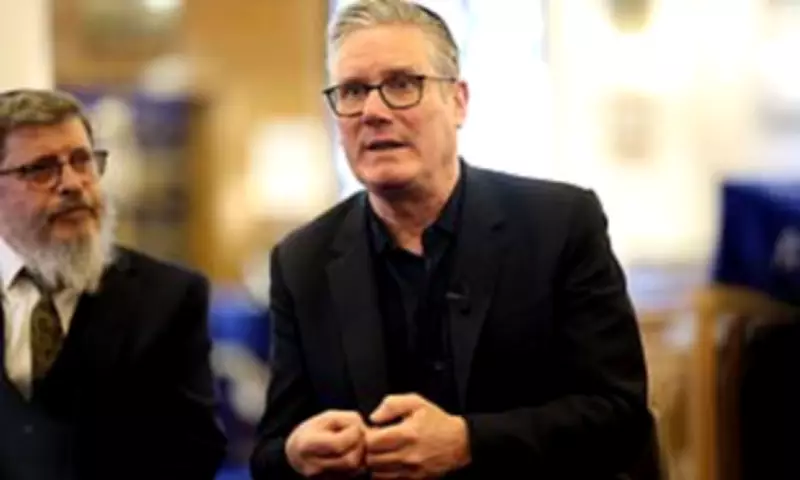
Sir Keir Starmer and Donald Trump remained far apart over Iran last night after their first telephone call in a fortnight. The Prime Minister warned the US President of the 'severe consequences' resulting from blockading the Strait of Hormuz.
After they spoke, President Trump made another public dig at Sir Keir over Britain's failure to send warships to protect oil tankers. The conversation came just after President Trump and the First Lady survived an apparent assassination attempt at the White House Correspondents' Association dinner.
This was understood to have been their first official conversation since 9th April, following the Prime Minister's remarks that he was 'fed up' with the US President and Vladimir Putin. Last night, Downing Street confirmed their latest telephone call and said the Prime Minister extended his best wishes after the dramatic scare.

The two leaders remained miles apart over policy. To Trump's disappointment, Starmer has refused to send Royal Navy ships during the conflict. The UK's position, agreed with its major European allies France and Germany, has been mocked repeatedly by the White House.
A spokesperson said: 'The leaders discussed the urgent need to get shipping moving again in the Strait of Hormuz given the severe consequences for the global economy and the cost of living for people in the UK and globally. The Prime Minister shared the latest progress on his joint initiative with France's President (Emmanuel) Macron to restore freedom of navigation.'
The US and Iran appear to have reached a stalemate after peace talks expected to take place in Pakistan were cancelled. The Iranian delegation left Pakistan over the weekend, while the US team led by Steve Witkoff and Jared Kushner were called back by Trump.
Addressing the cancellation of negotiations, Trump invited Iran to call the US, saying the country has plenty of security telephone lines. Trump said: 'If they want we can talk, but we're not sending people. They know what has to be in the agreement. It is very simple: they cannot have a nuclear weapon, otherwise there is no reason to meet.'
The tempo of the conflict has dropped dramatically since a temporary ceasefire agreed on 7th April, but a permanent agreement remains far off. A standoff remains elusive in the war that has killed thousands of people and shaken the global economy. Sir Keir Starmer has been a diplomatic bystander throughout the conflict.
Iran has called on the US to end its blockade before talks can start. Iran wants to charge companies vast sums to pass safely along the Strait and to share the proceeds with Oman. The economic fallout is growing two months into the war as global shipments of oil, liquefied natural gas, fertiliser and other supplies are disrupted by the near-closure of the Strait.
Both sides have continued to make military threats. Iran's joint military command on Saturday warned that 'if the US continues its aggressive military actions, including naval blockades, banditry, and piracy' it will face a 'strong response'. Last week, Trump ordered military units to 'shoot and kill' small boats that could be placing mines.
Since the war began, at least 3,375 people have been killed in Iran and at least 2,509 people in Lebanon, where the Israel-Hezbollah fighting resumed two days after the Iran war started.