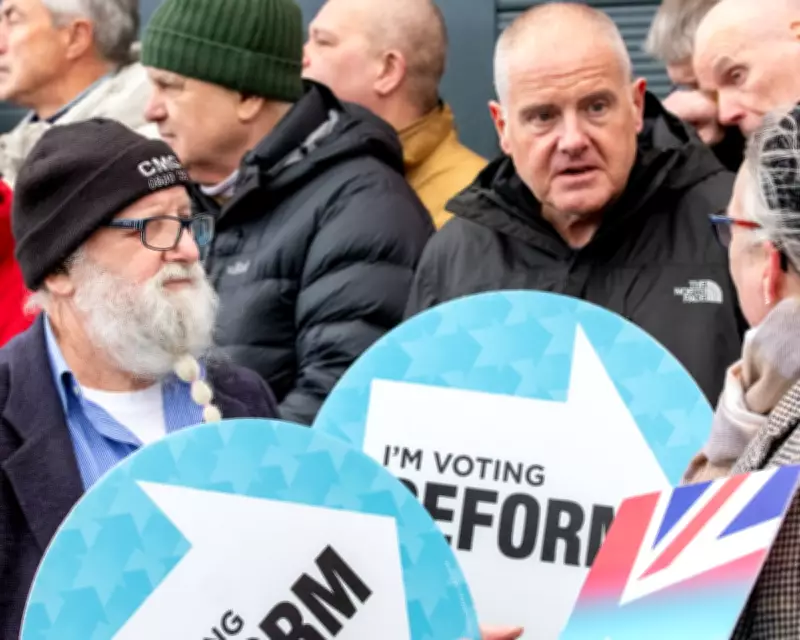
Anger and Disillusionment Define Historic Gorton and Denton Byelection
In the cold, rain-soaked streets of south-east Manchester, the fraying of Labour's electoral coalition is palpable. With just nine days remaining until the historic byelection in Gorton and Denton, a diverse range of communities share a visceral contempt for Prime Minister Keir Starmer. Mention his name, and people respond with laughter—not of affection, but disbelief, as if treating him as a serious topic of conversation is absurd.
A middle-aged woman walking her dog sums it up: "He just doesn't stick to his word," she says, noting that her real feelings are too impolite to print. This sentiment is widely echoed, with YouGov polling revealing that six in ten Britons view Starmer as untrustworthy, while only two in ten believe the opposite.
The Founding Sin of Deceit
This widespread distrust stems from what many see as the defining trait of Starmer's political project, crafted by his recently departed chief of staff, Morgan McSweeney. Initially, it was seen as smart politics to mislead the Labour membership with leftwing policy pledges six years ago, only to abandon them later. However, this founding sin has evolved into a perception of innate deceit and duplicity among voters.
The consequences are clear in Gorton and Denton, where Labour once secured half the vote in 2024. Now, the party's coalition is splintering in two directions: towards Zack Polanski's Greens on the populist left and Nigel Farage's Reform UK on the Trumpian nationalist right.
Diverse Voter Sentiments Defy Neat Categories
Commentators often divide the constituency into younger, more diverse Gorton and older, whiter, more working-class Denton. Indeed, Green Party posters and garden stakes are abundant in Gorton, while union jacks are more visible in Denton. Yet, voters do not always fit into neat boxes.
An older woman in Denton voices grievances about "illegal migrants" taking jobs but reveals she is voting for the Green candidate, local plumber Hannah Spencer. Similarly, a white man in his 70s denounces Rachel Reeves for what he perceives as a vendetta against pensioners and declares his support for the leftwing insurgents.
Hannah Spencer is bullish about Denton, arguing that Reform UK underestimates how much white working-class communities care about having a place for everyone to live. "They assume that white working-class communities all think and act in one and the same way," she says, "and that we don't care about each other."
Immigration as a Key Grievance
Despite the shared anger and disillusionment, expressions of frustration vary widely. For those leaning towards Reform's candidate, Matt Goodwin, immigration is often the first grievance voiced. A middle-aged woman explains her support for Reform, stating, "Britain seems full with immigrants at the moment, and there's not enough houses." She complains that her three sons cannot even get on the council-house waiting list.
This highlights how rightwing populism feeds on the wreckage of a broken economic model. People feel trapped in a zero-sum game, believing fewer foreigners would mean more homes, jobs, and security. However, the real issue is the flogging off of council-house stock without replacement, leaving tens of thousands on waiting lists.
The Greens' Uphill Battle
Whether the Greens can defeat rightwing populism depends on their mostly youthful army of activists. The party claims to have knocked on 11,000 doors in a single Saturday—roughly a quarter of households in the constituency. Yet, their rise has been sudden, with little historic infrastructure in the seat, forcing them to build from nearly scratch.
Longtime resident and activist Ally Fogg notes, "The main thing is that nobody is voting Labour. It's become almost impossible to find a Labour voter anywhere." This sentiment is echoed in the struggle to locate Labour supporters, with even party loyalists wavering and considering which candidate is best placed to stop Reform.
Labour's Struggles and Shy Voters
Labour remains bullish about its prospects, though this byelection upends normal expectations management. Typically, parties downplay their chances to motivate voters, but with competition from another progressive party, a different calculation applies. If Labour's vote has not collapsed, it may be due to a new "shy Labour voter" phenomenon, where supporters are reluctant to admit their intentions due to stigma.
However, the party's grassroots struggle to articulate a coherent purpose. A cheerful canvasser from Bradford mentions "equality" as a core Labour value but falters when asked which policies embody that. Party briefings insist support holds among local Muslim voters despite fury over British complicity in Israel's war in Gaza, but leftwing activist Farrukh Haroon dismisses this claim, arguing Labour's vote has "tanked" as Muslim communities feel treated as "voting fodder" and "colonial subjects."
A Darkening Future for Democracy
What should truly frighten anyone invested in democracy is the level of angry disengagement on display. Some citizens have given up on voting altogether, expressing solidified contempt towards all politicians. These are individuals the Greens' brand of populism has yet to convince.
After years of crises in living standards and public services, hope has shriveled, replaced by frustration, apathy, and most obviously, despair. If this despair hardens, it could propel the country into far darker territory. Once trust is eroded, as evident in Gorton and Denton, no one can be sure what happens next.