Democratic Insurgents Challenge Party's Old Guard Ahead of Midterms
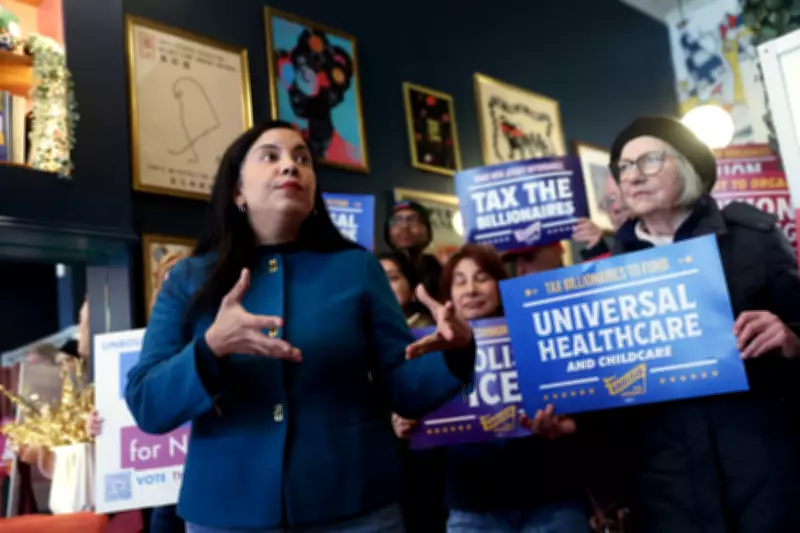
Inspired by Zohran Mamdani's shock victory in last year's New York mayoral race, a wave of insurgent candidates is mounting primary challenges against Democratic incumbents ahead of November's midterm elections. These challengers, often from the party's progressive wing, are driven by anger over the Democratic leadership's tepid response to Donald Trump's authoritarianism, complicity in the war in Gaza, and a crushing affordability crisis.
This movement has left entrenched Democrats, who for years cruised in safe House seats, reportedly panicking about being swept aside in an anti-establishment revolt reminiscent of the Tea Party that rocked Republicans in the 2010 midterms. The simmering discontent was evident in a recent New York Times focus group where rank-and-file Democrats described their own party as "spineless," "complacent," and "afraid."
Grassroots Momentum and Primary Battles
Ezra Levin, co-founder of the grassroots movement Indivisible, commented on the growing chasm between Democratic voters and leadership. "The size of this year's primary engagement is indicative of the chasm between rank-and-file Democrats and the Democratic leadership right now," Levin said. Indivisible has channeled backlash against Trump into "No Kings" protests, with a third planned for 28 March aiming to draw 9 million participants.
Levin predicted the primaries will test candidates' willingness to fight back, framing the general election as a one-two punch against authoritarianism and affordability issues. The Democratic primaries kick off in March and run through spring and summer ahead of the national midterms in November.
Key Races and Shifting Dynamics
The political tremors were recently felt in New Jersey, where Analilia Mejia, a progressive organizer allied with Bernie Sanders, won a crowded special Democratic House primary. Following Mejia's victory, the left "smells blood," according to Axios, with a senior House Democrat confirming members are freaking out about their own primaries.
Tom Malinowski, a former congressman and moderate Democrat who came a close second in that race, suggested the old left versus centre divide is less important than the dynamic of fighters versus folders. "One lesson of my race is that the two candidates who received the most support, myself and Mejia, both campaigned as uncompromising fighters against Trump and for democracy," Malinowski told the Guardian.
Malinowski, hurt by a $3 million negative ad blitz funded by the pro-Israel lobbying group Aipac, perceived a shift among Democratic voters away from bipartisan centrism. "There was a Manchin-to-Mamdani mood among the electorate," he added, emphasizing that being seen as a fighter matters more than party wing affiliation.
Demand for Combativeness and Funding Shifts
This demand for combativeness is a recurring theme on the campaign trail, where scores of insurgents are better funded than in past cycles. March On, a political action committee, recently announced early endorsements of "visible fighters" who "meet this moment head-on" and give Democrats the strongest chance to mobilize the base.
Andrea Pringle, president of the March On and Future Dems PACs, said, "There's a thirst for people that will stand up and show some spine and be willing to call things out and not be afraid." Age and ideology are also factors, with challenges like Jasmine Clark taking on David Scott in Georgia over alleged voting lapses.
Progressive Challenges and Establishment Fears
In New York's 10th district, moderate Dan Goldman faces a threat from progressive Brad Lander, backed by Mamdani and Sanders. Lander criticized the oligarchy's influence, saying, "While the oligarchy drives the affordability crisis, they shouldn't be able to buy a seat in Congress."
Another test case is Illinois' deep blue 9th District, where Kat Abughazaleh, a progressive Palestinian American, is taking on the Democratic establishment. Abughazaleh expressed frustration with leaders who capitulate while courting donors, arguing that fighting talk must go beyond mere words.
Norman Solomon, national director of RootsAction.org, said many challengers view the party establishment as serving the same corporate interests as Republicans, with complicity in Gaza being a major factor. "It's like a dam that's starting to burst," he noted, describing incumbents as "rotted fruit" starting to fall.
Centrist Warnings and Progressive Rebuttals
Centrist Democrats warn that a leftward lurch could be electoral suicide. Matt Bennett of Third Way called this season's primaries "problematic to idiotic," fearing they could fumble away winnable seats by nominating candidates too far left for their districts.
Progressive organizers reject this logic. Joseph Geevarghese of Our Revolution said, "What newer candidates are seeing and feeling is an electorate that is tired of the establishment and the status quo." He argued that full-throated economic populism, not moderation, is the way to win, citing Bernie Sanders, Mamdani, and even Trump as examples.
As the primary season unfolds, these battles will shape the Democratic Party's direction, testing whether insurgent energy can translate into electoral success against a wary establishment.