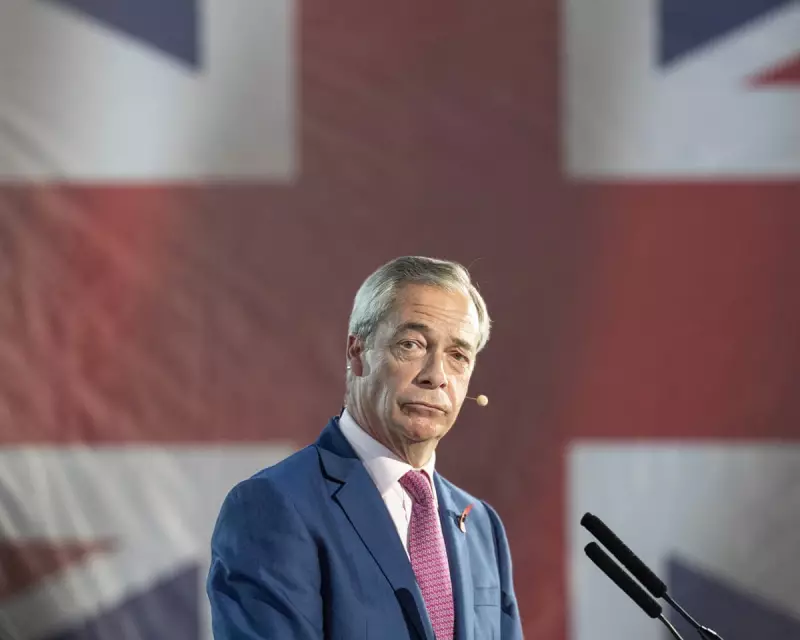
A former senior Labour strategist has issued a stark warning that the party requires a complete "fundamental reset" to effectively counter the rising populist threat posed by Nigel Farage's Reform UK. Chris Powell, who advised the party for over two decades, argues that current efforts led by Keir Starmer are insufficient and that the next general election represents an existential moment for British democracy.
The Populist Playbook: A Global Threat to Democracy
Powell highlights a dangerous international pattern, citing statements from figures like Donald Trump and Recep Tayyip Erdoğan that suggest a willingness to undermine democratic processes once in power. He points to examples in Hungary, Turkey, India, and the United States where populist leaders have been accused of rigging systems, controlling judiciaries, and stifling independent media to entrench their rule.
"The longer they go unchallenged, the more unthreatening and risk-free they will seem to voters," Powell states. He condemns any strategy that relies on hoping Reform UK implodes or that the right-wing vote fractures as "potentially suicidal for our freedom and democracy."

Learning from New Labour's Disciplined Playbook
The analyst draws a direct comparison to the disciplined approach taken by Tony Blair's team ahead of the 1997 landslide victory. He recalls a key election planning meeting at his home in September 1995, where New Labour, despite being ahead in the polls, meticulously planned a total reorientation.
"We planned scrupulously for a complete reorientation, to signal a real break from the past," he writes, advocating for the same "no-holds-barred thinking" today. This stands in contrast to what he sees as Starmer's current small-scale efforts, such as tentative steps on Europe and initial forays into TikTok, which are overshadowed by narratives of government failings.
A Three-Point Plan to Take on the Populists
Based on four years of research with colleague David Cowan, Powell outlines a crucial three-part strategy for Labour.
First, the party must adopt a ruthless rebuttal mindset, fighting fire with fire on messaging, calling out lies, and exposing simplistic solutions. Prioritising conventional political niceties would be a luxury it cannot afford.
Second, Starmer must fundamentally change how he connects with voters. Powell cites the example of Kentucky's Democratic Governor Andy Beshear, who won in a Republican state by relentlessly focusing on "bread-and-butter issues" in plain language. Voters who feel ignored and angry need to see that Labour is on their side.
Third, Labour requires a top-to-bottom media overhaul. Powell warns that the populist right operates a coordinated, emotionally driven machine across social platforms. To compete, Labour must create a semi-autonomous digital narrative unit to win the daily war for attention and shift from a national "air war" to a permanent, hyper-local "ground war." This involves building a local action network to listen, act, and communicate on community issues.
Powell concludes that time is a luxury Labour does not have, and that relying on a rational "hold-your-nose" vote from the electorate is a strategy destined to fail. The threat is growing, evidenced by international coordination among populist movements, and demands a comprehensive action plan immediately.