Gorton and Denton By-Election: What Do Opinion Polls Reveal About Party Fortunes?
As the political landscape continues to shift, the upcoming Gorton and Denton by-election on 26 February 2026 has become a focal point for gauging party support. The question on many minds is whether the recent spate of high-profile Conservative defections has bolstered Reform UK, or if the Greens might capitalise on Labour's ongoing difficulties. Sean O'Grady delves into the latest polling data to uncover the trends shaping this critical contest.
Current Polling Landscape: Reform's Dominance and Shifting Alliances
Recent opinion polling indicates that Reform UK's remarkable surge in support may be experiencing a slight softening, though Nigel Farage's party remains firmly in the lead. Meanwhile, the Greens, and to a lesser extent the Conservatives, appear to be gaining ground. Labour's support seems to have bottomed out at an alarmingly low 15 per cent, raising questions about their viability in this by-election and beyond.
Who Is Winning? Reform UK Maintains Its Lead
Reform UK has consistently led in the polls for approximately ten months, though some recent surveys place them at 25 per cent, below their October peak of 30 per cent. However, more sophisticated sociologically-based "mega polls" suggest higher levels of support, particularly concentrated in constituencies where they stand the best chance of securing Commons seats.

These MRP polls (multi-level regression and post-stratification), which target predictions based on the social and electoral characteristics of individual seats, have demonstrated strong predictive accuracy. The two most recent MRP studies, both published this month, project Farage's party winning a Commons majority. One conducted by Electoral Calculus (with fieldwork from 1 to 8 December) forecasts a parliamentary majority of 20 for Reform, while another by More in Common (with slightly earlier fieldwork) predicts a substantial majority of 112 over all other parties.
It is important to note that even minor fluctuations in support, along with varying assumptions about how that support is distributed and the extent of tactical voting, can significantly alter outcomes. In summary, Reform remains ahead and shows no signs of collapse, though there may be some softening in their support. The impact of recent Tory defections remains unclear at this stage.
Who Is Supporting Reform? A Coalition of Disaffected Voters
In terms of previous political allegiance, Reform's support primarily derives from former Conservative voters. There is also evidence that some individuals who abstained from voting in the July 2024 general election have been won over by Farage's message, though these voters would likely have supported the Tories under normal circumstances.
Who Is Losing? Liberal Democrats Face Challenges
The Liberal Democrats find themselves in a difficult position. Historically, when both major parties were simultaneously unpopular, centrist support surged—as seen during the 1974 elections, much of the 1980s, and the "Cleggmania" period preceding the 2010 hung parliament. Today, however, disillusioned voters have a broader array of choices, including Reform, the Greens, the SNP, Plaid Cymru, pro-Palestine independents, and Your Party on the Left.
Consequently, Lib Dem support is actually lower than at the last general election, though it remains efficiently distributed in marginal seats, helping to protect their parliamentary strength. In contrast, MRP studies estimate that the Greens could secure anywhere from 9 to 52 seats, highlighting the complexity of projections in a multi-party environment.
What Will Happen at the Gorton and Denton By-Election?
Predicting the outcome is fraught with uncertainty. No Labour seat can be considered safe at present, and much will depend on which of the half-dozen candidates emerge as the main contenders. The contest could well evolve into a direct battle between the Greens and Reform, especially since George Galloway has announced he will not run (with councillor Shahbaz Sarwar standing as the Workers' Party candidate instead).

It is worth noting that even if Andy Burnham had become Labour's candidate, his victory was not assured. Paradoxically, a weaker Labour candidate might help unify and strengthen the anti-Reform vote, potentially denying Farage another by-election win—he secured Runcorn in May 2025 by a mere six votes.
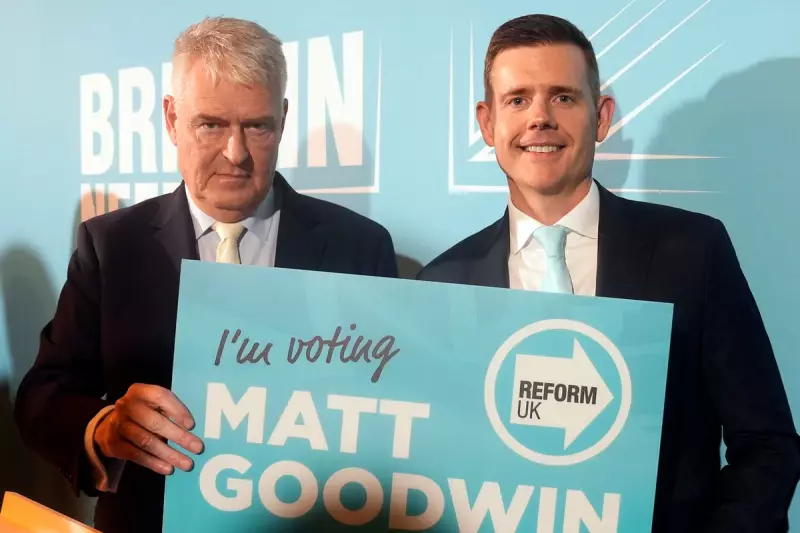
Zack Polanski, leader of the Green Party, will not be standing, which is regrettable given his strong campaigning abilities; local councillor Hannah Spencer is likely to be the Green standard-bearer. Reform has selected GB News presenter and former politics professor Matt Goodwin, who describes the contest as "a referendum on Keir Starmer." The Conservatives are expected to lose their deposit, having won only 7.9 per cent at the general election, and may even fall behind the Lib Dems (who secured 3.8 per cent at the last general election).
Given that the next general election may not occur until the summer of 2029, neither this by-election nor current opinion polls will provide definitive insights into who will form the next government. However, the Gorton and Denton contest will offer a valuable snapshot of the evolving political dynamics and voter sentiments in a rapidly changing landscape.