Japan's Ruling Conservatives Projected for Landslide Election Victory
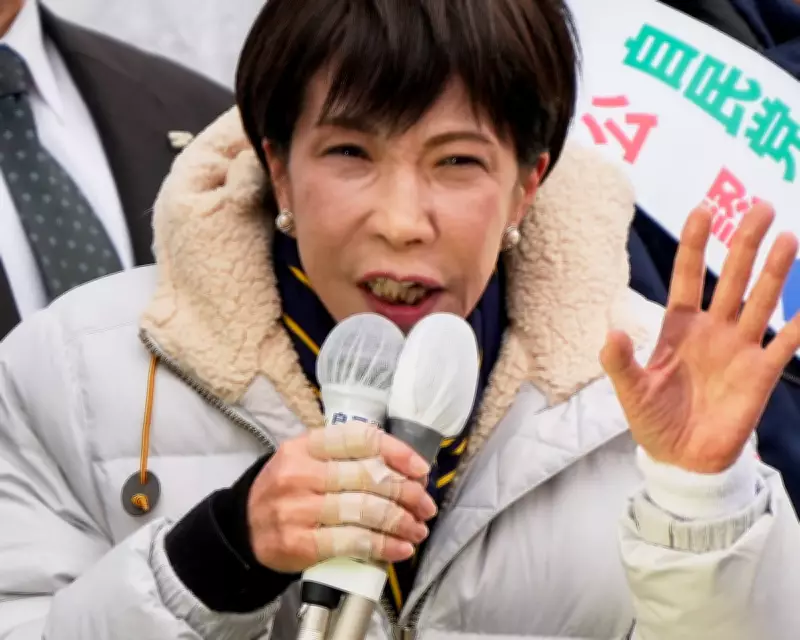
Japan's conservative governing coalition is poised to dramatically strengthen its hold on power, with exit polls predicting a commanding landslide victory in Sunday's crucial lower house elections. The vote, held during a day of blizzards and freezing conditions across much of the nation, appears to deliver an early public endorsement of Prime Minister Sanae Takaichi's leadership.
Projected Seat Counts Signal Overwhelming Mandate
According to exit polling conducted by the national public broadcaster NHK, the long-dominant Liberal Democratic Party (LDP) is projected to secure between 274 and 328 seats in the 465-seat lower house of parliament. This figure comfortably exceeds the 233-seat threshold required for a simple majority, which the party had lost in the 2024 election.
When combined with the projected seats for its junior coalition partner, the Japan Innovation Party, the ruling alliance could command a formidable bloc of between 302 and 366 seats. Such a result would grant the coalition significant legislative power and a strong mandate for Prime Minister Takaichi's policy agenda.

A Vote of Confidence Amid Challenging Conditions
The election took place under extraordinary circumstances, marking the first mid-winter parliamentary vote in 35 years. Voters across Japan braved heavy snowfall, freezing temperatures, and widespread travel disruption to reach polling stations. The severe weather, which halted dozens of train services and led to the cancellation of 230 domestic flights, is expected to have contributed to a lower overall voter turnout.
Despite the harsh conditions, many citizens were determined to cast their ballots. "She has shown strong leadership and pushes various policies forward," said Kazushige Cho, a 54-year-old teacher who voted for the LDP in Niigata prefecture, where snow depths exceeded two metres. "I think things could turn out quite well."
Takaichi's Policy Platform and Political Challenges
Prime Minister Takaichi, who called this snap election shortly after becoming Japan's first female premier last autumn, had staked her political future on the result, vowing to resign if her coalition failed to secure a majority. Her campaign focused heavily on economic relief, centring on a substantial $135 billion stimulus package designed to alleviate the ongoing cost-of-living crisis. A key pledge was the proposed suspension of the 8% consumption tax on food for two years, a measure estimated to cost the treasury approximately ¥5 trillion ($30 billion) annually.
However, these ambitious spending plans have already unsettled financial markets, raising concerns among analysts given Japan's colossal public debt, which exceeds twice the size of its GDP—the heaviest such burden of any major advanced economy.
Diplomatic Tensions and Future Foreign Policy
On the international stage, Takaichi's brief tenure has been marked by significant diplomatic activity and controversy. Following high-profile meetings with global leaders like Donald Trump and Xi Jinping late last year, she ignited a serious dispute with Beijing in November by suggesting Japan could consider military involvement should China attempt to invade Taiwan.
China responded by advising its citizens against tourism and study in Japan, citing safety concerns—advice that has been widely heeded. The rift has disrupted long-standing cultural exchanges and even halted decades of "panda diplomacy." While Takaichi's refusal to retract her comments angered Beijing, the stance appears to have resonated with a segment of the Japanese electorate.
Political analysts suggest that a decisive electoral victory could provide Takaichi with the political capital and stability needed to mend fences. "Now she doesn't have to worry about any elections until 2028," noted Margarita Estévez-Abe, an associate professor of political science at Syracuse University. "The best scenario for Japan is that Takaichi takes a deep breath and focuses on amending the relationship with China."

Market Reactions and Legislative Implications
The scale of the projected victory carries profound implications for both domestic policy and financial markets. A simple majority of 261 seats would allow the coalition to control parliamentary committees, streamlining the passage of budgets and legislation. A super-majority of 310 seats would grant the power to override the upper house, where the LDP-led alliance lost its majority in July of the previous year.
"If Takaichi won big, she would have more political room to follow through on key commitments, including on consumption-tax cuts," said Seiji Inada, managing director at the consultancy FGS Global. He warned that markets could react swiftly, potentially putting renewed pressure on the yen if the government proceeds with its costly tax suspension plan.
A Transformed Political Landscape
Prime Minister Takaichi's personal popularity, particularly among younger voters, has revitalised the LDP's fortunes since she succeeded Shigeru Ishiba as party president in October. Under Ishiba's leadership, the party and its coalition partner lost their parliamentary majorities amid public discontent over a slush fund scandal and rising living costs.
The fragmented and uninspiring opposition, a recurring feature of Japanese politics, again failed to mount a credible challenge. The main opposition Centrist Reform Alliance, formed just weeks before the election, was expected to suffer heavy losses, casting doubt on its future viability.
While the final official results will not be confirmed until late Sunday, the exit polls paint a clear picture of a nation granting its conservative government a powerful renewed mandate, despite economic uncertainties and diplomatic storms, both literal and figurative.