Illinois Democrats Select Lieutenant Governor Juliana Stratton for Senate Seat
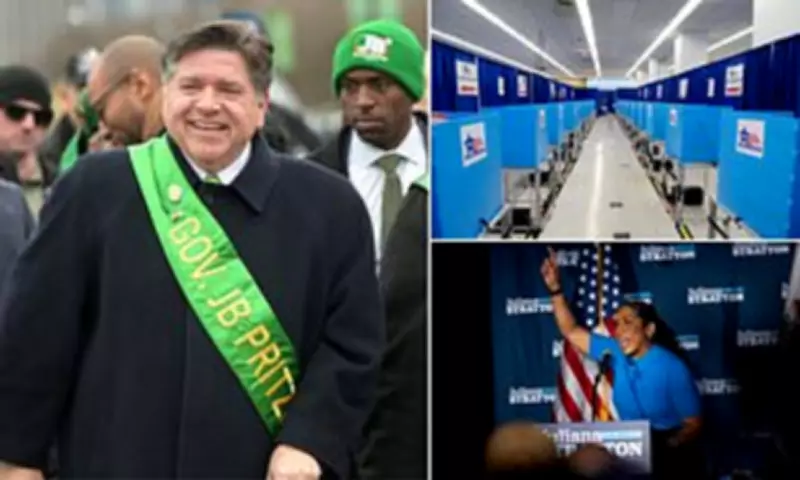
Illinois Democrats have chosen Lieutenant Governor Juliana Stratton as their nominee to replace retiring Senator Dick Durbin, the second most powerful Democrat in the US Senate. The Associated Press called the race for Stratton on Tuesday night following a contentious three-way primary battle that exposed significant fractures within the Democratic Party.
A Three-Way Battle With National Implications
The primary pitted Lieutenant Governor Stratton, 60, against Representative Robin Kelly, 69, and Representative Raja Krishnamoorthi, 52, in a contest that became a proxy war between different Democratic power centers. With Illinois being a solidly Democratic state, tonight's winner is virtually assured to become the state's next senator, with the Cook Political Report rating the seat as completely out of reach for any Republican challenger.
The race transformed into a dramatic showdown between the influential Congressional Black Caucus, the state's sitting governor, and one of the Democratic Party's most formidable fundraising operations. This conflict highlighted the competing priorities and power struggles within the national Democratic coalition as the party prepares for future electoral battles.
Governor Pritzker's Controversial Intervention
Illinois Governor JB Pritzker, who harbors White House ambitions for 2028, threw his considerable political weight behind his lieutenant governor, Juliana Stratton, much to the consternation of the Congressional Black Caucus. The CBC had officially endorsed Representative Robin Kelly, creating a direct confrontation between the governor and one of the party's most important constituency groups.
The tension escalated to the point where CBC Chair Yvette Clarke, a US Representative from New York, publicly blasted Pritzker for what she characterized as inappropriate interference. 'Governor Pritzker's effort to tip the scales in Illinois' US Senate race is beyond frustrating for the Congressional Black Caucus,' Clarke declared in an official statement. 'A sitting governor shouldn't be heavy-handing the race. Quite frankly, his behavior in this race won't soon be forgotten by any of us.'
The Financial Dynamics of the Race
Representative Raja Krishnamoorthi entered the contest with a massive financial advantage, establishing himself as one of Congress' most prolific fundraisers. According to the Chicago Tribune, Krishnamoorthi raised an astonishing $30.5 million between the start of 2025 and February 25, transferring more than $19 million from his existing House campaign fund. This made him the second-highest fundraiser in the entire Democratic Party this election cycle, trailing only Georgia Senator Jon Ossoff.
Krishnamoorthi also benefited significantly from cryptocurrency interests, with the super PAC Fairshake directing approximately $10 million toward his campaign according to Washington Post reports. This financial backing from the crypto community provided him with resources far beyond what his opponents could muster.
By comparison, Lieutenant Governor Stratton raised $4.1 million since declaring her candidacy in April, though she received substantial support from a super PAC funded by billionaire Governor Pritzker. Representative Robin Kelly operated with the most limited resources, reporting just $3.3 million for her Senate run, including $2.2 million transferred from her House campaign fund.
Endorsement Wars and Strategic Maneuvering
Stratton's campaign received several high-profile endorsements that bolstered her credibility, including support from progressive icon Massachusetts Senator Elizabeth Warren and Illinois' other Democratic Senator Tammy Duckworth. Her campaign also claimed an endorsement from the late civil rights leader Jesse Jackson, though this assertion became controversial when Jackson's son Yusef Jackson stated that sample ballots recommending Stratton were 'released without authorization' and that no official endorsement from the Jackson family or the Rainbow PUSH Coalition would be made.
Representative Kelly received crucial backing from South Carolina Representative Jim Clyburn, who was at one point the highest-ranking black member of Congress. Interestingly, Kelly also received unexpected assistance from an unlikely source—Project Progress, part of the pro-crypto Fairshake network that primarily supported Krishnamoorthi. According to Punchbowl News, this group spent $90,000 on advertisements boosting Kelly while simultaneously running negative ads against Stratton, in what appeared to be a strategic effort to divide the vote and weaken Stratton's position.
Polling Dynamics and Demographic Considerations
Throughout the campaign, Representative Kelly consistently trailed in all recent polling, with Stratton and Krishnamoorthi alternating for the lead position. Both Kelly and Stratton are black candidates, adding complexity to the racial dynamics of the race given the Congressional Black Caucus's endorsement of Kelly over the governor-backed Stratton.
Kelly represents Illinois' 2nd Congressional District, which encompasses Chicago's historic South Side, southern suburbs, and some rural areas, giving her a strong base in key Democratic constituencies. However, this geographical advantage proved insufficient against the combined forces of gubernatorial support and progressive endorsements that bolstered Stratton's campaign.
National Implications and Future Political Calculations
This Senate race served as a crucial test for Governor JB Pritzker, whose national profile has risen significantly, partly due to attention from former President Donald Trump. During a Monday Oval Office meeting, Trump referred to Pritzker as that 'slob of a governor,' highlighting the Illinois executive's growing prominence on the national stage.
Like other potential 2028 Democratic presidential hopefuls, Pritzker is actively attempting to demonstrate his political influence before his own name likely appears on ballots in two years. His successful backing of Stratton represents a significant flex of political muscle that will undoubtedly factor into future calculations about his national ambitions and his standing within the Democratic Party hierarchy.
The outcome of this contentious primary reveals much about the current state of Democratic politics, including the tensions between established constituency groups like the Congressional Black Caucus and ambitious state executives, the growing influence of cryptocurrency interests in Democratic fundraising, and the complex dynamics of endorsement politics in an increasingly fragmented political landscape.