Britain's political landscape is undergoing a seismic shift, with the historic dominance of the Labour and Conservative parties facing an unprecedented challenge. Voters appear to be rejecting the 'old normal' of a two-party system, leaving both major parties banking on a political recovery that may never materialise.
The Fading Duopoly: Labour and Tory Strategies
Both main parties are clinging to the hope that familiar political patterns will reassert themselves. Labour's strategy for recovery hinges on a crucial distinction between midterm polls and a general election. The party hopes that economic growth and demonstrated governing competence under Prime Minister Keir Starmer will improve public wellbeing in the coming years. This, they believe, will heighten the perceived risk of voting for alternative parties, particularly Reform UK. The calculation is that voters lacking enthusiasm for Starmer may still stick with him to block Nigel Farage from gaining influence.
Conversely, the Conservatives, led by Kemi Badenoch, are sustained by a mirror-image optimism. They anticipate that the economy may falter, allowing them to surge with a campaign arguing that Labour has overtaxed the nation and mismanaged public finances. Their pitch will be that Reform UK, lacking fiscal discipline, would exacerbate any problems. These scenarios are not wildly improbable, but they share a common, potentially flawed, assumption: that politics will follow historical precedent.

The Reform UK Challenge and the Cultural Barrier
At the heart of this political turmoil is Nigel Farage's Reform UK, which directly contests the convention that only Labour or the Conservatives are licensed to supply Britain's prime ministers. Farage recognises this as a significant cultural barrier to his ambitions. His recent recruitment of high-profile Conservative defectors, like former chancellor Nadhim Zahawi, is a deliberate tactic to present Reform as the new natural party of power on the right. However, this strategy carries a downside. While Zahawi's defection aims to signal serious intent to govern, his history—resigning over tax irregularities and having previously called Farage a 'menace'—risks diluting Reform's claim to represent a clean break from the establishment.
Current polling underscores the fragmentation. The Conservatives have seen a marginal rise but remain below the 24% share they achieved at their crushing July 2024 election defeat. Meanwhile, Keir Starmer struggles to keep Labour's support out of the high teens and above the Greens. This volatility makes Britain's first-past-the-post system, designed for two-party contests, hopelessly ill-equipped to translate multi-party politics into a rational distribution of parliamentary seats.
A System Broken Since the Financial Crisis
The root of voter disillusionment runs deep. The historic Labour-Tory rivalry is also a mutual dependency, with both parties acting as joint guardians of a Westminster system that has stopped working for many since the 2007-08 financial crisis. This was the period when average real-term incomes stagnated, social mobility stalled, and the post-war promise of generational progress was broken. While every Prime Minister from 2010 to 2024 was a Conservative, and Labour did not preside over austerity or Brexit, the public's frustration is with the configuration itself.
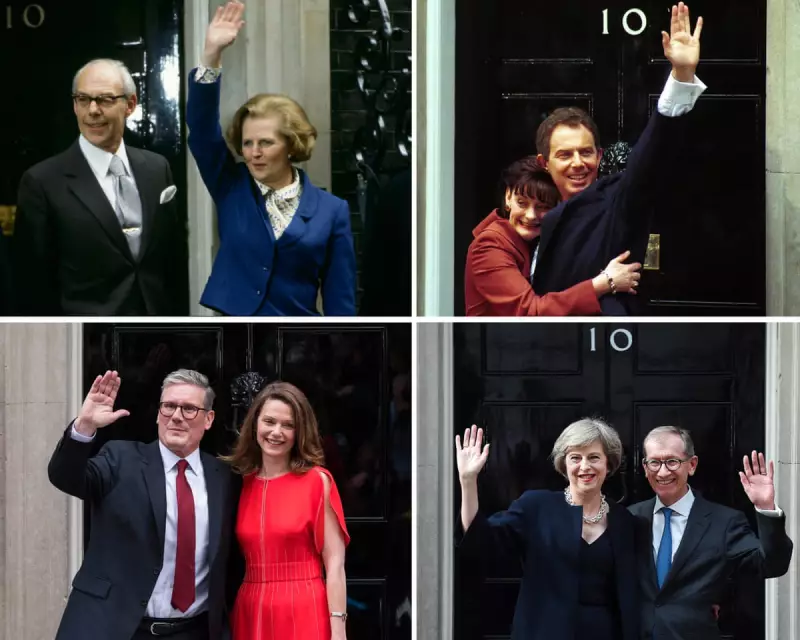
As the first Labour leader to win an election since 2005, Keir Starmer faced the task of convincing the public he understood what went wrong and had a plan to fix it. His failure to communicate this effectively is one point on which polls remain unambiguous. The emerging political climate is no longer defined by a stable left-right divide with swing voters in the centre. Instead, politics is fracturing into a liberal-progressive bloc and a conservative-nationalist one, efficiently delineated by attitudes towards Nigel Farage.

It is premature to declare the two-party duopoly terminally ill. Farage's influence may peak, Starmer or Badenoch could be replaced by more dynamic leaders, or a scandal could alter the course. Yet the possibility of a permanent, seismic change is being underpriced by party leaders psychologically invested in the old order. Voters are expressing doubt that politics in its familiar configuration can deliver anything but disappointment, signalling that the 'old normal' is precisely what they no longer want.