Myanmar is holding its first election in five years this Saturday, but the process is being widely condemned as a sham exercise conducted under an atmosphere of fear and coercion. The tightly controlled poll, the first phase of a multi-stage vote, allows only parties vetted by the military to contest, stripping the process of any genuine democratic choice.
A Vote Forced, Not Freely Given
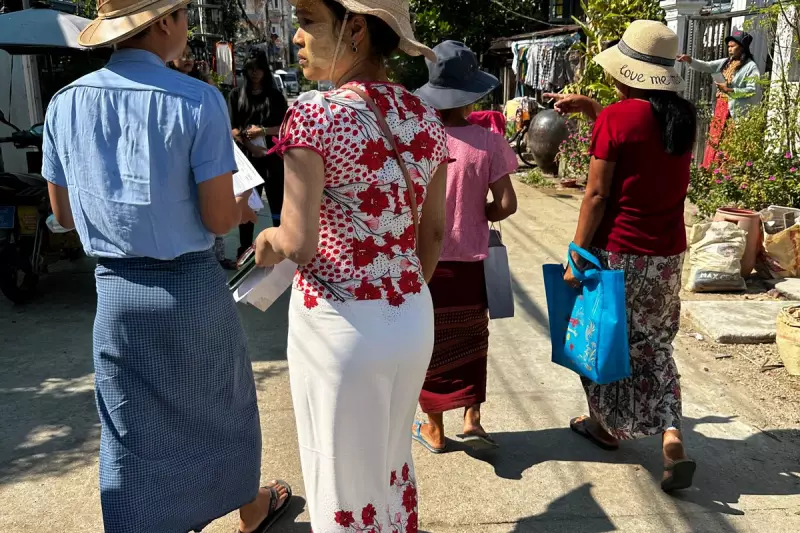
In the commercial capital Yangon and the historic city of Mandalay, citizens express a potent mix of anger and resignation. This stands in stark contrast to the enthusiastic participation seen in the 2015 and 2020 elections, when Aung San Suu Kyi's National League for Democracy (NLD) won by landslides. The 2020 result was later overturned by a military coup in February 2021, which set the stage for the current controlled vote.
"We are forced to go and vote this time. We don't know what could happen to us if we don't," said Khin Nang*, a resident of Mandalay whose brother is a political prisoner. She, like many others, votes out of fear of reprisal rather than any hope for a better future. Some cling to the faint hope of an amnesty for prisoners after the polls.

Zaw Zaw, another voter, highlighted the lack of choice: "I'll go and vote because I have to. The system is electronic for the first time and it's not even possible to leave a blank. I don't even know the names of the people running or their parties."
International Condemnation and Junta's Grip
The election has been denounced by resistance forces within Myanmar and many in the international community as far from free and fair, conducted amidst a brutal civil war. Over 20,000 political prisoners remain detained in abysmal conditions, including former leader Aung San Suu Kyi, who is serving a 27-year sentence on charges widely seen as politically motivated.
Opposition to the election itself has been criminalised, with more than 200 people arrested since July for offences such as critical social media posts. The regime has dissolved the NLD and other anti-junta parties that refused to register for the vote.
Despite a devastating earthquake nine months ago that killed thousands and briefly focused international aid on the regime, the junta's grip on central cities like Yangon and Mandalay remains, largely due to overwhelming artillery and air power. However, the economy is heavily weakened, with soaring food prices and a housing crisis.
Regional Dynamics and a Fractured Future
The military regime has regained significant territory recently, thanks in large part to direct support from neighbours China and Russia. China's explicit backing of the junta marks a turning point, demonstrated when coup leader Senior General Min Aung Hlaing was hosted in Beijing in August 2025 for WWII anniversary celebrations alongside Vladimir Putin and Kim Jong Un.
Analysts suggest the election is primarily a show of strength by the junta, intended to install a nominally civilian government. However, few believe it will end the civil war, which now involves not only ethnic armed groups but also the Bamar majority in the heartlands.
While Aung San Suu Kyi remains widely revered inside Myanmar, her potential to regain a pivotal role is seen as diminished by her age—she turned 80 in prison in June 2025—and the rise of a new generation leading the fight against the regime. As one Yangon-based journalist noted, "The country has to move on."
For most ordinary citizens, the sentiment is one of bleak acceptance. When asked what will change after these elections, Thiri's reply was succinct and echoed by many: "Nothing."
* Names of interviewees in Myanmar have been changed to protect their identities.