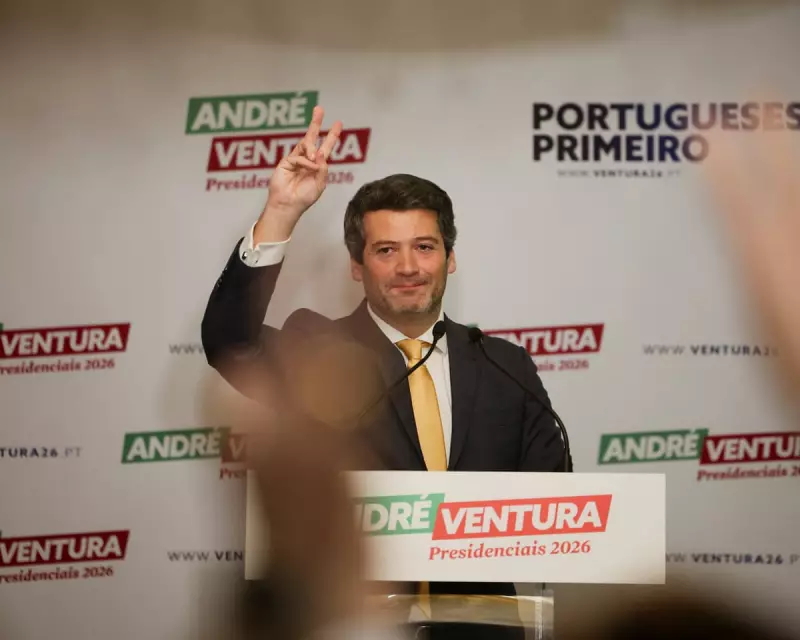
Portugal is set for a historic and politically charged presidential runoff next month, after moderate socialist candidate Antonio Jose Seguro finished ahead of far-right Chega party leader Andre Ventura in the first round of voting.
A Historic Runoff Signals Political Fragmentation
With all votes counted from Sunday's election, Antonio Jose Seguro secured 31.1% of the vote, while his rival, Andre Ventura, garnered 23.5%. This sets the stage for a second-round showdown on 8 February, a rare event in modern Portuguese democracy.
This will be only the second presidential runoff since the end of the country's fascist dictatorship five decades ago, with the last occurring in 1986. The necessity of a second round underscores a deeply fragmented political landscape, driven by the dramatic rise of the populist far-right and widespread voter disenchantment with mainstream parties.

The Stakes and the Key Players
Although the Portuguese presidency is largely ceremonial, the role holds significant reserve powers. The president can dissolve parliament, call snap elections, and veto legislation, making the office a crucial check on government power.
The result confirms the formidable rise of Ventura's anti-establishment, anti-immigration Chega party, which became Portugal's main opposition party in a parliamentary election just last May, winning 22.8% of the vote. Its success has already pushed government policy, particularly on immigration, towards a more restrictive stance, mirroring trends seen across Europe.
Joao Cotrim de Figueiredo of the pro-business Liberal Initiative party came third with about 16% of the vote. Other notable contenders included retired Admiral Henrique Gouveia e Melo, who led Portugal's Covid-19 vaccination campaign, with 12.3%, and satirical candidate Manuel Joao Vieira, who promised a Ferrari for every citizen and wine on tap.
An Uphill Battle for the Far-Right
Despite his strong first-round showing, Andre Ventura faces a significant hurdle in the runoff. Recent opinion polls consistently show the former TV sports commentator losing the second round, hampered by a high voter rejection rate exceeding 60%.
Analysts frequently describe Chega as Ventura's "one-man show," a point emphasised by his presidential run despite repeatedly stating his ultimate ambition is to become prime minister.
Following the results, a combative Ventura called for unity on the right, telling supporters in Lisbon, "Now we need to unite the entire right wing … I will fight day by day, minute by minute, second by second so that there won’t be a Socialist president. We will win." He declared that "The country has woken up after these 40 years of no runoffs."
However, he may struggle to consolidate right-wing support. Prime Minister Luis Montenegro said his centre-right Social Democratic Party, whose candidate came fifth, would not endorse either runoff contender. Furthermore, third-place finisher Cotrim de Figueiredo has stated he does not want Ventura as president.
In an assessment, the Economist Intelligence Unit noted that a Seguro-Ventura runoff "would be more straightforward given his [Ventura's] limited appeal beyond his core base," suggesting that while Ventura advocates a more interventionist presidential style, this was unlikely to translate into an electoral victory.
The February runoff will therefore serve as a critical test of Portugal's political direction, offering voters a stark choice between a moderate socialist and a figure representing Europe's swelling far-right movement.