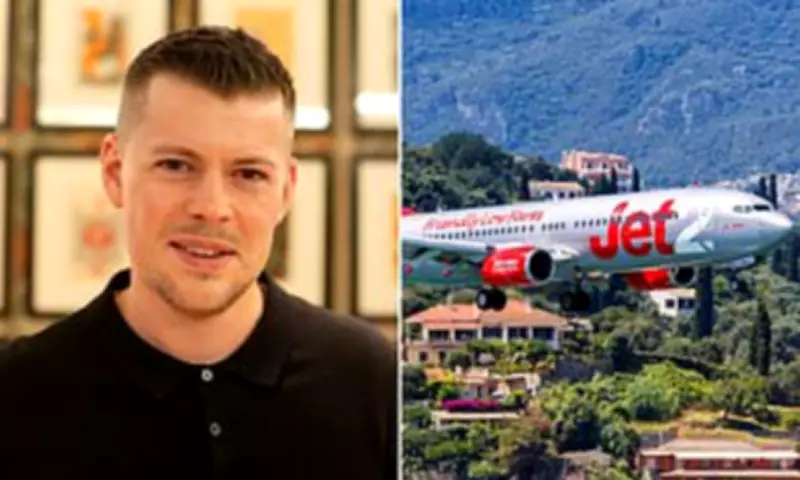
When boarding an aircraft, passengers are often enveloped by a carefully selected soundtrack designed to influence their emotional state. This auditory experience ranges from calming instrumental pieces to the famously catchy Jess Glynne track that has become synonymous with Jet2 flights. The music accompanying air travel is far from arbitrary; it represents a sophisticated marketing strategy known as sonic branding.
The Mastermind Behind Airline Soundscapes
Max De Lucia, a 34-year-old Londoner and co-founder of music advertising agency DLMDD, has pioneered sonic branding for major carriers including Singapore Airlines and Norwegian Airlines. In an exclusive interview with the Daily Mail, De Lucia revealed the intricate world of aviation sound design. "We always say that an airline or aircraft is a tin box in the sky until you fill it with all the elements," he explained, emphasizing that auditory identity is as crucial as visual logos for modern airlines.
The Viral Phenomenon of Jet2's Mantra
Perhaps the most recognizable example of contemporary airline music is Jet2's persistent use of Jess Glynne's "Hold My Hand." De Lucia notes this track has achieved viral status through strategic repetition. "Everyone's aware of it," he observes. "They've rammed that track absolutely everywhere they possibly can." While some passengers find the repetition irritating, De Lucia argues this demonstrates successful branding. "If you're the marketing director of Jet2, you'll be doing a mic drop right about now," he quipped.

The Psychological Power of Repetition
De Lucia attributes the effectiveness of repetitive airline music to the "mere exposure" effect, a psychological phenomenon where familiarity breeds preference. "If you listen to a song on the radio for the first time, you might not like it," he explains. "By week three, you actually quite like that song and know the words." This principle explains why Jet2's "nothing beats a Jet2 holiday" mantra has become so embedded in passenger consciousness through repeated exposure.
Crafting the Perfect Airline Soundtrack
Creating appropriate airline music involves a meticulous process. "First, the brand comes and says they want to figure out how they sound," De Lucia describes. His agency conducts discovery processes to establish musical references that align with brand identity, then assembles global teams of composers and producers to develop options. The final selection undergoes rigorous testing to ensure it perfectly represents the brand experience.
"Probably no one ever thinks, when they sit down on that plane, that the music has gone through this immensely robust process," De Lucia remarks. "Brands all over the world come to us and say, 'we know what we look like, but we want to be famous for how we sound.'"
The Science of Sonic Branding
De Lucia presents compelling data supporting sonic branding's effectiveness, claiming sound is approximately 800 percent more powerful than visual stimulus. "Airline music on board should be as ignorable as it is interesting," he suggests. "The idea is that if you're on board the plane, you can sip a glass of wine, read the newspaper, and it just sets that environment. But if your ear latches onto that piece of music, there's artistic depth to it."
Case Studies in Sonic Identity
DLMDD's work with Singapore Airlines demonstrates sophisticated sonic branding. To translate the airline's floral visual identity into sound, the team created a custom instrument that converts color frequencies into musical notes. This resulted in the "Symphony of Flowers" boarding and landing music heard by approximately 40 million passengers annually.
Compositional techniques are equally deliberate. Composers typically avoid minor keys that evoke sadness, instead creating rhythms and melodies that provide "a sense of going somewhere" without becoming overly repetitive. For national carriers, musical elements often reflect cultural identity. United Airlines famously used Gershwin's "Rhapsody in Blue" for years to evoke American sophistication, while Norwegian Airlines recorded with the Trondheim Orchestra to capture Scandinavian essence.

The Future of Airline Audio
De Lucia notes that airlines increasingly seek "Netflix level of fame" through distinctive sonic branding. "For many carriers, they are carrying not just the brand, but often the nationality as well," he observes. Achieving such recognition requires long-term commitment to consistent auditory identity. As air travel continues to evolve, the strategic use of sound will remain a crucial element in shaping passenger experience and building brand loyalty in the competitive aviation industry.