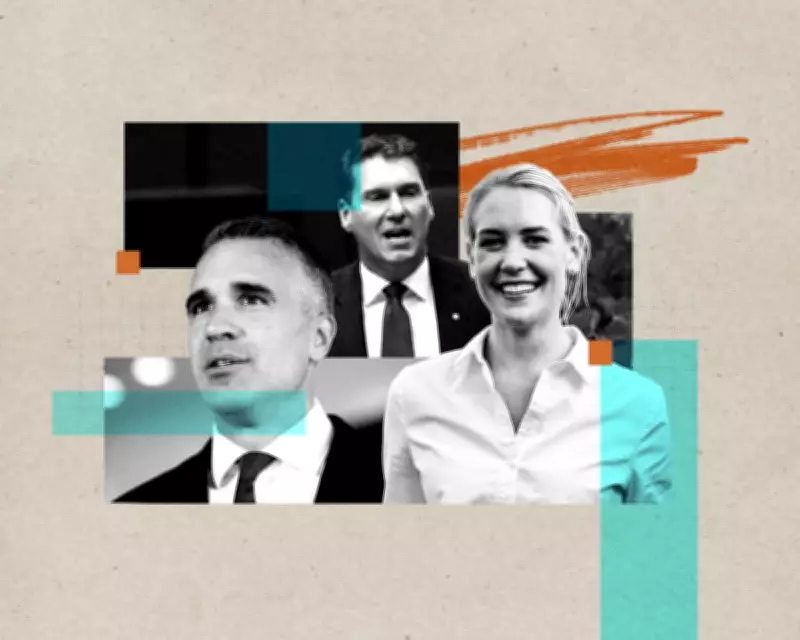
South Australia Election: Liberal Party Faces Humiliation as One Nation Surges
South Australia is heading to the polls on 21 March in a state election that could deliver a seismic shift in the political landscape. The Labor Party, led by Premier Peter Malinauskas, appears poised for a colossal victory, but the real drama centres on the collapse of the Liberal Party and the remarkable surge of the right-wing One Nation party.
Polling Points to a Liberal Catastrophe
The latest Newspoll reveals a dire situation for the state's Liberal Party, with its primary vote languishing at a catastrophic 14%. This level of support could see the party fail to win a single seat in the 47-seat House of Assembly. In stark contrast, One Nation's primary vote stands at 24%, placing it ahead of the Liberals, while Labor commands a dominant 44%.
Ashton Hurn, who assumed leadership of the beleaguered Liberal Party in December, just over 100 days before the election, has framed the challenge as climbing "Mount Everest." She faces a perfect storm of crises: a party decimated at the last election, internal factional battles dominated by conservatives, the popularity of Premier Malinauskas, the toxic fallout from federal Liberal turmoil, and the menacing rise of One Nation.

One Nation's Crucial Test
This election serves as a critical first test for One Nation's electoral viability outside its traditional strongholds. Cory Bernardi, the party's new upper house lead candidate and a former Liberal senator, claims One Nation would be "the strongest voice of opposition" if elected. Political scientist Rob Manwaring from Flinders University notes this election is unique, as it will provide the first clear indication of how One Nation might fracture and splinter the far-right vote on a larger scale, highlighting the "total disarray and carnage in the Liberal party."
Peter Lewis, Executive Director of Essential, points out that while One Nation's vote in South Australia runs lower than in Queensland or New South Wales, the state election offers a real-world test of whether voter intention translates into actual ballot box endorsement. The outcome could signal broader federal political shifts.
Labor's Dominance and Premier's Popularity
Polling consistently shows Labor, under the popular, football-playing Premier Peter Malinauskas, heading for an enormous win. The current composition of the House of Assembly stands at 28 Labor, 13 Liberal, and four independents, with two seats vacant. Analysts suggest the Liberal Party might not retain a single lower house seat, potentially leaving One Nation as the official opposition.
Malinauskas expresses more concern about the global phenomenon of populism than One Nation specifically, warning against simplistic policies that exacerbate complex issues. He has criticised One Nation's anti-immigration stance, while acknowledging the legitimate concerns of its supporters. Key issues for his government include hospital ramping, energy bills, housing, and the broader health system, though his popularity remains largely undented by various controversies during his premiership.
Liberal Party in Perpetual Crisis
The South Australian Liberal Party has long been embroiled in a delicate power struggle between conservative and moderate factions. Recently, a hardline conservative element, led by federal senator Alex Antic, has staged what a senior Liberal called "a takeover" of party branches. This internal strife has been compounded by a series of parliamentary crises.
Former leader David Speirs resigned after a drug offence arrest; his seat was lost to Labor in a byelection. Another seat, Dunstan, fell to Labor after former Premier Steven Marshall retired. Independent MP Troy Bell was imprisoned for theft, and Fraser Ellis is appealing a deception conviction. Nick McBride quit the party citing "dark forces" and faces assault charges he denies. This turmoil led to Vincent Tarzia's brief leadership before he resigned in December, passing what many see as a "hospital pass" to Ashton Hurn.

Unpredictable Preference Flows and Upper House Battles
How preferences will flow in this volatile electoral environment remains highly uncertain. Voting patterns are increasingly erratic, with many voters ignoring how-to-vote cards. One Nation's support is expected to be stronger in regional and rural areas, complicating races with sitting independents.
While Pauline Hanson's personal brand recognition is significant, her name is not on the ballot. Hurn argues that "a vote for One Nation guarantees a Labor government." However, One Nation could make a substantial impact in the upper house, where half of the 22 Legislative Council seats are contested. Insiders believe Cory Bernardi is very likely to win a seat, with state party president Carlos Quaremba also a strong possibility.
Peter Lewis suggests South Australia is not the most natural home for One Nation, given its popular incumbent, traditionally moderate conservative base, and less populated rural areas. Yet, the election may prove to be a defining test of the party's national potential.