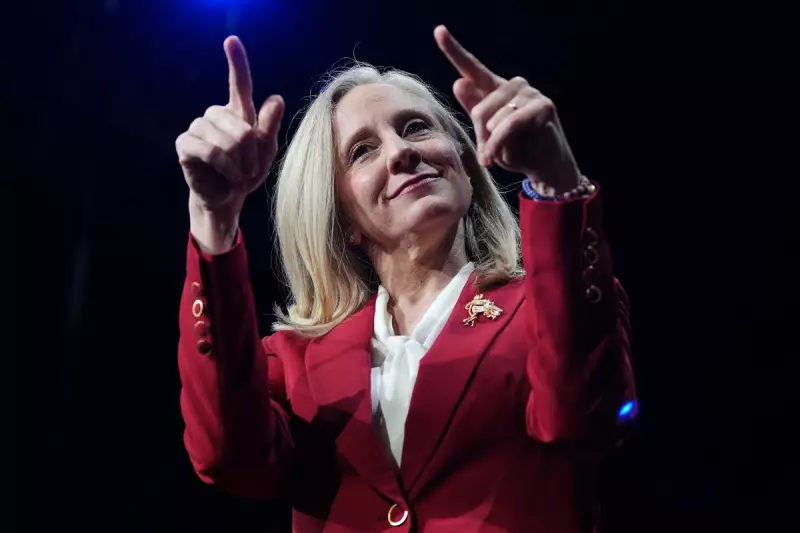
Virginia has entered a new era in its political history with the inauguration of Abigail Spanberger as its first-ever female governor. The Democrat made history on Saturday 17 January 2026, taking her oath of office on the steps of the state Capitol in Richmond, finally breaking a male-dominated streak that had lasted since the commonwealth's founding in 1776.
A Historic Oath and a Symbolic Choice
The swearing-in ceremony took place at noon amidst a cold drizzle, a fittingly solemn backdrop for such a significant moment. Spanberger, a former CIA case officer and member of Congress, defeated Republican candidate Winsome Earle-Sears to succeed outgoing Republican Governor Glenn Youngkin. Her victory in November 2026 made her the state's 75th governor, but its first woman to hold the executive power.
In a poignant break with tradition, Spanberger chose to wear an all-white ensemble for the occasion, with a gold pin adorning her long white coat. This sartorial decision is widely viewed as a tribute to the women's suffrage movement. While the official "Guide to Virginia Protocol and Traditions" suggests dark suits for women at such events, the new governor made a powerful statement with her attire.

A New Chapter for Virginia's Leadership
Spanberger's inauguration marks a pivotal shift for Democrats in Virginia, regaining control of the governor's mansion while a Republican, Donald Trump, occupies the White House. In her victory speech, she thanked the generations of women who "forged her path" to this historic achievement.
The day was doubly significant for representation, as it also saw two other barrier-breaking inaugurations. Ghazala F Hashmi was sworn in as Lieutenant Governor, becoming the first Muslim woman to hold a statewide elected office anywhere in the United States. Simultaneously, Jay Jones took office as Virginia's first Black Attorney General.
Protocol, Titles, and a Legacy Changed
With her new role, Spanberger will now be formally addressed as "Madam Governor" or, adhering to traditional Virginia protocol, "her excellency." Her ascent to the governorship closes a notable gap in American political history; no woman had ever served as a colonial governor in Virginia prior to statehood, and none had been elected in the 250 years since.
The historic moment signals not just a change in personnel but a profound shift in the identity of leadership for one of America's oldest states. All eyes will now be on the new administration as it begins to govern, with the legacy of this inaugural day setting a powerful precedent for the future.