Trump Administration Sought to Ban Mail-In Voting in SAVE Act, According to Report
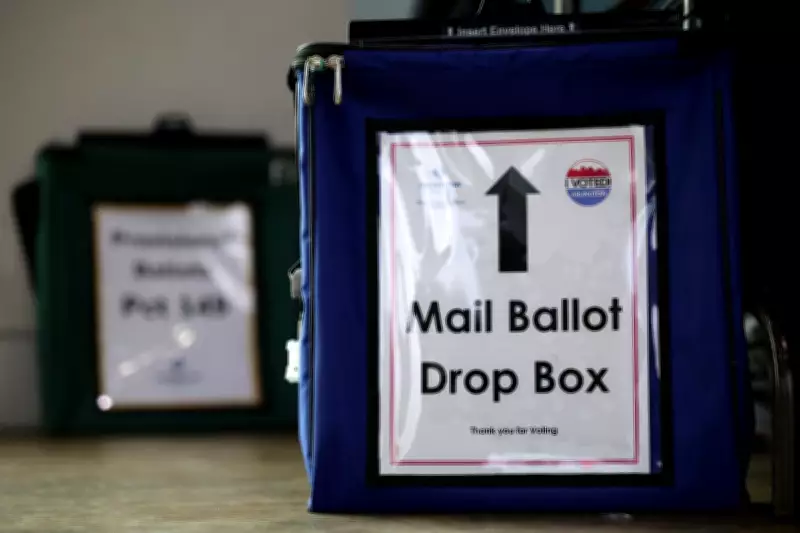
The Trump administration reportedly pushed to include language banning most mail-in voting as part of the SAVE America Act, a Republican-backed voter identification law that cleared the House of Representatives last week. This effort, detailed in a Politico report, aligns with President Trump's public calls to drastically restrict mail voting, which he has repeatedly and baselessly claimed is susceptible to widespread fraud.
SAVE Act and Mail-In Voting Restrictions
During the week of the vote on the SAVE America Act, President Trump took to Truth Social to demand that Republicans advocate for "NO MAIL-IN BALLOTS (EXCEPT FOR ILLNESS, DISABILITY, MILITARY, OR TRAVEL!)" He asserted that "America's Elections are Rigged, Stolen, and a Laughingstock all over the World." A White House official, Abigail Jackson, echoed this stance, stating that the president has consistently urged Congress to pass the SAVE Act and other proposals to establish a uniform photo ID standard for voting, prohibit no-excuse mail-in voting, and end ballot harvesting to ensure election security.
Despite these efforts, the SAVE bill ultimately did not incorporate mail-in voting restrictions, though it is unlikely to pass the Senate. However, the legislation does impose new requirements, mandating that voters provide proof of U.S. citizenship and photo identification. It also grants the Department of Security access to state voter rolls. While it is already illegal for non-citizens to vote, the Brennan Center estimates that approximately 21 million U.S. citizens lack ready access to the necessary documents to comply with such laws.
Political Context and Criticisms
Supporters of the president's voting agenda, such as Representative Tim Burchett of Tennessee, frame the SAVE Act as a measure to prevent voter fraud, a phenomenon that evidence shows is extremely rare and inconsequential. Critics, however, allege that President Trump and his allies are attempting to make voting more difficult ahead of a midterm season where Republicans are forecast to lose ground to Democrats. Another GOP bill in the House, which would ban universal mail-in voting, prohibit ballot counting after election day, and ban ranked-choice voting, has drawn similar accusations.
Representative Joseph D. Morelle of New York told The New York Times, "If you were concerned about our elections, you would be encouraging them to vote. The larger point is this: They are doing anything they can to disrupt the elections." This sentiment is underscored by the irony that President Trump himself has used mail-in voting to cast his ballot in the past, and Republicans in battleground states have spent months encouraging their base to utilize mail-in voting, with Wisconsin Republican Party chair Brian Schimming warning in December that treating early voting as optional is a "losing gamble."
Broader Election Control Efforts
President Trump has also pushed to exert greater federal control over elections, which the Constitution largely delegates to states. He has urged Republicans to "nationalize" election control and threatened to impose voter ID requirements without congressional approval. In a Truth Social post on Friday afternoon, he wrote, "We cannot let the Democrats get away with NO VOTER I.D. any longer. These are horrible, disingenuous CHEATERS." He added in another post, "I have searched the depths of Legal Arguments not yet articulated or vetted on this subject, and will be presenting an irrefutable one in the very near future. There will be Voter I.D. for the Midterm Elections, whether approved by Congress or not!"
This report highlights the ongoing tensions in U.S. election policy, with the Trump administration's push for restrictive measures facing scrutiny amid concerns about voter access and the integrity of democratic processes.